
Shaping a Way Ahead for the KC-130J
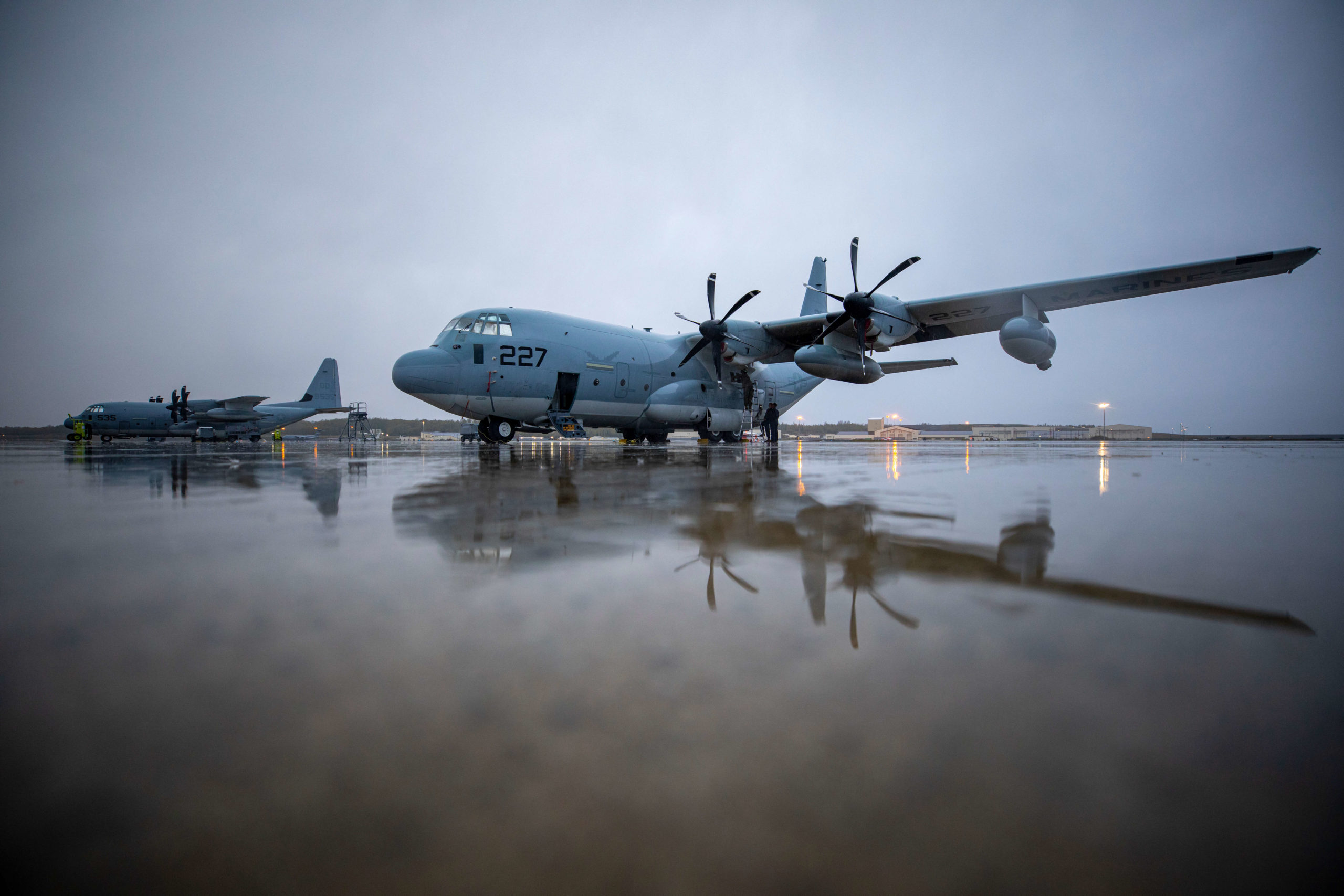
The KC-130J is the indispensable backbone to USMC operations.
Not only does it support the other core aviation elements – through re-fueling and carrying support elements – but provides the USMC with the independence other services do not have from the need to rely on USAF lift.
With the emphasis on agile combat employment for the USAF in terms of crisis, the availability of USAF lift for other services is limited. The USMC understands this and has prioritized their own lift and support systems complementary to what the USAF could provide.
The KC-130J is both tanker and lifter in its basic mission support and has evolved to play other mission with the Harvest Hawk variant, which is suggestive in my view of what air lifters, both the currently manned variants and future autonomous systems, could provide in terms of weaponization and roll on roll off ISR and counter-ISR capabilities.
When the Harvest Hawk was added, direct fire support to the Marines on the ground became part of the KC-130J operational capabilities, which in turn has established the notion that the airplane can become something different in the future as ISR and C2 engagement expands with the inclusion of UAVs and F-35 systems pushing data to the aircraft.
In the 2025 Aviation Plan released by the Deputy Commandant of Aviation in January 2025, the role and significance of the KC-130J was highlighted as follows:
The KC-130J remains a critical enabler for forward deployed MAGTF success across all the Combatant Commands. Continuously deployed since 2005, VMGR detachments are supporting Crisis Response-Africa, operations in Europe, the Middle East, and South America. Additional KC-130J capacity has been added with the activation of VMGR-153 aboard MCAS Kaneohe Bay, Hawaii in FY23. This will increase MAGTF mobility and grow logistical capacity throughout the Indo-Pacific.
The KC-130J has proven its value by operating from austere airfields in forward operating areas and providing mission support in emergency evacuation of personnel and key equipment, advanced party reconnaissance, tactical recovery of aircraft and personnel, special warfare operations, intelligence, surveillance, reconnaissance, target acquisition, indirect and direct fires adjustment, and battlefield damage assessment.
As the sole Marine Corps tactical fixed wing lift and aerial refueling platform, demand for KC-130Js will remain high. The KC-130J and VMGR will continue to be a critical asset to the MAGTF and the Joint Force in the movement of aircraft and cargo across the globe for years to come.
The Aviation Plan also highlighted the importance of completing the transition to a complete KC-130J inventory as well as enhancing its integration within a digital MAGTF.
The KC-130 transition to KC-130J began in 2000 and is scheduled to be complete in 2027. The Marine Corps has delivered 80% of the required KC-130J aircraft with the total procurement is for a program of record of 95 aircraft.
The VMGR team continues to seek ways and means to further integrate with the MAGTF and the Joint Force. Through coordination with the Logistics and Ground Combat Elements, we have begun redistributing capabilities like GPS Retransmission Kits and ViaSat KuSS Band Hatch Mounted Satellite Antenna System (HMSAS). These capabilities enable aircrew to have access to real time data, which can be transferred in flight, providing MAGTF units the most accurate and up to date information.
In addition, we have realigned aircrew training devices in accordance with Force Design and initial accession requirements, to support increased training demands with the standup of VMGR-153 and the possible expansion of KC-130J Fleet Replacement training.
The Aviation Plan indicated the funding priorities for the KC-130J in the period ahead as follows:
- Common configuration upgrades to hardware, software, and the airframe
- Processors and terminals needed to integrate MAGTF Agile Network Gateway Link (MANGL)
- Procure remaining Department of the Navy Large Aircraft Infrared Countermeasure kits (DoN LAIRCM)
- Procure Back Up Aircraft inventory and recapitalize attrition losses
The crews are trained truly to work multi-mission profiles and support to the core USMC air platforms supporting the Marines as they evolve their approaches to force insertion.
It is truly the backbone to a distributed integrated USMC force.
Featured photo: U.S. Marine Corps KC-130J Super Hercules aircraft with Marine Aerial Refueler Transport Squadron (VMGR) 152, Marine Aircraft Group 12, 1st Marine Aircraft Wing, sit on the flightline during exercise Kodiak Mace 25 at Joint Base Elmendorf-Richardson, Alaska, May 12, 2025. Photo by Lance Cpl. David Getz, 1st Marine Aircraft Wing.