
Readiness at the Speed of Relevance: Chaos Management and Adaptive Capacity for 21st Century Defense
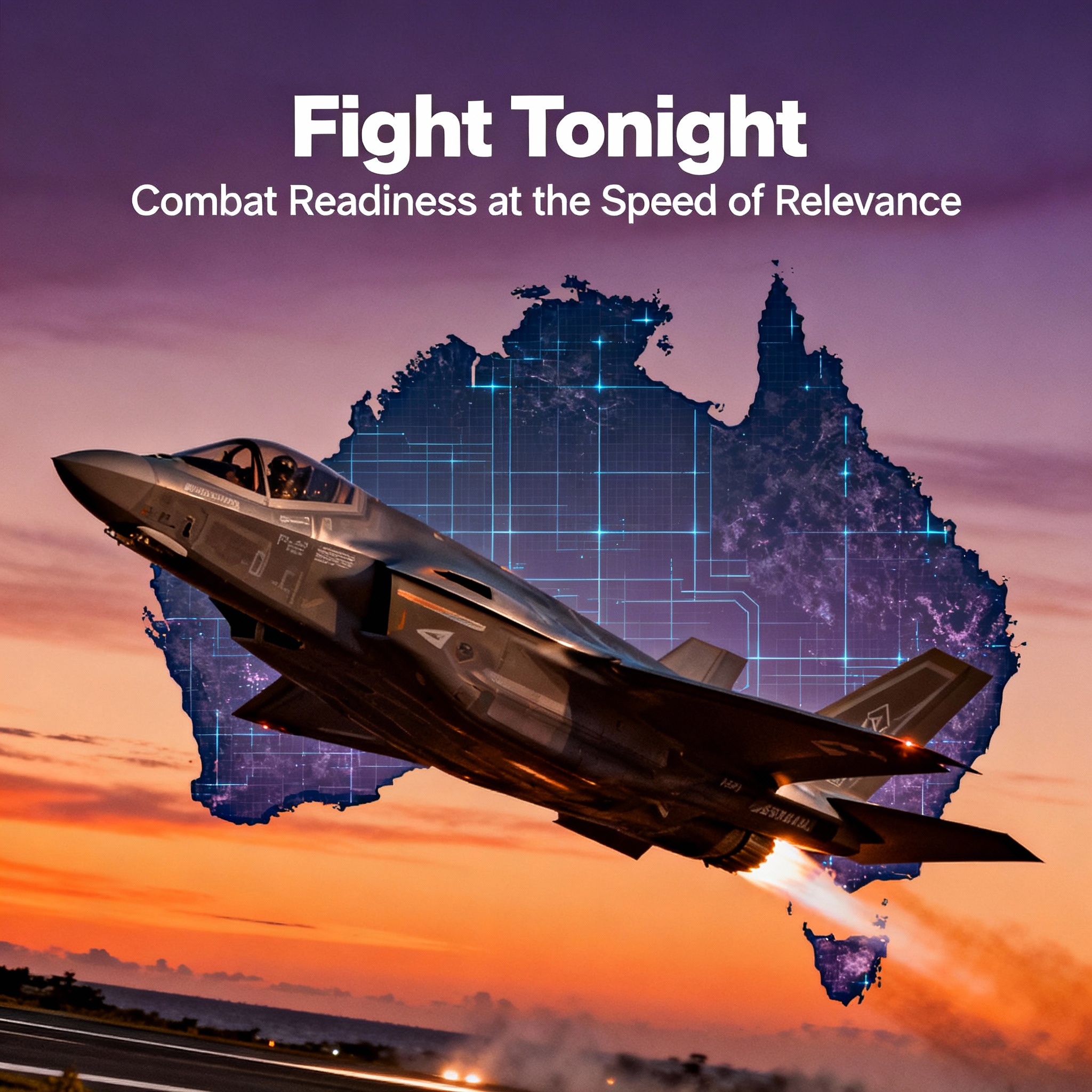
The twenty-first century has swept away the strategic certainties that underpinned defense planning for decades, thrusting democratic societies into a relentless era of turbulence and unpredictability.
Today’s world is more connected than ever before, but this very interconnectedness has not delivered the stability once promised.
Instead, it has amplified instability, cascading crises across domains and borders with unprecedented speed.
The systems that have brought historic gains in efficiency, global supply chains, digitized communications, instant financial flows, have proven brittle when disrupted.
Where armies and policymakers once relied on warning times and slow mobilization, they now confront adversaries, technologies, and social currents that move at the speed of relevance, upending the calculus of deterrence and defense planning.
Against this backdrop, the central strategic imperative is no longer to eliminate chaos or restore some lost order, but to build national systems, forces, and cultures that thrive amid it.
The security of the twenty-first century will belong to those who master the art of chaos management: sensing, adapting, and responding rapidly to events, even as crises multiply and old frameworks collapse.
The Collapse of Predictability
The paradox of modern connectivity is stark. Systems engineered to optimize efficiency and collaboration, air travel, just-in-time logistics, real-time news, have multiplied society’s exposure to shocks. A localized incident, such as the blockage of a major shipping lane or a virulent cyberspace attack, no longer remains contained. The effects echo globally, challenging governments, markets, and militaries to respond before facts can be fully established or policy thoroughly debated.
This collapse of predictability renders classic models of defense planning increasingly unworkable. The era when Western militaries believed they would enjoy ample warning before conflict, a gradual process of escalation, or the leisurely mobilization that characterized the twentieth century, is over. Instead, every day brings a new “urgent” crisis, pandemic, cyber sabotage, gray zone aggression, technological surprise, which threatens to override the slow, patient accumulation of military power and readiness.
Perhaps nowhere are the consequences of this transformation clearer than in the case of Ukraine since 2022. Here, a nation forced to adapt under fire has demonstrated that survival hinges not on perfectly laid plans or on access to legacy platforms, but on agility: the ability to integrate commercial technologies, deploy new operational methods, and mobilize social coherence even as infrastructure is destroyed and communications are disrupted. Ukraine’s resilience in the face of overwhelming kinetic and non-kinetic assaults has offered the world a living laboratory in twenty-first-century chaos management.
Lessons from History—Speed, Mobilization, and the Cost of Delay
If speed and adaptability now define strategic relevance, history offers both guidance and warning. The twentieth century’s crucibles, from World War II to the Cold War, produced a handful of hard-earned lessons on the value and cost of rapid mobilization. The United States’ Arsenal of Democracy exemplifies how victory itself became a function of organizing industry, marshaling national resources, and coordinating public and private sectors before the crisis fully arrived. General Motors executive Bill Knudsen, brought into Roosevelt’s wartime administration, recognized that “winning wars required more than battlefield strategy. It demanded mobilizing industry at extraordinary pace.” Knudsen’s genius lay in forging early public-private partnerships and, critically, in prioritizing “good enough” production over unattainable perfection. The result was decisive: by the apex of WWII, America’s mobilized industrial base was producing the lion’s share of all Allied equipment, and doing so at a tempo the Axis could never match.
By contrast, Australia’s own experience under BHP’s Essington Lewis reminds us that vision without urgency is a trap. Though Lewis saw the coming storm and lobbied for rapid industrial mobilization from 1935 on, political inertia and bureaucratic delay left the nation underprepared when war broke out. The insight is as relevant today as it was then: “Money cannot buy lost time.” Even extraordinary feats in steel production and innovation, while necessary, failed to compensate for precious years squandered when mobilization should have begun.
Contemporary Ukraine, modernized after the Crimea shock of 2014, embodies these lessons on the front lines. By beginning transformation well before the Russian invasion of 2022, Ukraine’s defense industry gained critical experience in drones, electronics, and AI-enabled systems. The culture of “innovating at wartime speed” meant that solutions could go from prototype to battlefield in weeks, not years. When Western supply faltered or adversary threats evolved, Ukraine adapted inside the adversary’s decision loop. The message to all nations is clear: the luxury of waiting for emergency to spur investment is no longer affordable in an age of compressed timelines and unpredictable threat vectors.
Building the Adaptive Force: Continuous Learning and Innovation
For contemporary armed forces, embracing a philosophy of “fight tonight” is less a slogan than an organizational imperative. Readiness is no longer a final destination, a static force posture that can be validated in peacetime and applied in war. Instead, it is a dynamic process, a continuous loop of experimentation, learning, and adaptation. In military operations and training, this means moving beyond elaborate five- or ten-year plans toward a system in which forces exploit every day, every exercise, and every engagement to uncover gaps, test new ideas, and integrate technologies as they emerge.
The Ukrainian experience again holds relevance. Success since 2022 has rested not just on adopting new weapons, but on effectively harnessing battlefield feedback—rapidly adjusting tactics, introducing commercial and dual-use systems, and changing command relationships to exploit fleeting windows of opportunity. This iterative innovation has trumped the theory-heavy, PowerPoint-driven planning familiar in more static military organizations.
For democracies and their allies, the challenge is sharper still. Allied militaries must develop an “always learning” culture: agility in both battlefield cognition and organizational structure, underpinned by robust training programs that reward not rote compliance, but rapid, creative, and mission-focused problem-solving. This extends from the trenches to the upper echelons, where leaders must embrace risk, encourage bottom-up adaptation, and accept that uncertainty is not an enemy to be vanquished, but the permanent condition of modern strategy.
Resilient Defense Industrial Base: Investing Before the Crisis
While military innovation is crucial, it cannot operate in a vacuum. The foundational enabler of continuous adaptation is a resilient, sovereign industrial base. For decades, defense procurement and industrial policy emphasized efficiency, minimizing costs, relying on global supply chains, and tolerating atrophy in domestic capability because cheap imports were always assumed to be available. That era is dead. In a world where pandemics, wars, and technological disruption can upend trade for months or years, relying on peacetime logic courts disaster.
For Australia the challenge is unique. As an island continent, it enjoys warning time and geographic buffer unavailable to others.
Yet this advantage evaporates absent the capacity to manufacture the munitions, platforms, components, and digital infrastructure required to sustain operations over weeks, months, and potentially even years of conflict.
The skills, tooling, and knowledge residing in a domestic defense industry are not “switches” that can be flipped at the outbreak of war.
They result from persistent investment in workforce development, infrastructure, and supply chain maturity.
The lessons are clear: early public funding in areas like guided weapons and explosive ordnance manufacturing, as reflected in Australia’s recent policy shifts, can lay the groundwork for a true mobilization capability. This means engaging suppliers before the supply base “locks in” overseas, using government purchasing to prime Australian companies not merely to catch opportunity but to build enduring, strategically valuable capacity.
Export strategies play a central role, keeping lines warm, skills sharp, and the innovation culture alive even in peacetime. So too does a “mobilization culture,” which prizes speed and mission-focus over bureaucratic delay and which empowers leaders at all levels to take initiative as circumstances demand. Most of all, it demands that the risk of wasted investment in peacetime capability be judged against the far greater risk of national catastrophe when the next crisis arrives.
Whole-of-Society Defense and Alliance Synchronization
Modern defense planning cannot confine itself to the military profession alone. Twenty-first-century conflict, whether kinetic or non-kinetic, will be contested in space, cyberspace, economic domains, the information environment, and civilian infrastructure. The fate of nations will depend on the mobilization of society’s total resources: government, industry, the innovation ecosystem, and, crucially, the minds and creative capacities of citizens themselves.
Operationally, this means whole-of-nation strategies that blur old boundaries between uniformed forces and civil society. Australia’s National Aerospace Enterprise captures the scale of ambition required: integrating commercial aviation, defense primes, advanced manufacturing, and academic research into a single, responsive “national team” able to pivot on demand as new crises or opportunities arise. Models like these echo the urgency of World War II mobilization but are retooled for a world where war and peace may be indistinguishable on the front lines of cyber, economic competition, and information operations.
Alliance structures must evolve alongside national capabilities. The habitual, consent-based decision-making of alliances built for measured crises must yield to forms better able to respond to threats moving at digital speed. Democratic nations do not need to mimic the dictatorial centralization of authoritarian adversaries, but they must develop frameworks for pre-positioned authority, distributed leadership, and the swift sharing of warning and intelligence. Only in this way can they deny adversaries the opportunity to paralyze deliberative systems by exploiting the speed and ambiguity of modern conflict.
From Platform-Centric to Adaptive, Networked Operations
Perhaps the most profound change in military affairs today concerns the shift from platform-centric thinking to adaptive, networked operations. In the legacy model, the force-in-being was defined by ships, tanks, and aircraft counted in peacetime and built up over decades. Today, value flows increasingly from payloads, sensors, and the networks that bind disparate capabilities into coherent operational effects. The rise of uncrewed systems—UAVs, USVs, UUVs—and of AI-enabled battle management is not a futuristic promise, but an everyday reality on battlefields from Gaza to the Donbas.
This “payload revolution” has deep consequences. It enables states with smaller numbers of legacy platforms to achieve outsized operational impact. It allows militaries suffering attrition or isolation to adapt their surviving platforms with new weapons, sensors, and software without waiting years for new acquisition cycles. It drives explosive learning loops: every strike, every failure, and every countermeasure becomes the seed of the next tactical or technical breakthrough. The operational edge belongs to those who can reconfigure, learn, and redeploy faster than their adversaries—not merely those able to field the greatest number of platforms.
Importantly, the networked force is also the resilient force. It can recover from the loss or degradation of individual nodes, shifting missions and priorities as circumstances change.
For Australia and its allies, this means investing not only in new materiel, but in the digital and cognitive infrastructure that underpins rapid data fusion, autonomous operations, and distributed command.
In sum, the “fight tonight” philosophy summarizes the fundamental transformation required of twenty-first-century defense.
The challenge is no longer to await perfect intelligence, build future forces for hypothetical wars, or maximize the last peacetime dollar.
Instead, the imperative is to maintain a force and a national system that learns every day, adapts every month, innovates relentlessly, and leverages all of society’s creativity in service of security.
It is to train leaders, soldiers, engineers, and policymakers not for the absence of chaos, but for the certainty of it and to develop structures, incentives, and cultures that turn unpredictability itself into a source of advantage.
The societies that master this dynamic, synchronizing industrial mobilization, distributed learning, whole-of-nation resilience, and digital-age alliance coordination, will not only survive, but prevail amid the permanent crisis of our times.
The decisive strategic question, for Australia and for all democracies, is not whether chaos can be banished, but whether we can build the wisdom, speed, and capacity to thrive within it.
In this new era, the only truly relevant force is the force that is ready to fight tonight and, crucially, is also ready to learn, improvise, and win tomorrow.
My new book on Australian defence which is crafted on the foundation of the September 2025 Sir Richard Williams Foundation explores in detail these themes.