
Raiders of the Lost Name: Speculating on the Name for the Army’s New Tiltrotor
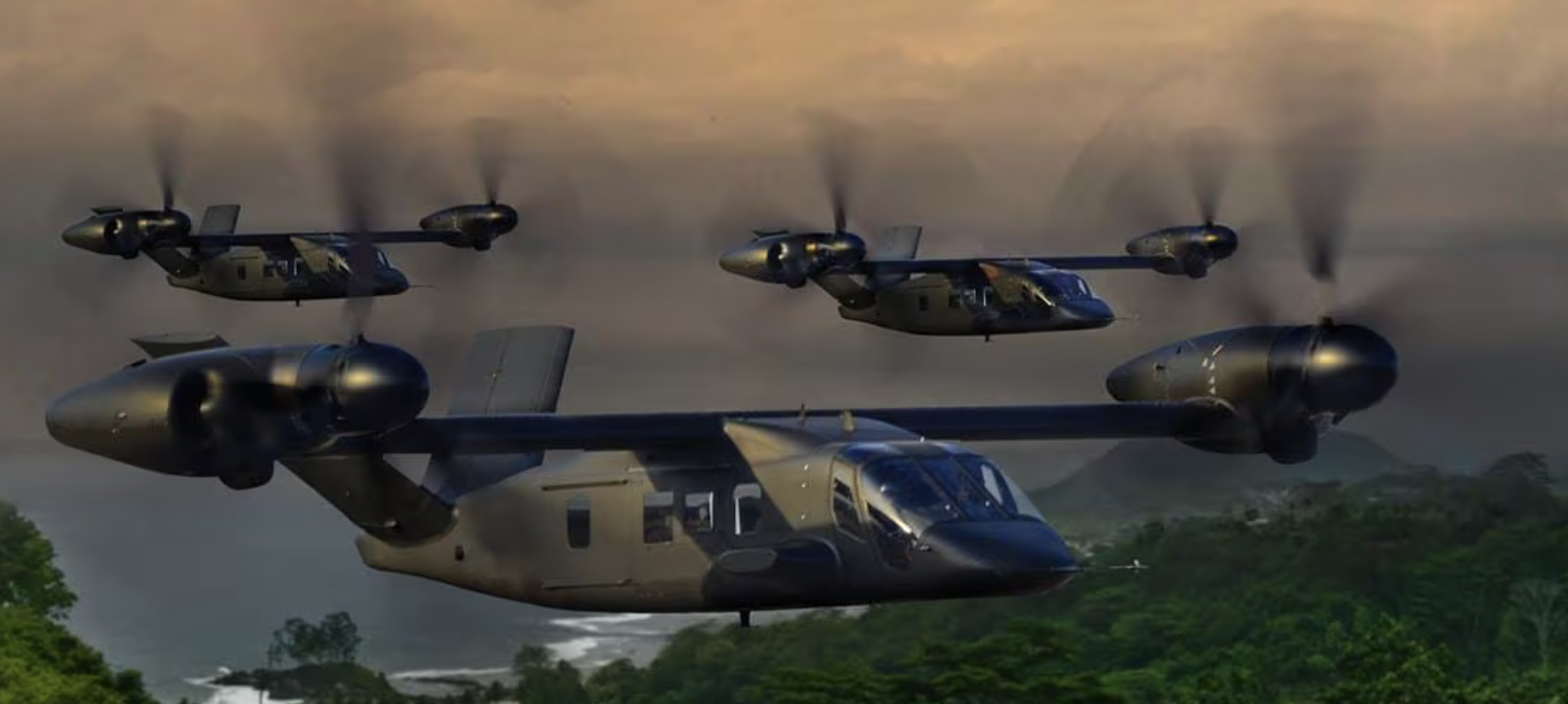
In the realm of U. S. Army aviation, the name of its aircraft means more than just plain marketing. It’s a battle standard and a bridge across generations.
As the Army readies its revolutionary MV-75 tiltrotor for service, the aircraft already carries an official mission-design series designation: MV for multi-mission vertical takeoff, and 75 to salute the Continental Army’s 1775 birth.
But every soldier knows the real question: What will the troops actually call it on the radio?
History supplies the answer, and it’s a story worth retelling, one that began with a General’s allergy to insect monikers and continues today as a living link between ancient warrior traditions and tomorrow’s long-range air assaults.
The naming tradition traces to the late 1940s and early 1950s, when Army aviation was shedding its experimental awkwardness. Early helicopters bore names like Hoverfly and Dragonfly, charming, perhaps, but hardly the stuff of intimidation.
Lt. Gen. Hamilton Howze, a visionary whose influence still echoes through Army Aviation, declared enough was enough. Helicopters weren’t delicate bugs; they were fast, agile platforms built for hit-and-fade tactics, rapid insertion, and the kind of mobility that turned battlefields into chessboards. Howze pushed for names drawn from Native American tribes —peoples whose history of endurance, lightning raids, and mastery of vast terrain perfectly mirrored the new machines’ promise.
The idea was enshrined in Army Regulation 70-28 (long since rescinded but never truly retired in spirit), which required U. S. Army aircraft to carry “Indian terms and names of American Indian tribes and chiefs.” The Bureau of Indian Affairs supplied vetted candidates, lending the process both authenticity and gravitas.
The logic was to match the tribe’s historical reputation to the aircraft’s mission. Mobile scouts? Light-cavalry names. Heavy lifters? Tribes known for resilience. Attack birds? Fierce raiders. The result became one of the most consistent and respected naming conventions in U.S. military history.
The AH-64 Apache evokes the Southwest warriors’ reputation for ferocity and precision strikes.
The UH-60 Black Hawk honors Sauk leader Black Hawk’s stubborn resistance and tactical brilliance.
The CH-47 Chinook draws on the rugged endurance of Pacific Northwest peoples.
The OH-58 Kiowa, CH-54 Tarhe (Skycrane), and UH-72 Lakota all follow the same drumbeat.
The stealthy RAH-66 Comanche and the short-lived ARH-70 Arapaho never reached full production, yet their names linger in aviation lore as perfect fits for agile reconnaissance and Plains-style mobility.
The MV-75 promises to fly roughly twice as fast and twice as far as legacy Black Hawks, shrugging off vast distances in the Indo-Pacific or any theater demanding dispersed operations. Think rapid theater-wide repositioning, deep insertion of assault or special operations forces, extraction under fire, and the ability to operate from austere or maritime forward bases.
In short, it needs a name that conveys “long-range raider.”
So should the name evoke endurance across impossible distances, mastery of difficult terrain, or deep-strike campaigning?
The name must roll off the tongue in a cockpit, short, punchy, unmistakable.
Several candidates rise naturally from this framework:
Cheyenne. The Cheyenne were legendary Plains horsemen, masters of rapid movement and far-reaching raids, exactly the metaphor for a tiltrotor that can leap continents and insert troops where the enemy least expects them. The name even carries prior Army pedigree from the canceled AH-56 Cheyenne attack helicopter. Why not lean into the sequel? Cheyenne II has a certain Hollywood swagger that the F-35’s Lightning II would appreciate.
Nez Perce. Under Chief Joseph, the Nez Perce conducted one of history’s most masterful fighting retreats, hundreds of miles across brutal terrain, repeatedly outmaneuvering larger forces while protecting noncombatants. Translate that to a tiltrotor that can bypass ground obstacles, reposition entire units across a theater in hours, and vanish before the enemy reacts. The name also broadens the honor beyond the overrepresented Plains and Southwest tribes, spotlighting Northwestern resilience. Radio call: “Nez Perce flight, feet wet.” It practically writes itself.
Seminole. The tribe’s prolonged campaigns in Florida’s swamps and hammocks showcased persistence, intimate knowledge of complex terrain, and adaptability in the face of overwhelming odds. For a platform designed to support littoral operations, launching from ships or coastal bases into contested inland zones, the association with Southeastern survival tactics lands perfectly. Units that train at Eglin or MacDill would feel an immediate resonance.
Crow. The Crow were renowned as scouts and long-range patrollers who often served as valuable allies to U.S. forces. The MV-75 will routinely ferry special operators deep into denied territory for reconnaissance and precision strikes.
Dakota. One of the three major Sioux divisions, kin to the existing UH-72 Lakota, with Great Plains mobility and the warrior societies of the Great Sioux War. It’s instantly recognizable, easy to brand, and slots neatly into the air-mobile cavalry narrative.
Wichita. A Southern Plains people known for fortified villages, strategic alliances, and resilience amid shifting regional powers, their history ties geographically to Texas and Oklahoma.
Pawnee. Short, radio-friendly, focused on Native warrior heritage.
The naming process is clearly underway. It might well be announced this week in Nashville at the Army Aviation Association’s AAAA Summit.
Stay tuned for an announcement that will echo for decades.