
Strategic Military Lessons from Ukraine and Israel
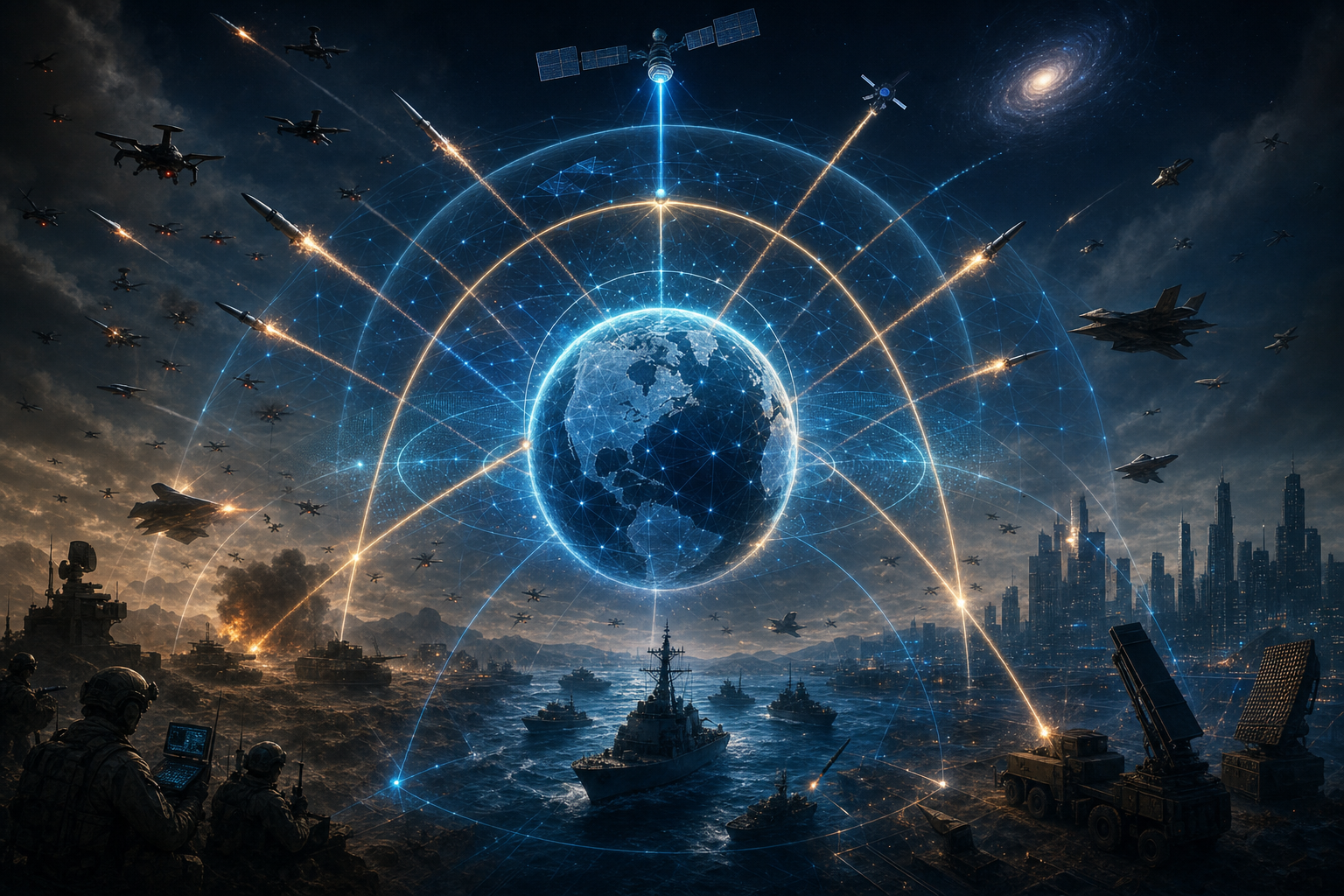
War is evolving from a competition between armed forces into a competition between complex national systems.
We are living in an international environment that is significantly less stable and predictable than in the past. Great-power competition, the return of large-scale conventional warfare, the expansion of regional conflicts, and the growing interdependence among military, economic, technological, and informational domains are reshaping the global security landscape.
Emerging technologies are transforming not only markets and societies but also the way power is exercised and warfare is conducted. Autonomous systems, drones, artificial intelligence, space capabilities, cyber operations, and digital networks now enable even relatively weak state and non-state actors to generate strategic effects once reserved exclusively for major powers.
At the same time, the wars in Ukraine and the Middle East demonstrate that technological superiority and traditional military power no longer automatically translate into political or strategic success. The United States, Russia, China, and other military powers are closely studying these conflicts because they have become operational laboratories in which new forms of warfare, decision-making architectures, and methods of integrating sensors, networks, and shooters are being tested.
Central to this transformation is what may be described as the emergence of a “kill web”, a networked architecture in which sensors, decision nodes, and shooters are dynamically and redundantly interconnected, replacing the linear, service-specific “kill chain” of the past. In a kill web, any sensor can cue any shooter through any available node, and the architecture degrades gracefully rather than catastrophically when individual links are lost. Programs such as the U.S. Army’s Integrated Battle Command System and the broader Golden Dome initiative for homeland and expeditionary missile defense illustrate how this networked logic is being built into operational architectures today, from the defense of Guam to layered protection of the homeland.
Nuclear deterrence, which served as the cornerstone of strategic stability throughout the Cold War, continues to play an essential role in preventing direct confrontation among nuclear powers. Yet it has proven insufficient to prevent conventional conflicts, proxy wars, cyber operations, disinformation campaigns, and persistent competition below the nuclear threshold.
The most important lesson may be that the nature of war has not changed, but its character is changing profoundly. The speed of operations, the diffusion of technology, and the ability of a wide range of actors to generate strategic effects at regional and global levels are transforming the way conflicts unfold.
This shift can usefully be understood as a move from crisis management to chaos management. Crisis management assumes a linear sequence, a discrete event, a decision point, a resolution, and it shaped Cold War planning and much of post-Cold War doctrine. Chaos management assumes instead a continuous, overlapping, and unpredictable flow of disruptions across domains, in which the objective is not to return to a prior equilibrium but to sustain the ability to operate, adapt, and generate effects under permanent uncertainty. Forces and societies organized around chaos management, rather than crisis management, will be better positioned for the environment described here.
Many contemporary wars have ended, or are moving toward conclusion, without a clear answer to the fundamental question: who actually won? This ambiguity reflects more than political complexity; it signals a deeper transformation in how military success and strategic outcomes are achieved.
Ukraine and the Middle East serve today as two major laboratories from which several strategic-military lessons can be drawn.
The first lesson is the return of firepower as the dominant factor on the battlefield. Ballistic missiles, cruise missiles, drones, loitering munitions, and long-range strike systems have extended the threat far beyond the front line. For the first time since World War II, not only military forces but also critical infrastructure, energy networks, industrial centers, and cities are continuously exposed to the direct effects of military operations.
The second lesson is that quantity has regained independent strategic value. For decades, Western armed forces prioritized increasingly sophisticated and expensive platforms. Recent conflicts demonstrate that large numbers of relatively inexpensive systems, employed in a coordinated manner, can generate significant operational and strategic effects. Mass has returned as a decisive factor, and quantity can once again become a form of quality.
This return of mass is best understood not as a rejection of quality but as the rise of intelligent mass, large numbers of networked, moderately capable autonomous and semi-autonomous systems operating in coordination, set against a strategy of exquisite scarcity, in which small numbers of exceptionally capable but irreplaceable platforms carry disproportionate risk when lost. Maritime autonomous systems illustrate the point concretely: uncrewed surface vessels such as the MARTAC T38 Devil Ray, Ocius’s Bluebottle, and comparable undersea and surface systems now entering allied navies are designed explicitly to generate persistent presence and distributed sensing at a cost and risk profile that exquisite platforms cannot match. Intelligent mass does not replace high-end capability; it changes the calculus of what must be risked to achieve an effect.
The third lesson concerns the growing difficulty of ground maneuver. The widespread availability of sensors, drones, commercial satellites, ISR capabilities, and long-range strike systems has made the battlefield increasingly transparent. What was once protected by distance or concealment can now be detected, tracked, and engaged with unprecedented speed. The threat has become increasingly spherical, emerging simultaneously from land, sea, air, space, and cyberspace.
This growing transparency of the battlefield is not confined to Ukraine and the Middle East. Allied forces in the Indo-Pacific are already adapting force design around the same problem. Discussions at the Sir Richard Williams Foundation’s 2026 seminars on exploiting strategic advantage have underscored how distributed ISR, autonomous logistics concepts such as the Australian Army’s “Camel Train” program, and layered sensor networks are being built specifically to operate inside an environment where concealment can no longer be assumed. The lesson, in other words, is being learned and applied well beyond the two conflicts most commonly studied.
The fourth lesson concerns air and missile defense. Recent conflicts demonstrate that no defensive system can guarantee absolute protection. The growing availability of drones, missiles, and saturation attacks presents enormous operational and economic challenges. The issue is no longer simply intercepting threats but doing so in a sustainable manner without allowing the cost of defense to exceed the cost of attack.
Programs designed around this cost-exchange problem are already underway. The U.S. Army’s Integrated Battle Command System, and exercises such as Operation Epic Fury, are testing precisely how a networked, sensor-agnostic air and missile defense architecture can manage saturation attacks without forcing every intercept to be a one-for-one trade against a cheaper threat. The lesson from Ukraine and the Middle East is reinforcing a shift already underway in allied planning: defense architectures must be judged as much by their cost-exchange ratio as by their raw interception performance.
The fifth lesson concerns the duration of conflict. The absence of decisive victories, the resilience of societies, external support to belligerents, and the increasing ability to absorb losses are transforming wars into prolonged contests of attrition. Modern conflicts tend to last longer, consume greater economic, industrial, and political resources, and generate geopolitical consequences that extend far beyond the battlefield.
Taken together, these lessons suggest that we are witnessing more than the evolution of military technologies. We are witnessing the emergence of a new way of war in which mass, networks, precision, resilience, and industrial capacity often matter more than technological superiority considered in isolation.
If these lessons describe the present, they likely represent only the initial phase of a much broader transformation.
The first emerging trend is the evolution of multidomain saturation attacks. Recent conflicts have already demonstrated the simultaneous employment of hundreds of drones and missiles against military targets and critical infrastructure. Within a few years, however, the combination of mass production, lower costs, artificial intelligence, and autonomous systems could enable attacks involving thousands of simultaneous vectors operating across space, air, sea, land, and cyberspace. In such an environment, the challenge will no longer be intercepting individual threats but managing the saturation of the entire defensive system.
The second trend concerns artificial intelligence. While AI currently supports analysis, target identification, and operational planning, future conflicts are likely to feature direct competition among autonomous and semi-autonomous systems. Human decision-makers will increasingly share the battlefield with algorithmic architectures capable of observing, learning, adapting, and reacting at speeds far beyond traditional decision cycles. We may witness the first form of warfare in which competing AI systems contest control of information, networks, the electromagnetic spectrum, and weapons systems themselves.
The third trend concerns the electromagnetic spectrum. Often perceived as an invisible and guaranteed resource, it is becoming one of the primary battlefields of the twenty-first century. Cellular networks, data links, satellite services, navigation systems, and timing architectures form the invisible backbone of both military operations and modern societies. In high-intensity conflict, these capabilities could be degraded, manipulated, or entirely denied, simultaneously affecting military effectiveness, critical infrastructure, and economic activity.
The fourth trend is the emergence of directed-energy weapons. High-energy lasers, high-power microwave systems, and related technologies could fundamentally alter the balance between offense and defense. Militarily, they offer promising solutions against drones, autonomous swarms, and low-cost threats. Civilian infrastructures, increasingly dependent on electronic systems, may also become vulnerable to these emerging forms of attack.
The fifth trend concerns the compression of decision time. Artificial intelligence, automation, and network integration will progressively reduce the interval between observation, decision, and action. Strategic competition will increasingly reward not simply those who possess the most advanced capabilities, but those capable of learning, adapting, and deciding faster. Cognitive speed may become the next great multiplier of strategic power.
All of this points to the need for a profound shift in mindset. The military successes observed in Ukraine or the Middle East should not generate excessive confidence. We have likely witnessed only the first manifestations of a much broader transformation. Military history teaches that revolutions in warfare do not unfold along linear trajectories, they occur through disruptive leaps that rapidly alter the character of conflict.
For this reason, future security will depend not only on the ability to strike an adversary but also on the ability to protect national networks, critical infrastructure, and society itself. The daily lives of citizens, energy systems, communications, transportation, logistics, and digital services have become integral components of national strategic power.
One of the most important lessons emerging from contemporary conflicts concerns the relationship between offensive and defensive capabilities. For decades, defensive systems were viewed primarily as enablers of offensive operations. Today, that relationship is changing fundamentally.
In an environment characterized by saturation attacks, multidomain threats, and growing infrastructure vulnerability, defense has become a prerequisite for generating offensive power. Without robust, resilient, and layered defenses, offensive potential may be degraded or neutralized before it can be effectively employed.
This reality requires a strategic rebalancing of investments between offensive and defensive capabilities. Traditional kinetic systems will remain essential, but they will not be sufficient on their own. Future defense architectures will increasingly rely on non-kinetic capabilities, electronic warfare, cyber defense, directed-energy systems, and control of the electromagnetic spectrum.
At the same time, military forces will need a more diversified portfolio of capabilities. Quality remains essential, but it is no longer enough. Future armed forces will require a mix of highly sophisticated systems alongside simpler, lower-cost, and more numerous capabilities capable of providing mass, persistence, and sustainability.
Another lesson once again becomes central: stockpiles matter. Munitions, missiles, electronic components, spare parts, and industrial replacement capacity have become strategic assets every bit as important as operational platforms. Modern wars are proving longer, more intense, and more demanding than many anticipated.
The new strategic reality presents both a national security imperative and a major industrial opportunity. The transformation of warfare extends beyond the armed forces into the broader ecosystems of innovation, research, manufacturing, finance, and venture capital.
The growing defense technology ecosystem, startups, private investors, and specialized funds, is becoming an increasingly important source of national innovation. Yet caution remains necessary. Not every rapidly developed wartime capability will prove operationally transformative, and the surge of investment into defense technologies carries the risk of inflated valuations and speculative bubbles.
Ultimately, the challenge of the coming decade is not simply to acquire new technologies. It is to build ecosystems capable of learning, adapting, and innovating faster than potential adversaries.
The strategic competition now underway will not be won solely by those possessing the most advanced technologies or the most powerful armed forces. It will be won by those political, economic, and social systems capable of understanding complexity, adapting rapidly to change, and continuing to function under pressure. National resilience is no longer a supporting capability. It has become the true center of gravity of geopolitical power in our century.
This resilience cannot be built nation by nation. The industrial, technological, and informational systems described above are increasingly transnational spanning the United States, Europe, and the Indo-Pacific and their coordination across allied industrial bases, from European programs will determine whether resilience can be generated at the scale and speed the coming decade demands. National resilience remains the center of gravity; allied resilience will determine whether that center of gravity holds.