
Time Is Not an Independent Variable: Why the Navy Must Hold the UJTS Award Date
Since Boeing withdrew the T-7A Red Hawk from the US Navy’s Undergraduate Jet Training System (UJTS) competition in June, critics have asked whether the service should slow down or reboot its search for a T-45 Goshawk replacement. Lockheed Martin had already pulled out in April, and in September Northrop Grumman left the Sierra Nevada Corporation (SNC) team. The field now consists of two teams: Textron Aviation Defense and Leonardo with the navalized M-346N, and SNC, now partnered with General Atomics Aeronautical Systems, with its clean-sheet Freedom Trainer.
The slowdown is no longer hypothetical. The Navy has twice extended the proposal deadline, first from June 29 to September 9 and now to October 30, and it has moved the planned contract award from March 2027 to June 30, 2027. Earlier, after industry pushback, it raised the price ceiling for engineering and manufacturing development from $1.75 billion to $2.7 billion. Each adjustment may be defensible on its own. Together they show how easily schedule becomes the variable that gives.
Some will argue that fewer bidders mean a weaker outcome and greater operational risk. The Textron team is offering a tailored, integrated training system already proven in global training while the SNC team is offering a developmental product for US Navy training. In reality, delaying UJTS in search of a “better” competition would lock in a more immediate risk: a fragile, aging T-45 fleet struggling to sustain the throughput of strike fighter pilots the Navy needs in the face of a peer competitor.
The Navy does have choices to make between Textron and SNC. But it no longer has the luxury of pretending that time is an independent variable.
A fragile backbone for a critical pipeline
The T-45 has been the backbone of Navy and Marine Corps jet training for more than three decades. At this year’s Sea-Air-Space symposium, then-outgoing Air Boss Vice Adm. Daniel Cheever summarized the aircraft as having “the original 1980s engine, original 1980s avionics, original 1980s computers.” That describes a pipeline resting on an aging, outdated platform with significant supply chain and maintenance challenges.
The fleet has been grounded repeatedly. In 2017, physiological episodes tied to its oxygen system led instructors to refuse to fly and forced the Navy to curtail operations while the system was redesigned. In April 2024, an in-flight engine malfunction prompted the Navy to pause all T-45C operations pending inspections. In March 2025, an engine malfunction at Naval Air Station Kingsville led the Navy to halt the entire T-45C fleet again while engineers investigated. And on May 26, 2026, a T-45C from Training Air Wing One crashed near Naval Air Station Meridian; both aviators ejected safely, and some of the wing’s training flights were paused.
Each of these events ripples through a training enterprise that is already stretched. Instructors, students, and maintainers divert time and effort to troubleshooting and recovery rather than flight hours and syllabus events.
The Navy has since launched a Service Life Extension Program (SLEP) for about 145 T-45s to keep the fleet viable as a bridge, and NAVAIR now plans to keep the Goshawk operational through 2040. Navy budget materials state bluntly that without timely SLEP inductions and replacement aircraft, the T-45 fleet will be unable to meet training requirements, with “a direct impact to the generation of tactical aviators.”
Relying indefinitely on a single point of failure in the strike pilot pipeline is a risk the Navy should not accept.
Backlogs, lost readiness, and a peer threat
The problem is not simply an old aircraft; it is what that aircraft’s fragility does to strike fighter readiness. In 2023, then-Rear Adm. Richard Brophy, Chief of Naval Air Training (CNATRA), noted that the pipeline had reached 100 percent of its strike requirement for the first time in years, but only after leadership repeatedly told students they were “at a bottleneck where there’s not enough airplanes for students.” Rear Adm. Gregory Harris, the Navy’s director for Air Warfare, acknowledged earlier that the Navy “did not pull in enough aviators” to meet its strike fighter requirement, and he cited chronic jet trainer readiness problems.
CNATRA has since worked hard to recover and, under Brophy, production reached 105 percent of requirement across every type-model-series. But when I spoke recently with his successor, Rear Adm. Max McCoy, he called that victory “pyrrhic.” The production stool still rests on three weak legs: not enough airplanes, not enough instructors, and too many students waiting in the pipeline at once. Instructors are flying seven days a week to hold the numbers. Fixing the front end has also exposed the next constraint, as the Fleet Replacement Squadrons (FRS) are now underproducing. Every T-45 stand-down and every year of recapitalization delay forces the same trade-off: cancel or compress training events now and try to recover them later in the FRS.
Training backlogs have broader readiness effects as well. USNI News reported late last year that the Navy still had more than 20,000 gaps at sea, with delays in training pipelines among the contributing factors. Aviation is not the only pipeline, but it is one where shortfalls are especially hard to recover from. Each strike fighter pilot represents years of investment, and every month lost upstream ripples through squadrons, carrier air wings, and ultimately deterrence posture.
Robbing Peter to pay Paul
When the T-45 can’t do its job, the Navy compensates by pushing more training into operational fleet aircraft. The FRS must expend more F/A-18E/F and F-35C flight hours to make up for skills that should have been learned in an advanced trainer. Vice Adm. (Ret.) Bill Westendorff, a former Commander of Naval Air Forces, has warned that unless UJTS reaches the fleet in sufficient numbers, the Navy will have to shift more training into the FRS and use fourth- and fifth-generation aircraft to fill the gap, adding stress to fighters already in high demand.
The F-35 enterprise is not well positioned to absorb that burden. A June 2026 Government Accountability Office report found that the F-35 fleet’s mission-capable rate fell from 67 percent in fiscal 2021 to 44 percent in fiscal 2025, and its full mission-capable rate fell from 38 percent to 25 percent, while sustainment costs are projected to remain well above affordability targets. Every additional training sortie flown in an F-35C or F/A-18E/F because the T-45 or its successor is unavailable consumes scarce aircraft hours that could otherwise support operational readiness.
Fewer bidders, but more urgency
Against that backdrop, what do the exits of Boeing, Lockheed, and now Northrop actually mean?
Boeing has been candid that the T-7A, already behind schedule for the Air Force, does not meet UJTS requirements, citing the long-cycle development needed to qualify its engine to Navy standards and the difficulty of reaching initial operational capability (IOC) quickly. Lockheed said its TF-50N would not be the best solution, citing the required level of US content among other reasons. Northrop, which joined SNC and General Atomics in February to bring production capacity to the Freedom Trainer, said it would focus its resources elsewhere; SNC and General Atomics say they are pressing ahead.
In the 2022 RFIs, the Navy made clear it needed a new jet trainer quickly, explicitly noting it needed around 200 aircraft and IOC less than three years after contract award. The final request for proposals calls for 216 aircraft. The Navy has since allowed more time from contract to IOC, with first production deliveries not expected until 2032, presumably to give a higher-risk clean-sheet design a chance to compete. The need has become no less compelling, and the original goal of fielding a T-45 replacement in 2028 is already gone.
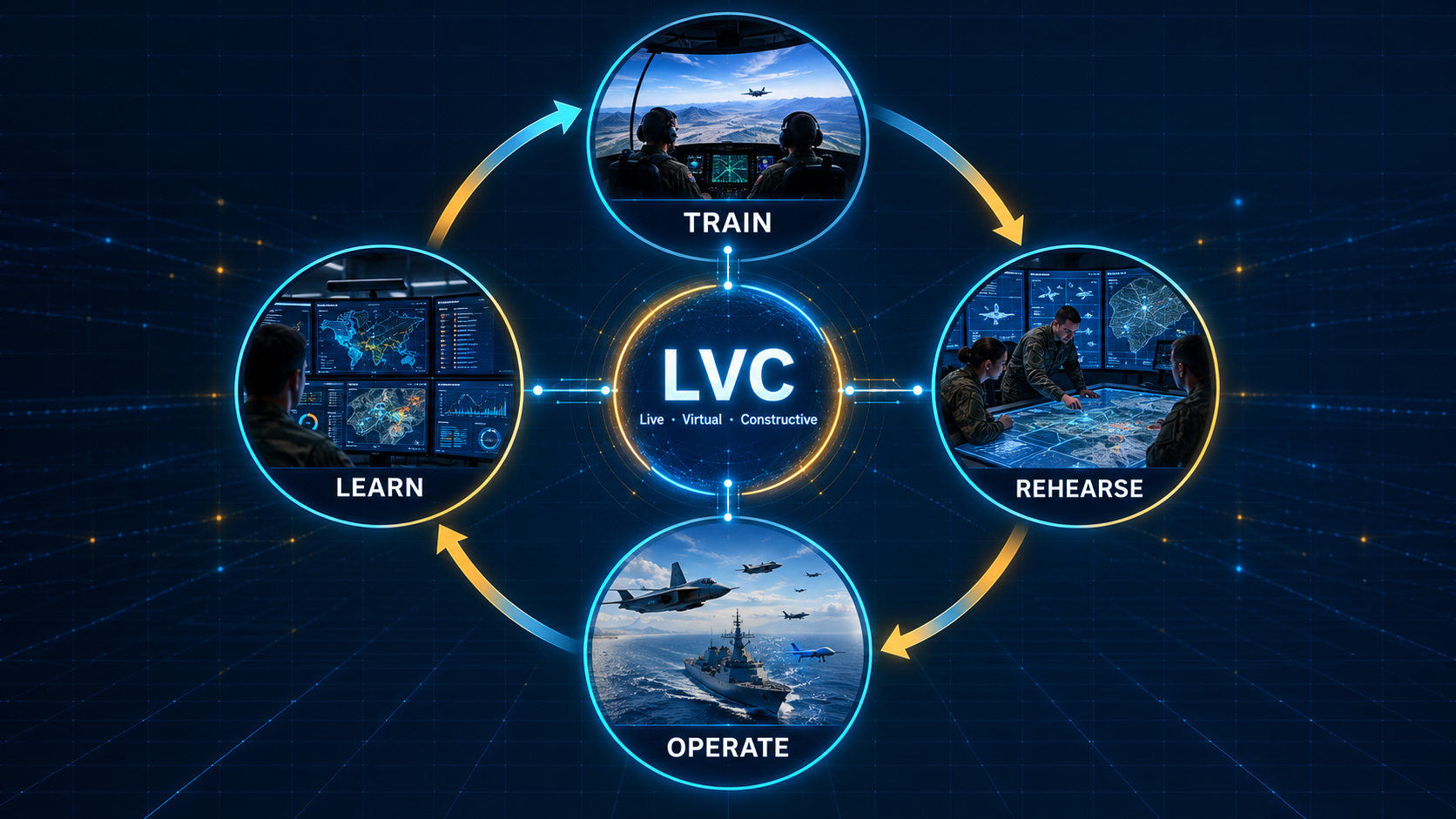
The Navy now has two approaches in front of it. Textron and Leonardo’s M-346N is based on a proven trainer already in service with multiple air forces and in production, with a track record training pilots for fifth-generation aircraft, and it focuses on the integration of embedded training and all elements on of a live, virtual, constructive (LVC) training model. Textron is calling it a “ready-now” solution from “an iconic American company,” while acknowledging that it is based on the original M-346 developed by Leonardo. The Beechcraft name ties a jet with more than 100 aircraft in service with Leonardo customers worldwide to a brand that has trained U.S. military pilots for generations, and Textron Aviation Defense builds the T-6 Texan II, the Navy’s own primary trainer, with more than 1,000 delivered. Between them, Textron and Leonardo have developed, produced, fielded, and supported military trainer aircraft and their training systems.
The industrial plan backs up the branding. If Textron wins the contract, it will assemble the M-346N at its east campus in Wichita, the historic home of the Beechcraft brand, investing more than $38 million to modernize over 50,000 square feet of existing factory space and creating about 100 direct manufacturing jobs. The partnership is a division of labor: Textron Aviation Defense president and CEO Travis Tyler has said Leonardo will continue to build the wing, fuselage and tail and develop the fly-by-wire and avionics software, while final assembly takes place in the United States. Honeywell has said it would add assembly of the F124-GA-200 engine at its Phoenix campus if the M-346N is selected, building more than 400 engines over 13 years. The approach reflects a broader pattern in allied defense cooperation, in which a mature, allied design is brought into the U.S. industrial base instead of a new platform being built from scratch. And the Textron offer centers on training rather than the airframe alone: the aircraft is one part of a system that includes simulators, adaptive AI-enabled instruction and a carrier-based live-virtual-constructive environment.
SNC’s Freedom Trainer is a clean-sheet design that its backers say is optimized for Navy carrier training needs, though the final request for proposals dropped the requirement for the trainer to fly field carrier landing practice to touchdown, and Northrop’s departure leaves SNC and General Atomics to carry the production case. The Navy will scrutinize both offers on performance, cost, schedule, and production risk. What it should not do is pause the program to wait for a hypothetical improved field of competitors. Losing time will only compound the downside.
The hidden risk of waiting
It is easy, in acquisition debates, to treat delay as a tenable option. In the case of UJTS, it is not. A pause would extend dependence on a T-45 fleet that already relies on SLEP to stay airworthy and has been grounded multiple times since 2017. It would prolong reliance on F-35s and Super Hornets to absorb training that belongs in a modern advanced trainer, and it would delay the shift to training methods designed around the systems and threats pilots will actually face.
UJTS is not a cosmetic upgrade. The Navy’s training system is meant to integrate live, virtual, and constructive environments, so students can learn to manage sensors, data links, and tactics in a way that more closely mirrors operational fifth-generation aircraft. This enhanced capability in initial training also has the potential to alleviate some of the current burden on the FRS which is causing the Navy’s present difficulties
Anyone who follows defense acquisition knows the Navy faces a pacing threat that is expanding its own aviation forces at speed. In that environment, the bottleneck is not just hulls or airframes; it is trained people. A trainer that arrives several years later than necessary means multiple cohorts of strike fighter pilots trained in a less relevant way or not trained on schedule at all.
Every month spent re-litigating the competition is a month the pipeline continues to depend on a fragile 1980s-era platform. Pedigree matters here because it bears on schedule risk, and schedule is the variable that has already given too often. With proposals due October 30, the Navy’s task is to hold the June 30, 2027 award date, resist further slips, and conduct a rigorous competition between Textron and SNC.
Fewer bidders do not necessarily mean a weaker competition.
A slower decision, however, would assuredly mean fewer, less prepared strike fighter pilots at the precise moment the Navy can least afford it.
Storyboard