
Russia’s War in Ukraine and Its Hybrid Campaign Against Moldova: Divergent Methods, Converging Failure
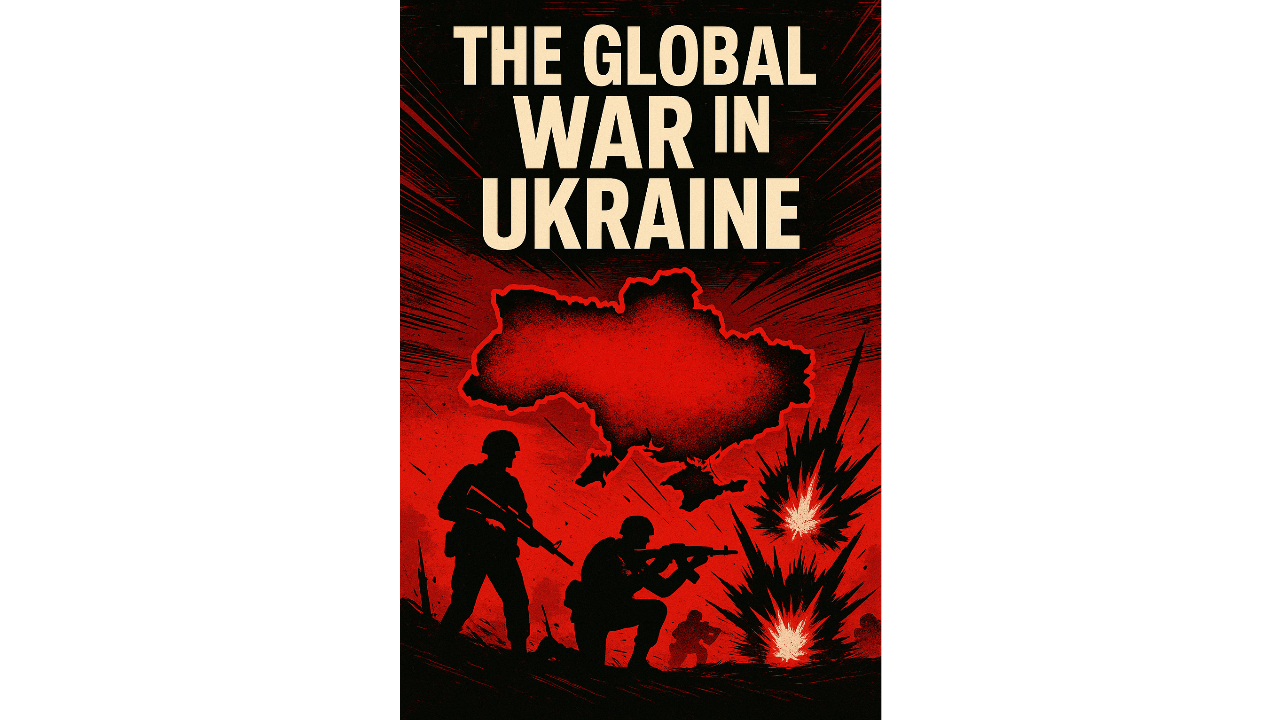
Russia’s full-scale invasion of Ukraine in February 2022 marked a decisive shift in European security. It ended any residual ambiguity about Moscow’s willingness to use large-scale conventional force to achieve its political objectives. Yet alongside this overt war, Russia has continued to employ a different toolkit against other neighboring states, most notably Moldova. In contrast to the armored thrusts toward Kyiv and the grinding attrition battle in eastern Ukraine, Russia’s approach to Moldova has relied on hybrid warfare: political subversion, energy coercion, disinformation, and the manipulation of frozen conflicts.
What is striking, however, is that despite the variation in methods, the strategic objective remains consistent. Moscow seeks to prevent the further integration of post-Soviet states into European and transatlantic structures, to preserve what it regards as a legitimate sphere of influence in the space between Russia and the West. Equally striking is the outcome. Just as Russia has failed to achieve its core political objectives in Ukraine, its hybrid campaign against Moldova is not succeeding. Indeed, Russian pressure appears to be accelerating precisely the alignment with Europe that Moscow seeks to prevent.
This pattern—coercive methods producing outcomes contrary to their intent has been a recurring feature of Russian strategy since 2014. As I have argued in earlier analytical work on the evolving character of European security, Moscow’s difficulty lies not only in capability, but in strategic conception. The Kremlin has consistently misread the political and social dynamics of the states it seeks to subordinate, treating them as passive objects of great-power competition rather than as societies with their own interests, identities, and capacity for strategic agency.
Two Approaches to Imperial Restoration
Russia’s divergent approaches to Ukraine and Moldova reflect both capability and opportunity. Ukraine, with its size, strategic depth, and symbolic importance, was viewed by the Kremlin as central to any restoration of a Russian sphere of influence. Moldova, by contrast, has been treated as a more permissive environment for indirect pressure, smaller, economically fragile, and historically more vulnerable to external manipulation.
The decision to invade Ukraine outright was shaped by a set of assumptions that proved catastrophically wrong: that Ukrainian resistance would collapse quickly, that Western unity would fracture under the pressure of economic interdependence with Russia, and that a rapid decapitation strike could install a compliant regime in Kyiv. None of these assumptions held. Ukraine fought back with remarkable effectiveness, drawing on a decade of military reform and a deep reservoir of national will. Western unity, rather than fracturing, consolidated into a sustained support architecture that has kept Ukraine in the field.
Instead, Russia has found itself in a protracted conflict that has severely degraded its conventional forces and exposed fundamental weaknesses in its military system—in logistics, in command and control, in equipment maintenance, and in the human capital required to sustain high-intensity operations. The contrast with pre-war expectations has been stark. Russia entered the campaign with assumptions shaped more by political ideology than by honest military assessment.
In Moldova, Russia has not attempted a similar military operation. Moldova is not contiguous with Russia, and any direct military intervention would require either a dramatic escalation through Ukrainian territory or a risky and logistically demanding operation beyond Russia’s current capacity. More fundamentally, the ongoing war in Ukraine has consumed the resources, the attention, and the political bandwidth necessary for additional military ventures. Moscow’s bandwidth for coercion has narrowed even as its ambitions have not.
Instead, Russia has relied on a hybrid strategy designed to exploit Moldova’s internal vulnerabilities. This includes leveraging the breakaway region of Transnistria, maintaining a small but symbolically important military presence there, and using it as a persistent source of pressure on the government in Chișinău. The strategy also involves economic tools, particularly energy dependency, and political influence operations aimed at shaping Moldovan domestic politics in ways favorable to Moscow.
Hybrid Warfare in Practice
Russia’s hybrid campaign in Moldova has operated across several interconnected domains, reflecting a playbook that Moscow has refined over decades across the post-Soviet space.
Energy coercion has been a central instrument. Moldova’s historical dependence on Russian natural gas provided Moscow with direct leverage to manipulate prices, disrupt supply, and generate political pressure on the government. Periodic energy crises have been used to undermine public confidence in pro-European governments and to fuel narratives that closer ties with Europe come at an unacceptable economic cost. The implicit message has been consistent: alignment with the West means vulnerability, while accommodation with Russia means reliability and affordable energy.
Political subversion has played a parallel role. Russia has supported pro-Russian political parties and figures, amplified their messaging through media and online platforms, and sought to mobilize public protest against pro-European governments. These operations aim to create the perception of widespread domestic opposition to European integration, even when public opinion surveys trend in the opposite direction. The goal is to manufacture the appearance of a divided polity and to impose a political cost on any government that pursues a clear pro-Western agenda.
Disinformation and information warfare have been deployed to shape the cognitive environment. Narratives portraying the European Union as economically exploitative, culturally threatening, or strategically unreliable are designed to erode public support for integration. At the same time, Russia presents itself as a familiar partner offering stability and predictable energy relationships. These narratives do not need to be believed by a majority of the population to be effective—they need only sustain sufficient doubt and division to complicate governance.
The frozen conflict in Transnistria remains a latent instrument of coercion. While Russia has avoided escalating this conflict into open warfare, the continued presence of Russian troops and the unresolved political status of the region serve as a constant reminder of Moldova’s vulnerability. The implicit threat is clear: deeper alignment with the West could trigger instability, and Moldova’s geographic position makes external rescue difficult to guarantee. Transnistria functions as a strategic mortgage on Moldova’s political future, held by Moscow as long as the relationship remains contested.
This toolkit is not novel. As I noted in earlier analysis of Russia’s broader intimidation campaign against European states, Russian hybrid operations since 2022 have included electoral interference, demonstrated in Romania and Moldova in 2024, cyberattacks on critical infrastructure, and disinformation campaigns targeting pro-Western governments across Eastern Europe. Moldova represents not an isolated case but a specific application of a broader strategic template.
Why the Strategy Is Failing
Despite the persistence and multi-dimensional character of Russia’s hybrid campaign, it has not achieved its intended effects. Several factors explain this outcome, and together they suggest that the Moldovan case is not an exception but an illustration of the structural limits of hybrid coercion as a strategic tool.
The most significant factor has been the transformative impact of Russia’s invasion of Ukraine. Rather than reinforcing perceptions of Russian power and strategic inevitability, the war has highlighted the risks of proximity to Moscow and the costs of dependence on Russian goodwill. For Moldovans, the invasion of a neighboring country, visible, loud, and only a short distance from their own border, has underscored with brutal clarity the stakes of sovereignty. The war has served as a strategic warning, not a deterrent to European integration. It has made the abstract arguments about European security concrete and immediate.
This dynamic mirrors what I have observed in the broader European context: Russian coercion has repeatedly strengthened rather than weakened the resolve of the states it targets. The Finnish and Swedish decisions to seek NATO membership, the Baltic states’ decades-long drive for energy independence from Russia, and Poland’s dramatic rearmament all reflect the same pattern. Pressure has produced alignment, not accommodation. Moldova is the most recent example of this recurring failure.
Moldova’s political leadership has also demonstrated greater coherence and strategic clarity than in earlier periods of its post-independence history. The government under President Maia Sandu has pursued a consistent pro-European agenda, secured EU candidate status, and taken concrete steps to reduce energy dependence on Russia. These are not merely rhetorical commitments. They represent a sustained effort to restructure Moldova’s external relationships in ways that reduce vulnerability to Russian coercion. The strategic direction has become clearer even as the economic and social challenges facing the country remain substantial.
The European Union has adapted its approach to match the urgency of the moment. Recognizing Moldova’s vulnerability and its strategic significance as a candidate state under pressure, the EU has increased financial assistance, supported energy diversification, and deepened institutional engagement. This external counterweight has helped to offset some of the pressure generated by Russian coercion. It has also reinforced the credibility of the European option, demonstrating to Moldovan citizens that the EU partnership carries tangible benefits and not merely abstract values.
Russia’s own limitations have become increasingly apparent as the war in Ukraine has continued. The demands of sustaining a large-scale conventional conflict have constrained Moscow’s ability to project influence elsewhere. Economic sanctions, military losses, and growing international isolation have reduced the resources available for sustained hybrid operations. Russia remains capable of disruption and of imposing costs. But its capacity to shape political outcomes in neighboring states has diminished. The gap between Moscow’s strategic ambitions and its actual instruments of power has widened.
Finally, Moldovan society has shown a degree of resilience that Russian planners appear to have underestimated. While divisions remain as they do in any democratic society, there is a growing recognition of the risks associated with Russian influence and a corresponding willingness to absorb short-term economic costs in exchange for long-term security and political alignment. This resilience is not simply a function of government messaging. It reflects a genuine societal reckoning with what proximity to Russia has meant in practice.
The Limits of Hybrid Coercion
The Moldovan case highlights the inherent limitations of hybrid warfare as a strategic tool. Hybrid methods are most effective when they operate in conditions of ambiguity, exploiting uncertainty about the attacker’s intentions and maintaining plausible deniability. They rely on the target state’s internal weaknesses and on the absence of a clear external counterweight capable of offsetting the coercive pressure.
In Moldova, these enabling conditions are eroding. The war in Ukraine has reduced ambiguity. It has made the nature of Russian intentions unmistakably visible. Russia’s 2022 invasion settled, for most observers in the region, the question of what Moscow means when it speaks of protecting Russian-speaking populations or safeguarding legitimate security interests. The EU’s increased engagement has provided a countervailing force, both economically and politically. And Moldova’s own reforms, while incomplete, are gradually strengthening state capacity and reducing the internal vulnerabilities that hybrid operations depend upon.
Hybrid warfare also lacks the decisive impact of conventional force. It can create friction, delay decision-making, impose costs on target governments, and complicate the political environment. But it struggles to compel strategic realignment when the target state is determined, externally supported, and operating within a clear strategic framework. Disruption is not the same as decision. Russia’s approach to Moldova reflects not a position of strength but of constraint, a second-best option pursued because the first-best option is unavailable.
There is a deeper issue here as well. Hybrid coercion depends on a political theory: that economic pressure, social division, and information manipulation will eventually produce a political elite willing to accommodate Russian demands. This theory has not been validated. In Moldova, as in Ukraine before 2022, Russian pressure has instead contributed to the consolidation of a political identity explicitly defined in opposition to Russian influence. Coercion has produced not accommodation but polarization and in a polarized environment, the pro-European pole has proven stronger than Moscow anticipated.
Implications for European Security Architecture
The contrast between Russia’s war in Ukraine and its hybrid campaign in Moldova offers broader insights into the evolving character of European security and into the kinds of investments and strategies that will determine whether the post-2022 security architecture holds.
The first insight concerns resilience. States that can withstand economic pressure, counter disinformation effectively, and maintain political cohesion are substantially less vulnerable to hybrid coercion. Building such resilience requires sustained investment, both domestically, in governance, in civil society, in diversified energy infrastructure, and through external partnerships that can provide resources and institutional support during periods of acute pressure. The Moldovan experience confirms that resilience is not simply a military concept. It encompasses the full spectrum of state capacity.
The second concerns the strategic role of the European Union. The EU’s ability to provide economic support, institutional integration, and political backing can offset the effects of Russian pressure in ways that no purely military instrument can replicate. In this sense, EU enlargement and partnership policies are not administrative processes or geopolitical gestures. They are strategic instruments, with tangible effects on the security calculus of states in Russia’s immediate neighborhood. The Moldovan case reinforces an argument I have made in the context of the broader Europeanization of alliance policy: that institutional integration and military deterrence are complements, not substitutes.
The third insight is that Russia’s toolkit is becoming less effective over time, even as Moscow’s ambitions remain unchanged. The failure to achieve decisive results in Ukraine, combined with limited success in Moldova, raises serious questions about the sustainability of Russia’s current approach to the post-Soviet space. Russia will continue to pose challenges through coercion, disruption, and the exploitation of internal divisions wherever they exist. But its capacity to shape strategic outcomes through these methods has narrowed.
The fourth concerns interconnectedness. Developments in Ukraine have direct and immediate implications for Moldova, just as instability in Moldova would have consequences for the broader security of Eastern Europe and for the EU’s southern flank. This interconnectedness argues for a comprehensive approach to Eastern European security that addresses both conventional and hybrid threats within a single strategic framework, rather than treating each country or each threat vector in isolation.
Conclusion: Coercion and Its Limits
Russia’s use of conventional force in Ukraine and hybrid warfare in Moldova represents two sides of the same strategic coin: a sustained effort to prevent the erosion of Moscow’s influence in the post-Soviet space and to preserve a sphere of subordinate states on Russia’s periphery.
Yet in both cases, the results have fallen short of the Kremlin’s objectives.
In Ukraine, the invasion has produced sustained resistance, Western military support on a scale that Moscow did not anticipate, and a Ukrainian national identity more consolidated and more explicitly Western-oriented than at any previous point in the country’s independence. In Moldova, hybrid pressure has failed to halt the country’s movement toward Europe and appears, on balance, to be accelerating it. The contrast between the methods obscures a deeper continuity in outcomes: Russia is struggling to translate coercion—whether conventional or hybrid—into lasting political gains.
This does not mean that Russia poses no threat. It remains capable of imposing costs, of exploiting divisions, and of creating conditions of instability that complicate governance and delay integration. The frozen conflict in Transnistria will not resolve itself, and Russian hybrid operations will continue to test Moldovan institutions. The war in Ukraine, whatever its eventual outcome, will leave a European security environment that requires sustained vigilance and sustained investment.
But the Moldovan case suggests something important about the limits of coercion as a substitute for legitimate political influence.
Hybrid warfare, while disruptive, is not decisive when confronted by resilient institutions, credible external support, and a clear strategic vision. In this sense, Russia’s campaign against Moldova is not simply a story of intimidation. It is a story of its limits, and of a small state’s capacity to resist.
For European security planners and for the analysts attempting to understand what the post-2022 order will look like, that is a story worth understanding carefully.