
Nacelle Modernization is the Key to CMV-22B Readiness
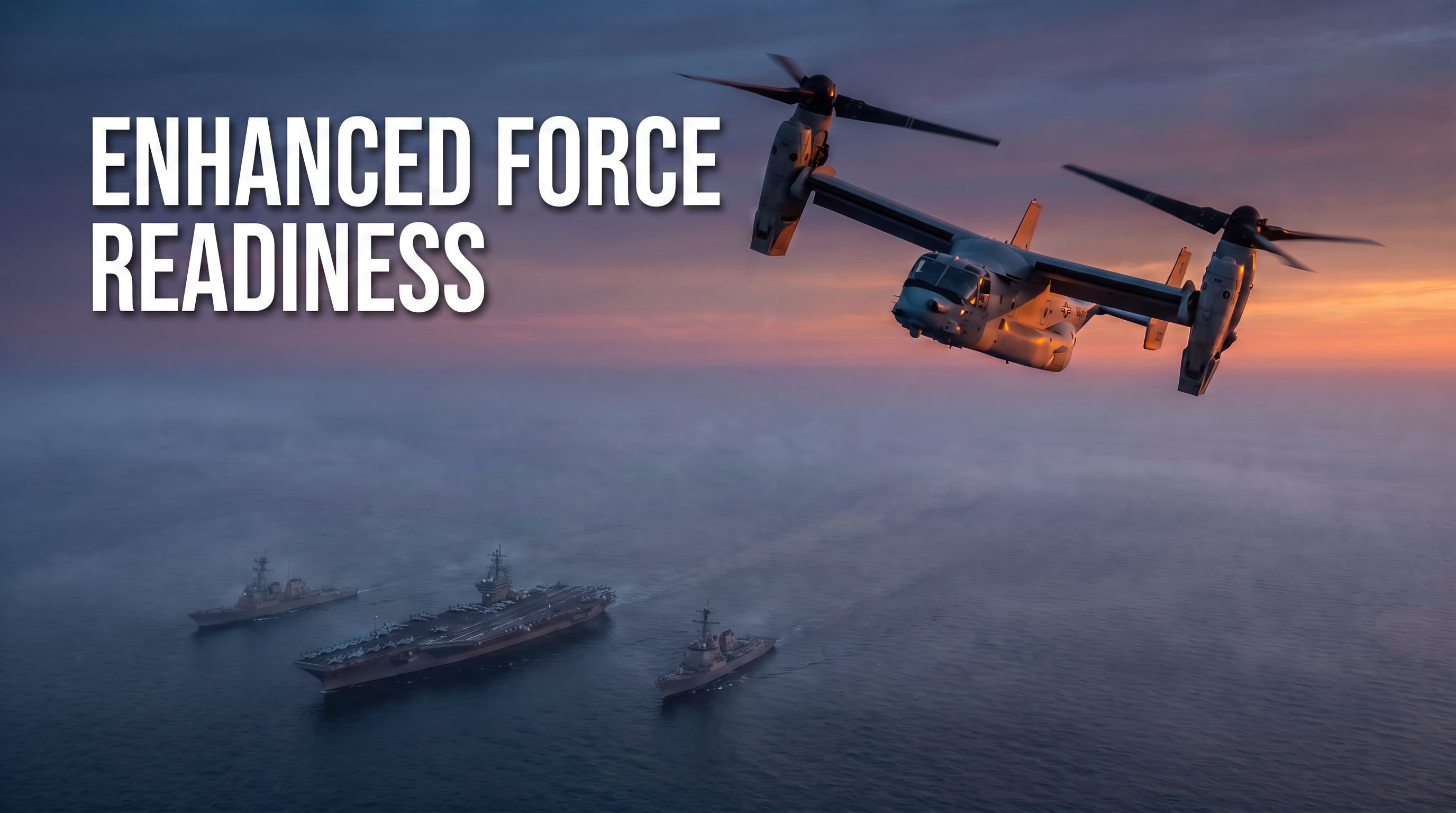
Naval power is often judged by the capabilities of the platforms at the tip of the spear, such as surface vessels, submarines and combat aircraft. Those assets enable the United States to project power in the maritime domain, but to bring their full capabilities to bear requires readiness — a key priority for Pentagon leadership.
The CMV-22B Osprey plays a vital logistics role in carrying out its carrier onboard delivery (COD) mission, where its speed, range and runway independence are essential capabilities, particularly in the vastness of the Indo-Pacific area of responsibility.
Keeping the carrier strike group supplied, connected and fully operational is the mission of this tilt-rotor aircraft; accordingly, it needs to be ready and relevant both now and for decades to come.
That’s why it’s so important to modernize the CMV-22B, specifically through the Nacelle Improvement program. Each nacelle houses a rotating engine, which allows the aircraft to transition between vertical and horizontal flight. The Nacelle Improvement program is a modernization effort that overhauls and simplifies the internal workings of the Osprey’s nacelles.
The condition of the nacelles directly affects the aircraft’s reliability, maintenance cycles and availability. According to estimates by the V-22 Joint Program Office (PMA-275), approximately 60 percent of maintenance work on V-22 Ospreys across the services is related to the nacelle area. With today’s technology and four decades of learning, investments in nacelle improvement will result in significantly increased aircraft availability and operational readiness.
The Nacelle Improvement program is not one single fix; it’s a package of upgrades designed to capitalize on decades of real-world operations. The specifics of the Nacelle Improvement program illustrate how comprehensive the modernization program is.
For example, the Nacelle Improvement program replaces the original wiring and junction boxes with a more efficient point-to-point wiring system. It reduces harness count by 43 percent and wire interface assemblies by 80 percent. Ribbon harnesses have been eliminated everywhere except in the conversion area and locking connectors have been made more robust.
Feedback from maintainers has been a vitally important factor that has helped shape the Nacelle Improvement program. Redesigned access panels, simplified routing for wiring and plumbing and parts that can be swapped out more efficiently all add up to less time on the ground.
The program also addresses conversion system reliability — the mechanical linkage and actuators that actually tilt the nacelle between helicopter and airplane modes. This system is unique to the V-22 and critical to its mission. Improvements here are focused on reducing the time between critical part changes.
The Nacelle Improvement program has already brought dramatic improvements to the Air Force fleet of CV-22 Ospreys. Air Force Special Operations Command (AFSOC) Commander Lt Gen Michael Conoly has said, “We’ve got 31 of the 51 aircraft that have had the nacelle improvement complete, and we are seeing very tangible positive gains on that: double-digit increases in mission readiness on those tails, and close to double-digit reduction in maintenance man-hours.”
The numbers tell the story. With more than 10,000 flight hours recorded on NI-modified CV-22 aircraft, the Air Force has saved more than 24,000 personnel hours in maintenance time. The Osprey fleet has seen a 10 percent readiness increase thanks to nacelle modernization — a truly impressive improvement.
The modernization of the nacelles also provides four times longer flight hours between critical part changes, and it’s reducing maintenance time by 75 percent. Through simplified wiring and strengthened structures, the program improves reliability, reduces downtime and extends service life.
These transformational effects of nacelle modernization provide both near-term readiness gains and long-term sustainment benefits in availability and affordability. This is an increasingly important consideration as the Navy plans to operate the CMV-22B well into the future.
Continued investment in nacelle improvement will have significant benefits: increased readiness, decreased maintenance and reduced pressure on the aviation workforce. Over time, this will positively influence the confidence of warfighters who depend on reliable logistics to carry out missions at sea. Taking a proactive approach to modernization shows a stable commitment to readiness, today and in the future.
There is also a broader signal at stake. Supporting CMV-22B modernization through the Nacelle Improvement program can demonstrate that the Navy and the Department of War are committed to learning from experience across all service branches and sustaining critical platforms for the long term.
The Nacelle Improvement program exemplifies a responsible approach to effective acquisition and sustainment. There is a strong case to be made for close collaboration between manufacturers, customers and maintainers to develop a collective understanding of how evolving systems create an avenue for responsible care of our fleet.
Congress, of course, has a role to play as well. Although last year’s budget reconciliation package authorized $160 million to accelerate the V-22 Osprey Nacelle Improvement program, uninterrupted funding from the legislative branch can help prevent the stop-start cycles that lead to delays and inflated costs.
The success of the CMV-22B Nacelle Improvement program will be measured by its impact on the fleet: uninterrupted missions, rapid transfer of key personnel, parts, and maintainers, and synchronized fleet operations. The Nacelle Improvement program is an essential part of the effort to ensure this success continues.
The path ahead is clear, and it’s one that the Air Force has already trailblazed. The Nacelle Improvement program is essential not just to the Osprey’s readiness, but indeed to the readiness of the entire fleet.
About the Author
Capt. Christopher “Chet” Misner, USN(Ret) is a former naval rotary-wing aviator. He has commanded a naval air station and an H-60 squadron. The views expressed are his own and do not reflect those of the U.S. government.
The opinions expressed in this editorial do not purport to reflect the opinions or views of the Tailhook Association or its members.
This article was first published on The Hook in the Summer 2026 edition and is republished with the author’s permission.
Navy’s CMV-22B Osprey Needs Nacelle Improvements to Meet Readiness Demands