
Influence Without Occupation: A Future U.S. Strategy for Iraq
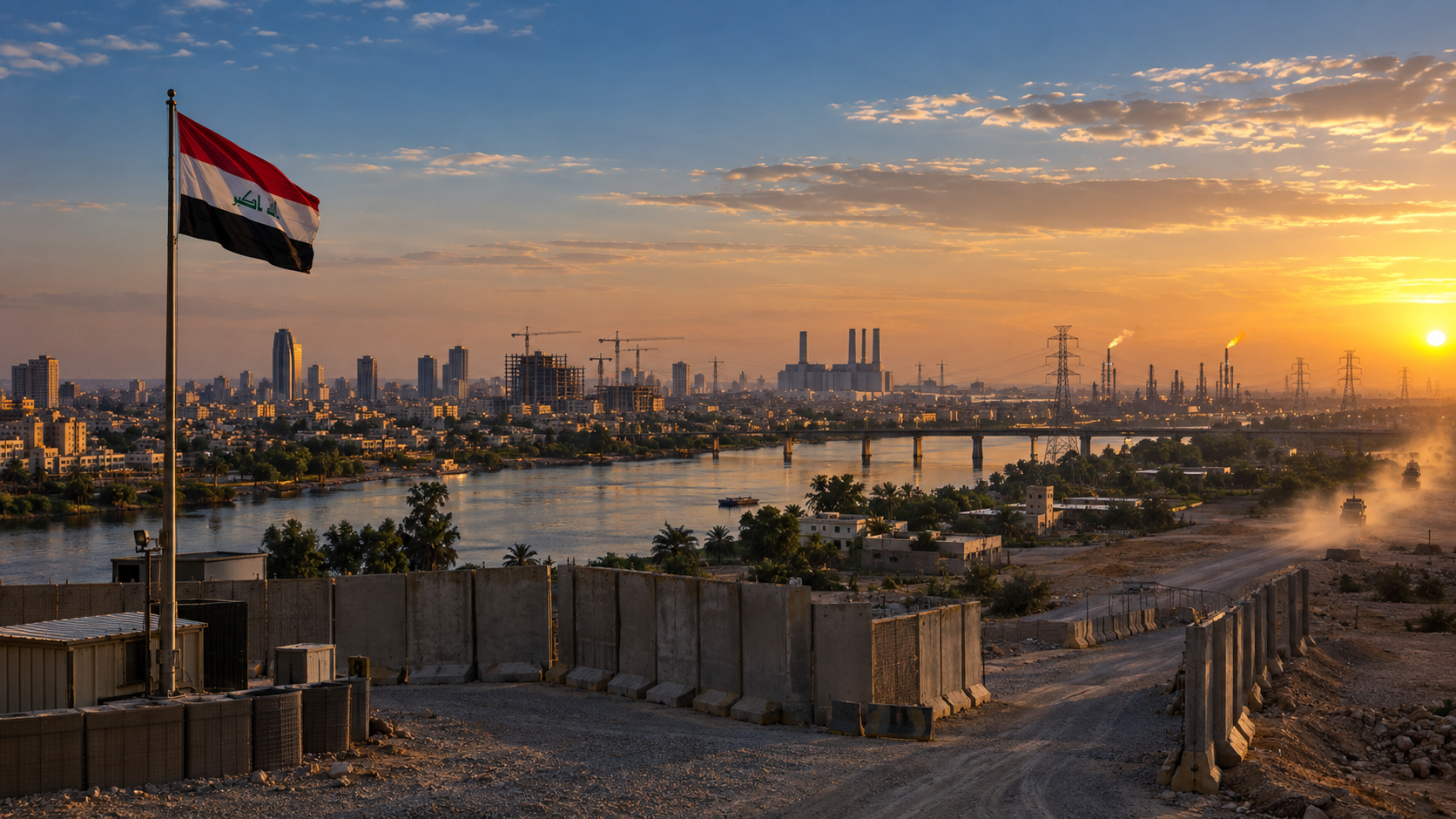
On 30 September 2026, Ali Al-Zaidi, Iraq’s prime minister and commander-in-chief of the armed forces, marked Sovereignty Day and the conclusion of the mission of the international coalition forces to combat the Islamic State in Iraq.
1 October 2026 is “the day after” and is an opportunity for Washington to redefine the relationship rather than end it. America’s challenge will be transitioning from control to influence.
Now that the troops are gone, direct leverage will diminish. Washington will retain other instruments of power, including the U.S. dollar-based financial system, sanctions, intelligence sharing, and defense sales, but will Washington use those instruments to influence Iraqi decisions or to control them?
The latter approach will probably fail.
The post-withdrawal relationship should become less securitized and more strategic.
Iraq needs American and Western technology and investment in infrastructure and the energy sector. Commercial relationships, rather than military presence, are likely to be a more durable source of American influence, consistent with the 2008 U.S.–Iraq Strategic Framework Agreement, which envisioned cooperation beyond defense into diplomacy, trade, and education.
American financial power will remain after the troops leave. Iraq’s crude oil export revenues flow through the dollar system and are held in a Central Bank of Iraq account at the U.S. Federal Reserve Bank of New York, and Iraqi banks depend on dollar access. Washington demonstrated this leverage in 2026 by restricting physical-dollar shipments to Iraq, citing Iran-backed militias and illicit finance. Will Washington stop dollar shipments if the militias keep their weapons and oil exports have not rebounded from the closure of the Strait of Hormuz?
Protecting the U.S. dollar system differs from using it to dictate Iraqi political decisions.
A smarter policy would rely on conditional access: Iraqi oil revenues would remain Iraqi revenues, but banks seeking access to international finance would need to meet industry standards on anti-money laundering, transparency, and sanctions compliance. The thorniest issue is likely to be Iraq’s Iran-aligned militias, known by many Iraqis as “the resistance.”
Washington should support the principle that all armed groups answer to the civilian government, while avoiding demands for the immediate disarmament of every militia.
Many militias are more than armed groups; they have parliamentary representation, businesses, and social service networks, and are part of the government’s Popular Mobilization Forces (PMF). Dismantling the militias simultaneously risks civil conflict, political fragmentation, further economic dislocation, and Iranian intervention.
1 October should be a political milestone – the start of the process toward genuine and irreversible state control of armed groups – but with Baghdad setting the pace.
The objective should be transformation rather than immediate demobilization. Iraqis remember the consequences of America’s heedless decision in 2003 to abruptly disband Iraq’s army: many former soldiers joined the resistance to the U.S.-led coalition, and the some former officers helped organize the Islamic State of Iraq. Militia members who accept Baghdad’s authority could join the military or police, while independent chains of command, unauthorized operations, and heavy weapons are phased out.
Several militias proposed placing heavy weapons into storage, and Baghdad rejected that offer. A separate proposal would demobilize the Kurdish militia, the Peshmerga, though Washington is unlikely to support it, since Iraq’s constitution permits the Kurdish Regional Government to organize its own internal security forces.
The armed Kurds were Washington’s “thumb on the scale” in Iraq, but the Pentagon has proposed slashing funding for Kurdish security forces for 2027. The withdrawal of the U.S. troops may heighten anxieties in Iraqi Kurdistan about the aims of the Iran-aligned militias and the possibility of a resurgence of the Islamic State, though the militias’ target may be the Iranian Kurdish separatist groups sheltering in Iraq.
A suspected Iranian drone struck a separatist camp in Erbil, Iraqi Kurdistan on the evening of 30 September, and the next day Al-Taakhi, the Arabic-language newspaper of the Kurdistan Democratic Party (KDP), the party led by the Barzani family, revived a statement attributed to Mullah Mustafa Barzani from the 1960s: “I am a Kurdish Iraqi…and we did not ask to separate from Iraq.” Masoud Barzani, KDP leader and former president of Iraqi Kurdistan, may have been reminding Baghdad it had an obligation to protect all of Iraq. Al-Zaidi is rid of one headache – foreign forces on Iraqi soil – but is inheriting increased anxiety in Erbil and tension with Tehran if the Iranian Kurdish separatists are not brought to heel.
Al-Zaidi has a plan to disarm and disband the militias, starting on 1 October 2026 and ending by 30 June 2027, a date Washington supports, though the militias want to wait until the end of 2027 to disarm. (And “disarm and disband” is a misnomer as many of the formations will just get new uniforms when they move into the PMF.)
On the day of America’s departure, Iraq’s cabinet approved and referred to parliament legislation to “legitimise the PMF as a permanent national security institution by providing benefits that would position them on equal footing with other state military institutions.” The Coordination Framework, “the largest parliamentary bloc…an alliance of Iran-aligned factions,” will scrutinize the legislation.
In late September 2026, a spokesman for Kata’ib Sayyid al-Shuhada, a member faction of the Coordination Framework, declared a forced disarmament by Baghdad “will not happen” and “The government is an outcome we helped produce.” On 1 October, however, the group released a statement thanking “our brother Ali Al-Zaidi” and noting his efforts “which contributed to sparing Iraq from Shiite-Shiite infighting and preventing the country from sliding into internal strife…We declare our commitment to the agreement reached between the concerned parties and to the points raised in the speech by the Commander-in-Chief of the Iraqi Armed Forces, provided that the other party does not violate its obligations under the signed terms [emphasis not in the original statement].” An August 2026 statement by the group characterized the weapons handover as a reorganization instead of a surrender or disarmament.
The nine-month timeline assumes the ongoing U.S.-Israel war on Iran doesn’t cause more instability in the region, that the militias don’t delay the parliament’s consideration of the PMF legislation to fortify their positions, and that militia supporters in parliament don’t move for a vote of no confidence in Al-Zaidi if the central government won’t make the accommodations they seek.
As part of the deal, during a 90-day period, the militias would not launch any attacks and would be assured that they would not be attacked by U.S. forces. (And by “U.S. forces” the militias likely also mean Israel, so Washington may have to restrain its ally, though that probably will not be possible, or desired, by American officials.) This is the key issue for the Americans because militias have attacked U.S. facilities in Iraq over six hundred times since the U.S. and Israel escalated the war on Iran in February 2026. (In January 2024, an Iraqi militia attacked the Tower 22 base in Jordan, killing three soldiers and injuring forty-seven, and supporters of U.S. intervention in the area will use this incident to keep the pressure on Baghdad.)
Also important to Washington is avoiding clashes between Iraq and Saudi Arabia since the kingdom already has its hands full with Yemen’s Ansarallah. A drone attack launched from Iraq crippled the kingdom’s East–West Crude Oil Pipeline (“Petroline”) in September 2026. (Iran-directed covert units in Iraq also attacked Kuwait and the United Arab Emirates.) The Saudi and Iraqi governments met to ensure that no further incidents occur, and the incident no doubt underlined to Baghdad that its problem with Iranian infiltration is also a regional problem.
The militias’ justification for keeping their weapons was the presence of foreign troops in Iraq. The U.S. troops have departed (many of them to Jordan) and Turkey and Iraq have agreed that Turkish troops will evacuate two bases in northern Iraq, provided the Kurdistan Workers’ Party militia is disarmed. Now that the Americans are gone and the Turks are headed for the exit, the militias will need a new excuse to keep their weapons. This may give Al-Zaidi the opportunity to address the Iraqi people and point out that it was the militias that joined the U.S.-Israel war against Iran and made Iraq the only country “where all sides — the United States, Israel, and Iran and its proxies — conducted military operations,” which could undercut the militias’ claims to be safeguarding Iraqi sovereignty, and highlight Al-Zaidi’s intent to strengthen state institutions by bringing the militias under Baghdad’s authority.
Washington should also avoid demanding that Iraq choose between the United States and Iran. Iraq and Iran share a 1,400-kilometer border, so geography and history make a substantial relationship with Iran inevitable. The U.S. administration’s “Operation Economic Outcast” targets Iran but will damage Iraq, and Iraq’s Foreign Minister, Fuad Hussein, observed, “We became a victim of this war.”
An Iraqi politician can be pro-Iran. Iraq can trade with Iran. Iraq can buy Iranian electricity. None of those developments threaten American interests; they reflect Washington’s long-standing grievances with Tehran rather than a question of Iraqi sovereignty – a principle Washington has historically honored more in the breach than in the observance.
The relevant distinction is whether Iranian influence operates through Iraqi politics or through an Iranian-backed parallel military structure inside Iraq. A mature U.S. approach would tolerate the former while opposing Iranian influence over Iraqi armed groups and critical infrastructure such as Iraq’s mobile communications network.
American financial leverage can also be used to strengthen, rather than undermine, Iraqi sovereignty.
Rather than ordering Baghdad to disarm the militias or face punishment, Washington could link American cooperation to measurable progress in Iraqi institutional performance. Greater control over armed groups, stronger banking regulation, and stronger enforcement against sanctions evasion could be linked to increased American investment, defense cooperation, and access to financial markets.
Washington policymakers will be tempted to maintain control, particularly after US$3 trillion in spending and about 4,500 dead troops, if Iraqi decisions conflict with U.S. desires. But external pressure rarely works in Iraqi politics, where influence comes through incentives, alignment of interests, and respect for internal balances, not coercion.
Iraq 2026 is not Iraq 2011. Iraqi political elites increasingly view a strategic partnership with the United States as important, and see investment, technology, and shared economic growth as more important than security cooperation alone.
America’s misadventure in Mesopotamia should have taught it that exercising full control over Iraq is difficult. But if it’s any consolation, King Faisal I of Iraq (1921-1933) lamented, “In this regard and with sadness, I have to say that it is my belief there is no Iraqi people inside Iraq…There are no common grounds between them.”
Before the 2003 invasion, U.S. President George W. Bush declared, “Freed from the weight of oppression, Iraq’s people will be able to share in the progress and prosperity of our time.” It is time to follow through on these fine words and make a relationship with the U.S. attractive on its own terms, rather than conditioning Iraqi sovereignty on deference to Washington.
Washington should not waste time trying to eradicate every trace of Iranian influence in Iraq. A realistic objective is an Iraq that maintains relations with both Washington and Tehran while retaining sovereignty over its security decisions and is no longer a proxy battlefield for the United States, Israel, and Iran. This will be a difficult adjustment for American policymakers snared in the “meddler’s trap,” but less overt control may be more effective for preserving American influence.
Prime Minister Al-Zaidi met U.S. President Donald Trump in Washington, D.C., in July 2026, and the visit featured the signing and announcement of over fifty agreements and memoranda of understanding between the Iraqi government and U.S. businesses, collectively totaling more than US$60 billion. Though the U.S. will insist that the disarming and disbanding of the militias proceed expeditiously, it will also consider the potential economic consequences for U.S. businesses of punitive action against Baghdad.
Iraq is aligning with U.S. interests and has begun making progress on reducing corruption and upholding the rule of law. It is a strategic opportunity for America that will only be realized if committed leaders in Baghdad and Washington move stedily.
James Durso (james_durso) is a regular commentator on foreign policy and national security matters. Mr. Durso served in the U.S. Navy for 20 years and has worked in Kuwait, Saudi Arabia, and Iraq.