
Present at the Creation of the Kill Web: From Manazir’s Navy to Taiwan’s Turn
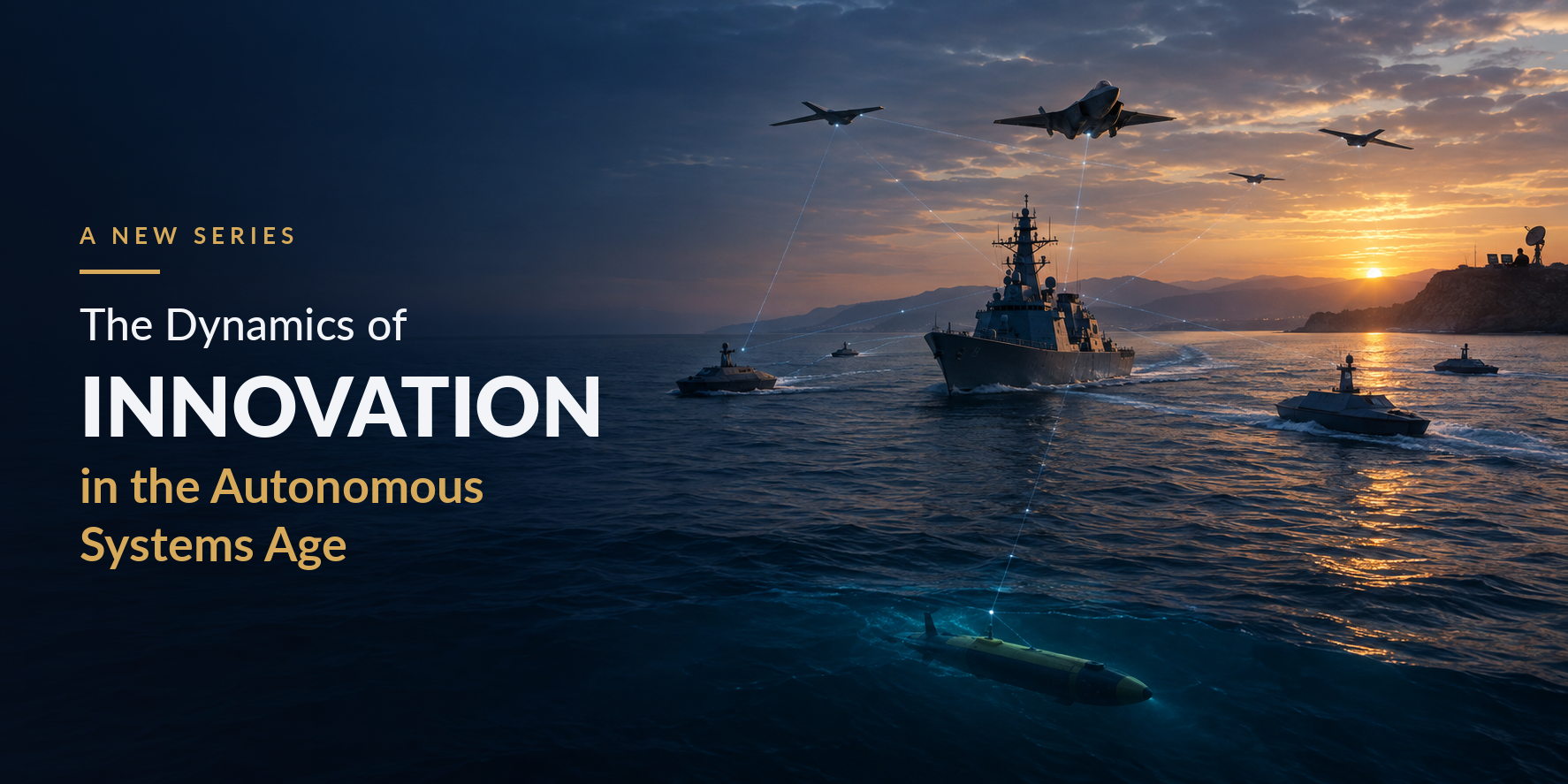
On 3 November, Taiwan’s Ministry of National Defense told its legislature that the force is moving from a linear “kill chain” to a multi-node, interconnected “kill web.” For those of us who have been writing about the kill web for a decade, the sentence matters less as vocabulary than as a sign of where an idea has travelled: from a Navy briefing room and a Canberra seminar in 2016 to the written doctrine of a front-line democracy.
I have written about being present at the ending of the Cold War in Europe. This is the other side of that experience: being present at the creation of a way of fighting, and watching it be adopted by those who need it most. Dean Acheson gave that phrase to his memoir of building the postwar order. The kill web is a more modest creation, but it is also a founding act of a kind, because it changes how forces are organised, how commanders trust each other and how allies fit together.
The creation: a Navy admiral and a Canberra seminar
In December 2015, Ed Timperlake and I interviewed Rear Admiral Manazir, then a senior Navy air warfare leader, and framed the decade ahead as one of global agility in an extended battlespace, not a continuation of the land-centric counterinsurgency years (Second Line of Defense, 15 December 2015). We tied it to our book, Rebuilding American Military Power in the Pacific: A 21st Century Strategy, and its core idea that “no platform fights alone”: key platforms act as nodes in a honeycomb force, scalable and linked across an extended battlespace, with allies built into the structure from the start.
Ten months later, after Manazir became Deputy Chief of Naval Operations for Warfare Systems, we interviewed him again (Second Line of Defense, 13 October 2016). He had just returned from the Williams Foundation seminar in Canberra on air-sea integration, where he had highlighted the kill web approach. Our own summary of his point put the distinction plainly: the kill chain is a linear concept about connecting assets to deliver fire; the kill web is about distributed operations and the ability of force packages to deliver dominance in an area of interest, built so that forces work together through multiple networks instead of one large network with a single point of failure.
The interview contains most of what Taiwan’s report now says:
- Command ubiquitous, not centralized. Manazir called the hierarchical air operations centre an artifact of sixteen years of ground war under complete air superiority, and said that as the kill web is built, “C2 is ubiquitous across the kill web.”
- Fight when the network is cut. If a network that shares vast information is severed, “we still need to be able to fight independently,” which requires persistent training and mission orders so the fleet can operate when networks are disrupted.
- Capability over platform. The move was “from a platform-centric mindset to a capability-centric mindset.” The F-35 mattered for how it empowers the distributed network.
- Rules that keep up. Rules of engagement have to keep pace with the technology, and he spoke of an adversary “snipping parts of the network.”
- Man and machine. Use the machine for observe and orient, and optimize the human for decide and act, across manned and unmanned and kinetic and non-kinetic systems.
- Integration is engineered. The Navy’s NIFC-CA effort connected proprietary systems built to different standards, which meant engineering the network between the nodes. He argued for open architectures so systems are “integrateable” from the ground up.
He also said the allies were on the same page, and that allies could “function as each other’s wingman.” That has aged well.
The Taiwan development
According to Central News Agency, Taiwan’s Ministry of National Defense delivered a written report to the Legislative Yuan on the evening of 3 November, ahead of Defense Minister Wellington Koo’s briefing to the Foreign Affairs and National Defense Committee the next day. It says the force is shifting how it connects sensors to shooters, from a linear kill chain to a multi-node, interconnected kill web.
The report frames joint-force transformation around four terms: multi-domain, unmanned, distributed and intelligent. Its distributed section is the doctrinal core. Citing the risks of precision strike, jamming, cyberattack and damage to command nodes, the ministry commits to mission command, decentralized operations and layered redundancy, supported by mobile command and control, backup communications, dispersed deployment and rapid maneuver. Units at every level are to carry out missions on their own, under delegated authority, when information is limited or communications are cut. A “multi-node, substitutable” command-and-fire architecture is meant to limit the effect of any single node’s failure.
On the multi-domain side, the report links ISR, command and control, air defence, electromagnetic warfare and precision fires across army, navy, air force, space, cyber and unmanned systems, with a common operational picture. Unmanned systems are now part of planning for every phase of joint defense operations, including reconnaissance, fire guidance, battlefield management, joint fires and logistics resupply, with counter-drone protection, swarm attack and manned–unmanned teaming as development aims.
The threat section sets the context. The report describes PLA live-fire activity and routine harassment around the Strait and China Coast Guard formations entering restricted waters near Taiwan’s outlying islands. It also records a first: in June, a Chinese maritime patrol vessel, a type distinct from coast guard ships, carried out “special enforcement” in waters east of Taiwan, which the ministry reads as an attempt to build an impression of de facto Chinese jurisdiction over the island.
What Taiwan’s report shows about the idea
Set side by side, the 2016 interview and the 2026 report describe the same architecture. What has changed is who is writing it down, and under what pressure.
| Design element | Manazir, October 2016 | Taiwan MND report, November 2026 |
| Core shift | Kill chain is linear; kill web is distributed operations through multiple networks | From linear kill chain to multi-node, interconnected kill web |
| Command | C2 ubiquitous across the web; hierarchical operations centre called an artifact | Multi-node, substitutable command-and-fire architecture; mobile C2 |
| When the network breaks | Fight independently; mission orders; persistent training | Units carry out missions on their own under delegated mission authority |
| Unmanned role | Manned and unmanned teaming; machine for observe and orient | Unmanned in every phase, including fire guidance and logistics resupply |
| Integration | Open architectures; engineer the network between proprietary nodes | Common operational picture; cross-domain fire coordination |
Three points follow from the comparison.
First, the hard part has not changed. The important commitment in the Taiwan report is not the phrase but the institutional choices behind it: mission command, delegated authority and substitutable nodes. A kill web is only as resilient as the willingness of commanders to let lower echelons act when the network breaks. Manazir said the same thing a decade ago when he spoke of mission orders and training. Technology is the easier half.
Second, Taiwan adds sustainment. Folding unmanned systems into logistics resupply as well as strike suggests a force thinking about how to sustain distributed operations, not only start them. A web of shooters and sensors that cannot be resupplied is brittle in its own way.
Third, the pressure is different. In 2016 the argument was about maintaining advantage in a contested but still permissive environment. Taiwan’s report assumes its command nodes will be jammed, hacked or struck, and designs for it. That is the same logic as the kill web, but applied by a force that expects to be the first target, which makes it a sharper test of whether the concept works.
One idea, three theaters
The three stories of the past week share a thread. South Korea, Japan and Australia are moving toward nuclear-powered submarines, which in kill web terms are long-endurance nodes that shoot, sense and carry other nodes. In the North Atlantic, the reported European planning around a thinner Royal Navy turns on Atlantic Bastion, a distributed sensor network that still needs crewed platforms to prosecute contacts. And Taiwan has written the principle into its doctrine: no single node may be indispensable, and every echelon must be able to fight when the network is cut.
In each case the lesson of the kill web is the one Manazir stated in 2016. The web is not a technology. It is an architecture of nodes, networks, delegated authority and allied contribution, and it succeeds or fails on whether the institutions behind it will let it operate as designed. Alliances in this picture are not a layer added on top. They are nodes in the same web, which is why a Norwegian frigate escorting a British carrier and an American submarine rotating through Western Australia belong in the same analysis as Taipei’s report to its legislature.
Being present at the creation does not mean the work is done. The kill web arrived in doctrine within ten years of the first interviews.
Whether it arrives in practice, in training, budgets and command culture, is the question that the Taiwanese committee session and the budgets that follow will begin to answer.
It is also the question this series will keep asking.
Sources
- Yu Kai-hsiang, 國防部:作戰鏈結由線性「擊殺鏈」轉向「擊殺網」, Central News Agency, 3 November 2026 (Chinese; via a English summary provided via translated text.)
- Robbin Laird and Ed Timperlake, “The Deputy Chief of Naval Operations for Warfare Systems Look at the Way Ahead: Rear Admiral Manazir on Shaping Kill Webs,” Second Line of Defense (sldinfo.com), 13 October 2016, https://sldinfo.com/2016/10/the-deputy-chief-of-naval-operations-for-warfare-systems-look-at-the-way-ahead-rear-admiral-manazir-on-shaping-kill-webs/\
- Robbin Laird and Ed Timperlake, “The Sea Services Prepare to Prevail in the Extended Battlespace: An Interview with Rear Admiral Manazir,” Second Line of Defense (sldinfo.com), 15 December 2015, https://sldinfo.com/2015/12/the-sea-services-prepare-to-prevail-in-the-extended-battlespace-an-interview-with-rear-admiral-manazir/