
Learning from Colonel Spaid: The Osprey’s Indispensable Role Across Two Decades
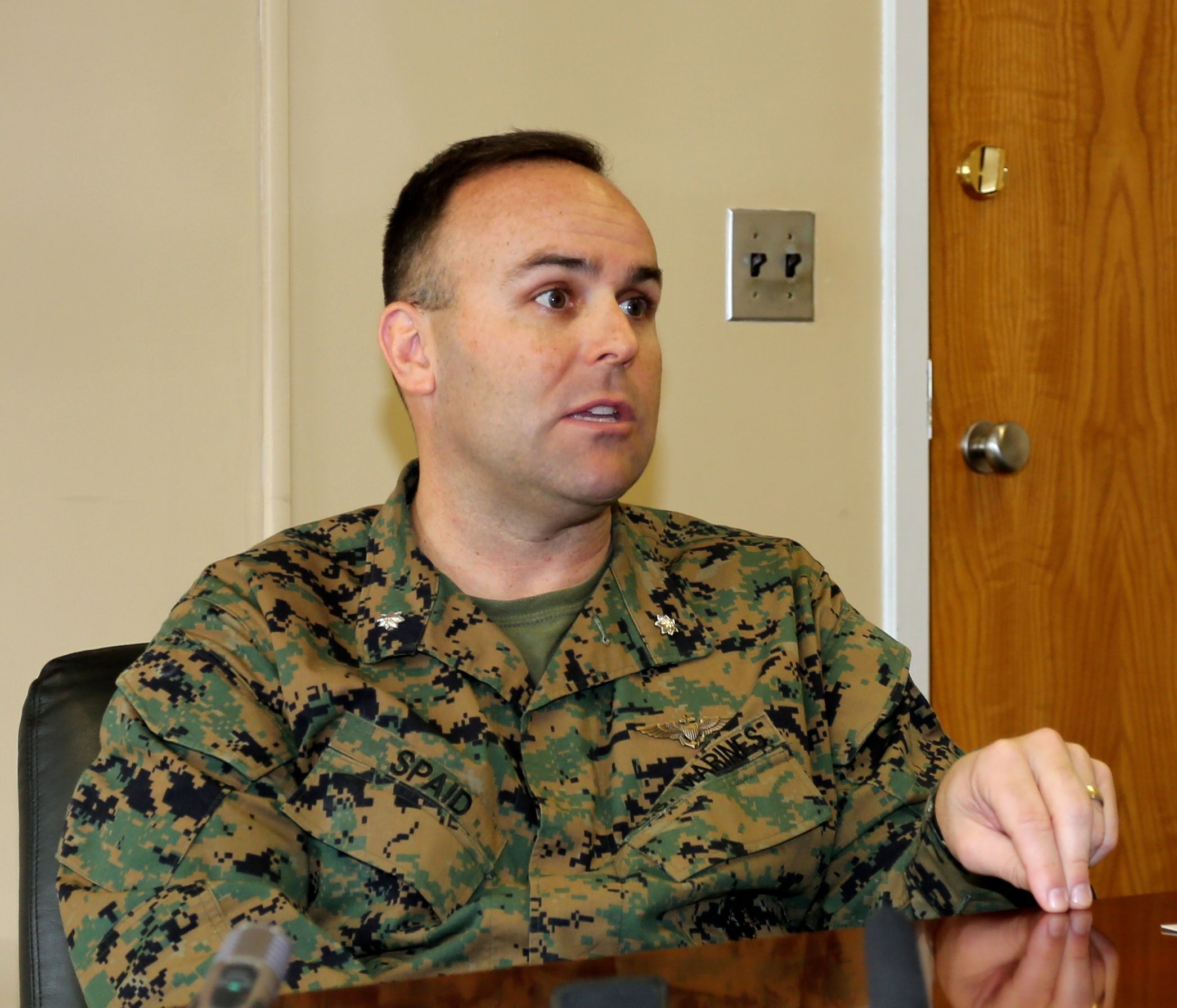
Colonel Wes Spaid’s journey with the V-22 Osprey spans nearly two decades, from flying the first combat mission into Iraq in 2007 to commanding MAG-26 and now articulating why tiltrotor aviation remains indispensable. My interviews with him in 2014 and 2021, combined with his recent 2026 article “The Value of the V-22 in a Dangerous World,” provide a unique longitudinal perspective on how a pioneering “plank holder” in the “Osprey Nation” has evolved his understanding of what the Osprey means for Marine Corps operations.
Spaid’s perspective is particularly valuable because he is not merely an advocate but a practitioner who has lived through the platform’s transformation from early combat deployments that proved the concept, through expansion and standardization, to the current inflection point where distributed operations have become doctrine. His insights reveal how operational experience shapes strategic understanding, and how tactical innovations become strategic necessities.
What emerges from Spaid’s evolution is a narrative of continuous learning. The revolutionary but unproven aircraft he first flew in combat became the foundation for new operational concepts. The capability he now defends as crucial in an era of distributed operationshas transformed from tactical advantage to strategic imperative, mirroring American military power’s shift from counterinsurgency to great power competition.
When I first interviewed Spaid in 2014, his most compelling observation concerned the cognitive shift from the CH-46 to the Osprey. This wasn’t simply learning a new aircraft; it was a complete reorientation from mechanical manipulation to digital systems management. As he described it, the transition felt “like being selected for the space program.”
The CH-46 required constant hands-on intervention through mechanical systems. The Osprey introduced fly-by-wire controls and sophisticated automation that initially seemed impossibly precise. Spaid recounted his early skepticism about landing accuracy, only to discover the digital systems enabled greater precision than years of CH-46 experience had provided.
This transformation extended far beyond the cockpit. Maintenance shifted from wrenches to avionics expertise. Digital architecture created downloadable flight histories, enabling direct diagnosis and battlespace analysis. Mission planners could optimize routes using performance data. Maintainers could anticipate problems before failures occurred. The entire ecosystem evolved alongside the aircraft.
Spaid emphasized that pilots needed retraining after 24-month absences as software continued to evolve. This wasn’t a limitation but a feature. The platform could be continuously improved through software updates rather than requiring entirely new airframes. The Osprey represented a different philosophy of aviation, one where the aircraft itself was a computer system that happened to fly rather than a mechanical system augmented by computers.
What Spaid understood early and his 2026 article reinforces is that this digital sophistication wasn’t merely modernization for its own sake. It was foundational to capabilities that would become essential: self-diagnosis, dynamic mission adaptation, integration with networked operations. The Osprey represented not just a new platform but a new operational paradigm that anticipated the future of military aviation.
The tactical advantages Spaid described in 2014 have only grown more critical in the intervening years. His comparison of CH-46 operations versus Osprey missions perfectly captures the transformation: what was once a weekly, arduous journey from al-Assad to al-Qa’im became a daily routine with the Osprey. The aircraft could operate high and fast, circumnavigate the battlespace at altitude, then insert forces at tactically advantageous points, capabilities no conventional rotary-wing platform could match.
Spaid’s combat experience revealed how tiltrotor aviation fundamentally reshaped operational geometry. During Iraq operations, battlefield circulation using legacy helicopters often occurred only weekly due to range, speed, and staging limitations. The MV-22 enabled daily movement of commanders, units, critical parts, and time-critical detachments across the entire country. What previously demanded extensive planning and fuel coordination became routine missions, reducing convoy dependence and accelerating decision-making across distributed battlespace.
This wasn’t simply about going faster or farther. The Osprey changed how commanders thought about the battlespace itself. With conventional helicopters, planning centered on fuel stops, staging bases, and carefully choreographed timing. The Osprey collapsed these constraints, enabling commanders to treat the entire theater as a single operational space.
This is how he put in his recent article: “The V-22 demonstrated the core tenets of distributed operations — spreading small, highly effective units across vast areas of operations – well before the concept was codified in tactical doctrine.”
This observation is crucial. The Osprey didn’t merely enable distributed operations; it pioneered the operational approaches that would later become Marine Corps doctrine.
Spaid’s 2014 interview captured the development of “Osprey Nation”, the tight-knit community of aviators and maintainers drawn from diverse aviation backgrounds who filtered out legacy bad habits while developing new tactics through combat experience. They spent extensive time in Iraqi dust perfecting reduced-visibility landings, then brought those lessons back to shape training for follow-on squadrons.
This community-building represents an often-overlooked dimension of military transformation. New platforms don’t automatically generate new tactics; they require practitioners willing to experiment, fail, learn, and codify lessons. The small size of the initial Osprey community proved advantageous, enabling rapid iteration and knowledge transfer. Everyone knew everyone, and best practices spread quickly through informal networks.
The cultural aspect was equally important. Osprey pilots came from diverse aviation backgrounds, CH-46, AH-1, even fixed-wing. This prevented the community from simply replicating existing helicopter tactics with a faster aircraft, forcing synthesis of lessons while recognizing the Osprey demanded entirely new approaches.
By 2010-2012, as the community expanded, focus shifted toward standardization for West Coast squadrons. This transition from innovation to institutionalization represented natural maturation, requiring conscious effort to preserve experimental mindset while establishing necessary standards. The challenge was maintaining the culture of innovation while achieving the consistency required for large-scale operations.
Spaid’s role in demonstrating the Osprey’s strategic value cannot be overstated. The 2009 Marine Expeditionary Unit deployment proved transformative, teaching Navy crews that the aircraft could be fixed, launched, and folded faster than expected. This wasn’t just technical validation but operational proof that the Osprey could integrate seamlessly into amphibious operations.
Combatant Commanders discovered they could base aircraft in Kuwait while operating throughout Iraq, birthing the Special Purpose Marine Air-Ground Task Force concept that has since become a staple of crisis response. The Osprey’s range and speed enabled a level of geographic flexibility impossible with conventional helicopters, fundamentally changing how combatant commanders thought about force positioning and crisis response.
Senior leaders became advocates after experiencing the aircraft firsthand. Spaid memorably recounted flying General Petraeus to multiple FOBs on Christmas Day 2007, an operational tempo impossible with conventional helicopters. These operational missions showcased the Osprey’s ability to maintain command presence across vast distances. This inside-the-Beltway support proved crucial during budget battles.
His 2026 article articulates why this demonstration of value remains essential today:”Mobility has strategic consequences. The ability to move across an entire region in a single sortie — reaching dispersed units, repositioning capabilities or reinforcing deterrence — creates agility that adversaries must account for. It compresses timelines, expands opportunities and imposes uncertainty on opponents who depend on predicting our patterns of movement.”
This strategic framing elevates the Osprey beyond simply being a better helicopter to being an essential enabler of strategic mobility.
By the time of my 2021 interview with Spaid, then commanding MAG-26, his primary focus had shifted to “sustainment, sustainment, sustainment.” This wasn’t a retreat from operational concerns but recognition that sustainment enables operations. He worked closely with the program office and industry on software upgrades to enhance reliability, understanding that digital systems require continuous evolution.
This focus reflected hard-won lessons from combat and training. The Osprey’s complexity demanded sophisticated maintenance approaches. Digital systems providing operational advantages also required specialized expertise. Supply chains had to adapt to support a platform that was neither pure helicopter nor pure airplane.
Spaid saw Navy adoption of the CMV-22 variant as benefiting the entire tiltrotor enterprise through enhanced sustainment prioritization, shared training at New River, cross-fleet parts availability, and joint upgrade opportunities. This joint approach to sustainment reflected his understanding that platform commonality across services creates efficiencies and resilience. When one service improves reliability or reduces maintenance burden, all services benefit.
Throughout all three touchpoints, 2014, 2021, and 2026, the Indo-Pacific looms increasingly large in Spaid’s strategic calculus. His 2026 article makes the case unequivocally: “No conventional rotary-wing platform can self-deploy, sustain airplane-like speed over range, or execute contested logistics in the way V-22 squadrons do today. Without the Osprey, the Marine Corps would lose the mobility advantage essential to complicating an adversary’s targeting cycle. Nowhere is this advantage more decisive than in the Indo-Pacific. Forward-deployed MV-22Bs in Japan and Hawaii routinely conduct crisis response missions, reinforce allies and reposition forces across the first and second island chains in hours, not days. In a theater defined by scale and limited warning timelines, this speed matters.”
Spaid’s evolution on this point mirrors the broader strategic shift in U.S. defense planning. What was initially about operational efficiency in the Middle East has become about strategic competition in the Pacific. The Osprey isn’t just better than alternatives; it’s essential for operating where distance itself has become weaponized terrain. In a conflict where the first imperative is surviving initial strikes and maintaining force survivability through dispersal and mobility, the Osprey’s speed and range become existential rather than merely advantageous.
Learning from Spaid across more than a decade reveals how tactical innovation becomes strategic requirement. The Osprey demonstrated distributed operations before the doctrine existed. It proved tiltrotor aviation could transform operational geometry. It enabled crisis response at speeds conventional helicopters cannot match. And as major power competition defines the strategic environment and the Indo-Pacific becomes the decisive theater, the capabilities Spaid first demonstrated in Iraqi dust have become indispensable.
The journey from 2007 to 2026 traces not just one officer’s career but the transformation of American military aviation. Spaid’s insights reveal how platforms enable concepts, how operational experience informs doctrine, and how tactical advantages compound into strategic necessities. The Osprey he flew on that first combat mission was revolutionary. The platform he now defends as indispensable has proven its revolutionary promise.
As Spaid concludes, “Tiltrotor aviation has transformed how the United States projects power and maintains presence. In an era of distributed operations, the V-22 is not optional. It is indispensable.”
For those who have followed his journey from plank holder to strategic thinker, from combat pioneer to commanding officer to defense analyst, this conclusion is simply the truth learned through two decades of operational experience.
The Osprey’s story is ultimately a story about how innovation survives skepticism, how capability creates possibility, and how what begins as tactical advantage becomes strategic necessity.
The featured photo was taken by me during my interview with LtCol Spaid at New River, February 10, 2014.
For the Spaid interviews, see the following: