
Mastering Chaos: How the Marine Corps Is Reinventing Itself for an Age Without Sanctuaries
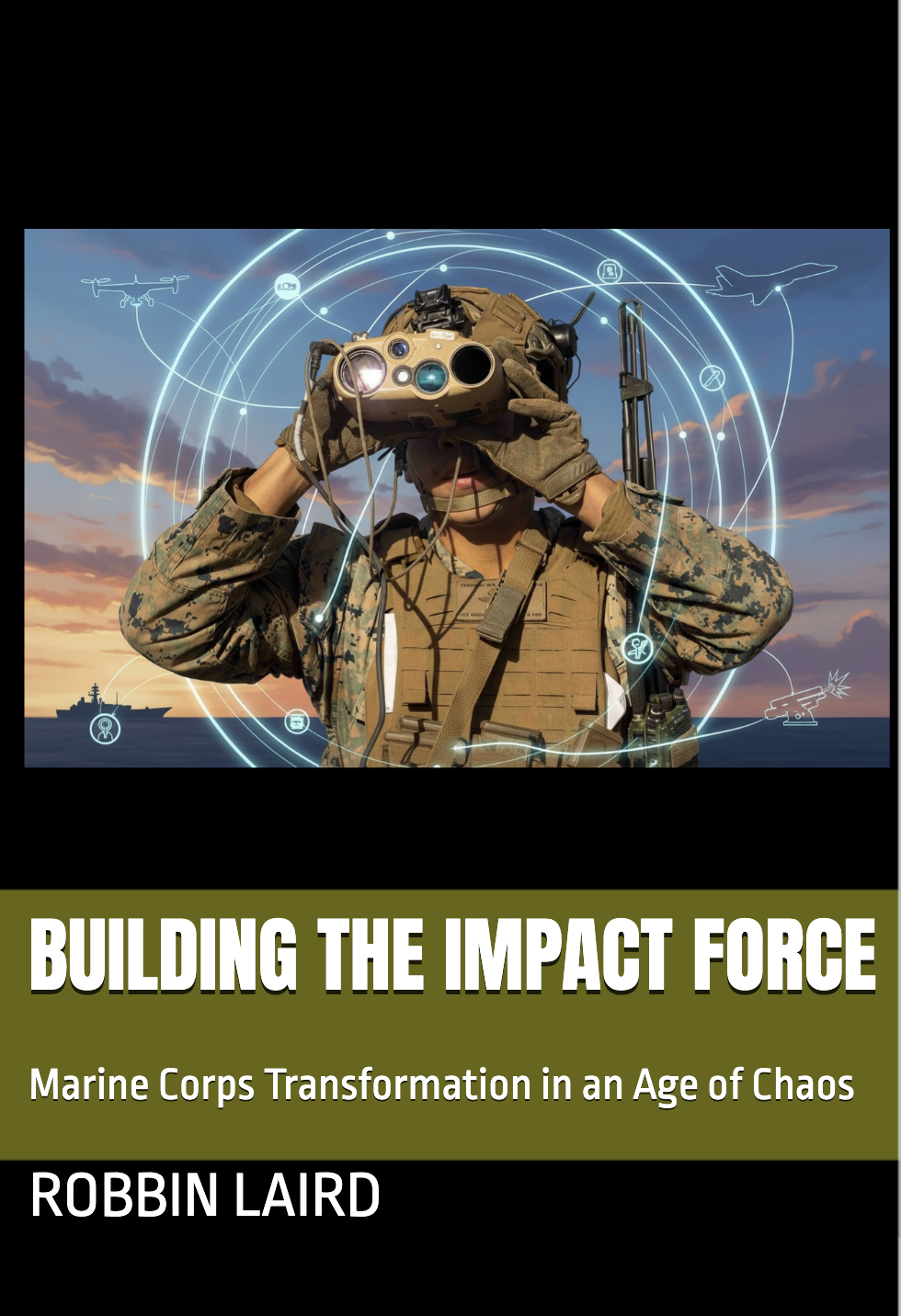
For two decades, the United States Marine Corps built its identity around a particular kind of war. The model was episodic: surge from a secure sanctuary, respond to a discrete emergency, an embassy under threat, a counterinsurgency campaign, and return home. It was a model well-suited to the Middle East era, a period when the United States could count on strategic depth, operational predictability, and the luxury of deliberate escalation.
That era is over. What has replaced it is not another discrete conflict but something more structural and more demanding. I have called it the Age of Chaos, a condition of persistent competition in which the boundaries between peace and war have effectively ceased to exist. In this environment, the old operating assumptions do not merely require updating; they become liabilities. Massive enduring bases are targeting opportunities. Predictable communications signatures are invitations to precision fires. Crisis management, as a strategic concept, has been overtaken by the requirement to master chaos as a permanent operating condition.
What follows is an assessment of how the Marine Corps is executing that transition, not through a fixed blueprint, but through a genuine campaign of learning driven by field evidence. The transformation underway touches everything: doctrine, platforms, logistics, command culture, and the fundamental question of where authority must reside when decision cycles are measured in seconds.
From Ship-Killer to Kill Web Integrator
When Force Design 2030 was first unveiled, the framing was comparatively narrow. The narrative centered on building a specialized Inside Force capable of sinking ships with organic anti-ship missiles, Marines as maritime missile batteries dispersed across island chains, contributing magazine depth to the joint force. It was a coherent concept for a particular threat environment, but it undersold what the Marine Corps actually brings to a contested theater.
By 2025, the Corps had worked through the implications of that early framing and arrived at a more sophisticated and strategically consequential role. The highest value the Marine Corps offers is not its own organic fires. It is its capacity to function as the forward enabler for the entire U.S. military. As Brigadier General Christopher Haar, Assistant Deputy Commandant for Combat Development and Integration, put it during a discussion of this evolution: the original document was focused on killing ships for the stand-in force, but the Corps is better understood as the JTAC for the joint force, using its sensors, using its eyes, killing occasionally, but primarily enabling the rest of the joint force to kill with confidence.
This is the logic of the kill web rather than the kill chain. The Marine Impact Force serves as the forward sensing and integration layer providing what practitioners describe as terminal control and confidence: the precise identification and deconfliction of targets that allows the right shooter, whether a Navy destroyer or an Air Force bomber operating hundreds of miles away, to fire with certainty. The value is not in the Marine Corps owning the shot. It is in the Marine Corps making the shot possible and precise.
The 32-Second Problem
Connectivity is the operational currency of the kill web. But in modern contested environments, connectivity is also a targeting signature. The electromagnetic spectrum has become as lethal as a minefield, and the paradox at its heart is this: the more a unit communicates to coordinate a strike, the more precisely it advertises its own location.
Field observations from exercises such as Steel Knight 25 have crystallized this paradox into a benchmark that is reshaping signature management doctrine across the force. A 32-second radio transmission can attract precision adversary fires within two minutes. That is not a theoretical threat to be modeled in wargames; it is a field observation that has become a survivability benchmark. Silence, in this context, is not a communications failure: it is a tactical requirement.
The challenge this creates is not merely technical. It demands a fundamental rewrite of how units balance the need for data flow against the imperative of electromagnetic concealment. Units that transmit to coordinate fires expose themselves to the fires they are trying to direct. The solution cannot be to stop communicating, the kill web is useless without connectivity. The solution must be to communicate differently: in shorter bursts, with greater compression, and with a cultural shift toward the kind of pre-planned, pre-delegated action that reduces the need for real-time permission cycles.
Timestamping the Operational Node
The logic of the 32-second problem scales up to the operational level in a concept that is reshaping how the Marine Corps thinks about presence and position. The age of the enduring base is over. In an environment of persistent satellite surveillance and long-range precision fires, permanence is vulnerability. If an adversary can locate a node with confidence, that node becomes a target — and modern ISR makes location a matter of time, not probability.
The 2026 Marine Aviation Plan codifies the response in a framework designated S2D: Survivability, Sustainability, and Duration. The conceptual core, articulated by Lieutenant General (Ret.) Robert Hedelund, is that every operational node must carry a timestamp — a pre-planned moment of departure that is built into the operational design from the outset, not negotiated reactively when fires begin to land. As Hedelund put it, commanders must assume they are coming out at a designated time on a designated date, not requesting permission to withdraw after the situation has already deteriorated.
This represents a profound cultural shift for a Corps that has historically valued holding ground. The new logic inverts that instinct: persistence is achieved through mobility, not through fortification. A node that moves on schedule is harder to target than a node that stays until conditions force it to move.
Aviation as the Brain Stem of the Kill Web
Marine aviation has historically been understood as a support function, the maritime bus service that moves troops from ship to shore and provides organic fires overhead. That framing has been overtaken by the demands of the kill web, and the transformation now underway through Project Eagle reflects a fundamental reconceptualization of what aviation contributes to the force.
Project Eagle sequences the aviation transformation across three time horizons: Fight Tonight from 2026 to 2030, Bridge the Gap from 2031 to 2035, and the Future Fight from 2036 to 2040. Across those horizons, the Aviation Combat Element transitions from a support platform into the connective tissue of the distributed force, the brain stem of the kill web rather than a weapons delivery system operating in isolation.
Units like HMLA-267 are leading what practitioners have called a Digital Revolution within the legacy platform fleet. Cobras and Hueys, aircraft that were designed for a different era of warfare, are being reconfigured as airborne gateways: nodes that translate disparate data links between F-35s, MQ-9s, and ground commanders who would otherwise be operating in information isolation. The platform is secondary; the function is primary. What matters is the ability to translate, integrate, and pass targeting data across a kill web that spans multiple services, multiple platforms, and multiple domains.
The Logistics Binding Constraint
Distributed operations are conceptually elegant and logistically brutal. The vision of small, dispersed, mobile units operating inside an adversary’s weapons engagement zone collapses quickly against the reality of fuel, ammunition, and power. You cannot sustain a distributed force without a heavy-lift backbone that can service dispersed nodes without creating the very signature concentrations that distributed operations are designed to avoid.
The CH-53K King Stallion is the logistics answer that makes the concept operationally real rather than theoretically attractive. Unlike legacy heavy-lift platforms, the King Stallion can establish a functioning distributed node, delivering fuel, power, and ammunition — in a single sortie. A commander at Steel Knight 25 framed it with characteristic directness: you cannot do this operation with magic. No voodoo here.
That is precisely the right framing. Logistics is the binding constraint on the kill web. Without the physical capacity to sustain presence inside the enemy’s engagement zone, the Impact Force is a theoretical exercise conducted at a safe distance from the threats it is designed to operate within. The Kilo is not an optional capability enhancement — it is the platform that converts concept into operational reality by providing the physical endurance the force requires to persist where it must operate.
The Command Culture Problem: Hovering as a Liability
The final transformation challenge is the most culturally difficult because it runs directly against the instincts that senior military leaders spend careers developing. Modern digital systems have given commanders an unprecedented picture of the battlefield, persistent, detailed, and available in near real time. That capability has created a powerful temptation toward centralized control: if a general can see everything, why would he not direct everything?
The answer is the 32-second problem, scaled to command culture. In the compressed decision timelines of modern warfare, hovering is a liability. If a junior Marine at the edge must wait for senior permission before moving, the window closes. The adversary acts. The opportunity disappears — or worse, the unit that waited for permission becomes the target that the adversary has already triangulated.
The data from aviation mishap analysis reinforces the point from a different direction: 78.8 percent of aviation mishaps involve human factors. The concentration of decision authority at levels removed from the immediate situation produces errors that distributed authority would prevent. Trust is not merely a leadership virtue in this context — it is a technical requirement for survivability. An Impact Force that defaults upward for permission cannot function at the speed the kill web demands.
The solution is mission command operationalized at the edge: pre-planned, pre-authorized decision frameworks that allow Marines with the most immediate situational awareness to act without waiting for a confirmation cycle that the threat environment cannot accommodate. Authority must reside where the information is sharpest and the timeline is shortest.
Iterating Through Evidence
What distinguishes the current Marine Corps transformation from previous reform efforts is its epistemology. The Corps is not executing a fixed blueprint drafted in Washington and cascaded down through the force. It is running a genuine campaign of learning: field exercises generate hard evidence, that evidence drives doctrine revision, and when the evidence contradicts an earlier assumption, the Corps reverses course. This is how Force Design 2030’s original ship-killer framing evolved into the kill web integration concept that now defines the Impact Force mission.
The trajectory is from crisis management to chaos management, from a force that responds to discrete emergencies within predictable parameters to a force that operates persistently inside contested environments where the parameters are defined by the adversary’s capabilities and intentions, not by U.S. preference. That transition is harder than it sounds, because it requires dismantling assumptions that were operationally validated across two decades of Middle East experience.
The Marine Corps is proving through Steel Knight, through Project Eagle, through the S2D framework, through the CH-53K program that the transition is real and that the concept is operationally grounded. The harder question, the one that exercises like Steel Knight are still stress-testing, is whether modern military forces can sustain the electromagnetic discipline, the command culture, and the logistics density required to operate persistently inside a threat environment that targets every transmission.
In an age where every transmission is a targeting solution, the survival of the force depends not only on its platforms and its doctrine, but on whether it can sustain the cultural and organizational discipline to act at the speed of the threat. That is what chaos management actually requires and it is what the Marine Corps is in the process of learning how to do.