
From Red Air Trainer to Front-Line Jammer: The Angry Kitten Story
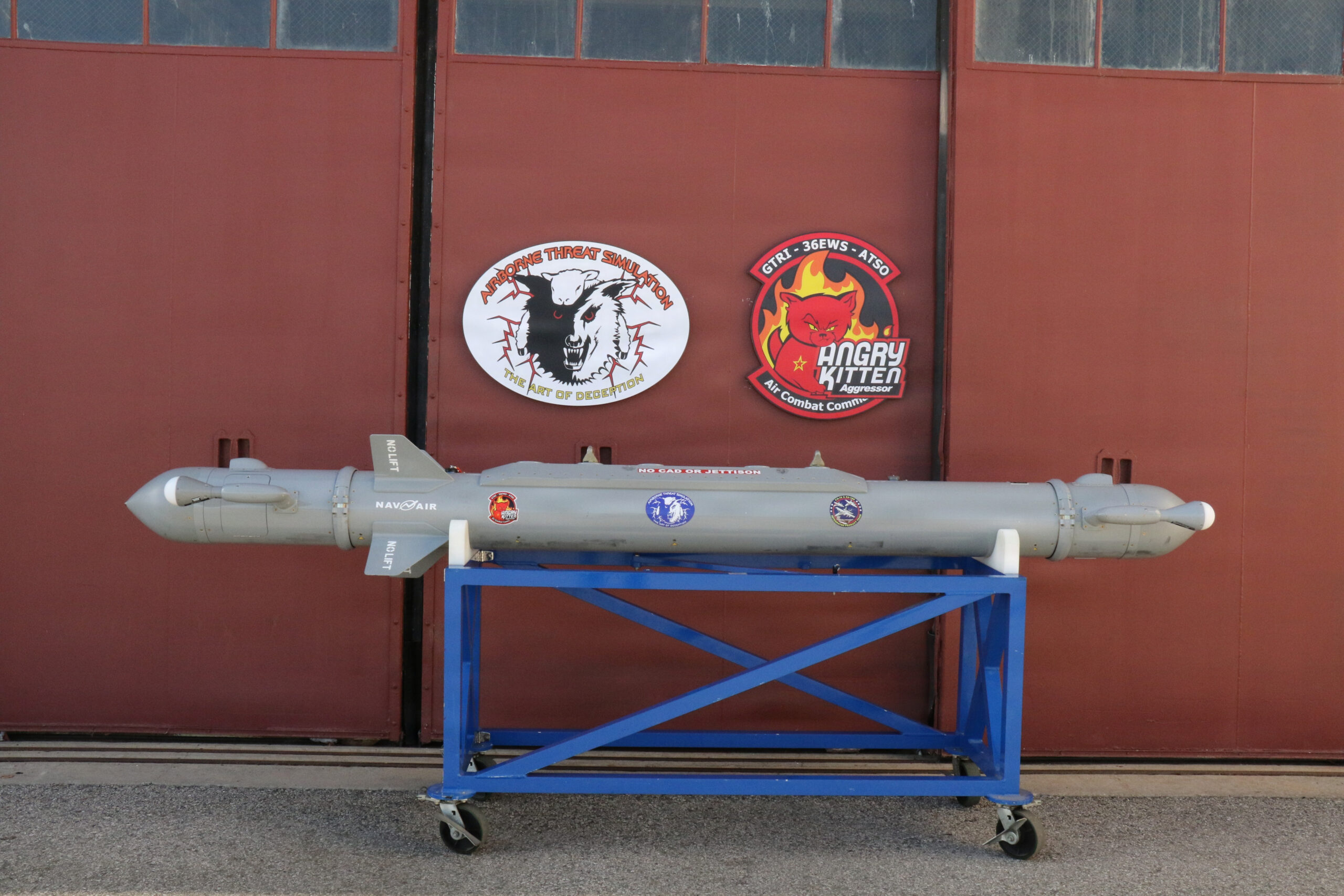

There is a certain logic to the evolution of the Angry Kitten system that cuts to the heart of how effective military innovation actually happens. not in program offices, but at the intersection of operational need, engineering ingenuity, and the willingness to ask an obvious question that no one had thought to ask before.
The question was simple: if this pod is good enough to stress our own systems, why not turn it outward?
That question has now produced a government-owned offensive electronic attack weapon headed into contested airspace as a tool for suppressing enemy air defenses. The journey from red air trainer to operational jammer is a case study in the kind of adaptive, bottom-up innovation that the U.S. defense establishment talks about far more than it actually delivers.
The Angry Kitten story begins not with a weapons requirement but with a gap in realistic threat replication. In 2013, aggressor squadrons at Nellis Air Force Base found their existing threat pods inadequate for replicating modern, agile radars and jammers during large-force exercises. Georgia Tech Research Institute had developed the core electronic warfare technology, but translating a laboratory asset into something flyable, maintainable, and operationally credible required a different kind of expertise.
Naval Air Warfare Center Weapons Division engineers brought that expertise. Their Airborne Threat Simulation Organization had spent decades working with intelligence agencies to model foreign threat signals and build jammers capable of credibly replicating them on instrumented ranges. This was not a bureaucratic capability. It was deep, practitioner-level knowledge of both the adversary emitters being simulated and the friendly radars being tested against them. That dual familiarity is precisely what gave the partnership traction.
Georgia Tech developed and prototyped the electronic warfare payload. NAWCWD integrated it on aircraft, certified it for flight, and sustained it in daily range use. First flights came in 2017. The early years included the predictable friction of any serious integration effort, high-speed runs at Nellis cracked antenna covers, grounding the pod fleet and forcing rapid redesign of the radome. What distinguished this program was the speed of recovery: back in service within months, a small episode that illustrated both engineering competence and the operational value of a close government-FFRDC partnership built around shared risk.
What genuinely differentiates Angry Kitten from legacy pods is its architecture. At its core is Georgia Tech’s Technique Description Language, a hybrid design coupling dedicated hardware modules optimized for speed and bandwidth with software elements handling more complex decision-making. In practical terms, this gives the government an unusually agile, reprogrammable jammer.
The operational consequence is significant. Rather than cycling through contract modification processes to counter new threat tactics, government programmers can reprogram the pod in-house. When an adversary changes radar modes or employs different waveforms, NAWCWD’s team can update Angry Kitten’s responses in days. That is not an incremental improvement over legacy systems. It is a fundamentally different relationship between the weapon and the threat environment it is designed to counter.
This reprogramming agility, combined with the pod’s proven credibility as a high-end threat simulator, began attracting attention well beyond the training community.
The Air National Guard Air Force Reserve Command Test Center in Tucson recognized the potential early. What began as a borrowed training asset had become, by 2024, a vehicle for rapid experimentation in offensive jamming concepts. Through exercises and range trials, AATC operators demonstrated that the same pod used to challenge friendly radars could be repurposed as an offensive electronic attack system.
In March 2025, AATC’s electronic warfare technical lead described a continuous cycle of reprogramming and real-time updates, optimizing jamming effectiveness against specific threat systems. That performance secured authorization to bring Angry Kitten into theater as an operational offensive jammer.
For the NAWCWD engineers who had spent years using the pod purely as a training tool, the shift carried an almost poetic symmetry. They had built something to test their own radars — and now they were bringing that same capability to warfighters as an offensive weapon to protect aircraft in real situations.
The dual role is not an accident of clever repurposing. It flows directly from the physics of electromagnetic warfare. A threat simulator and an offensive jammer use the same signal processing, waveform generation, and hardware, only the target set and command authority change. NAWCWD’s long experience jamming U.S. radars forced its engineers to build highly realistic replicas of adversary behavior. That same realism translated into effectiveness when the pod was turned outward.
This blurring of boundaries between “red air” training tools and “blue force” weapons is increasingly characteristic of the modern electromagnetic battlespace. Systems that can be rapidly reprogrammed and retasked collapse the traditional distinction between test asset, threat simulator, and operational jammer. It is an early indicator of what a genuinely adaptive kill web looks like in the electronic warfare domain, the ability to shift function, retarget, and reconstitute on a timeline set by operational need rather than acquisition cycles.
To understand why a government-owned pod like Angry Kitten matters, it helps to place it against the backdrop of the existing airborne electronic attack inventory.
The AN/ALQ-99 Tactical Jamming System has served as the principal podded jammer for U.S. Navy electronic attack aircraft for more than five decades, first on the EA-6B Prowler, now on the EA-18G Growler. The Growler carrying multiple ALQ-99 pods alongside AGM-88 HARM missiles remains one of the most capable standoff electronic attack platforms in the world. But the ALQ-99 is a product of a different era, fundamentally analog in many respects, with mechanical beam steering and real limitations against the fast-hopping waveforms and dense electromagnetic environments that future conflicts will generate.
The Next Generation Jammer — embodied in the AN/ALQ-249 — is designed to address those limitations with digital, AESA-based electronic attack, higher effective radiated power, and more agile software-defined techniques. But NGJ development has taken time, and transitions from legacy to next-generation systems are never instantaneous. The Air Force has also fielded the ADM-160 MALD family, including the MALD-J variant with active radar jamming, but these are expendable assets, effective in specific scenarios, not reusable platforms.
The result is a capability gap between aging systems and the electronic warfare architecture envisioned for the 2030s. Angry Kitten did not emerge to fill that gap by design. It emerged because operators recognized what they already had.
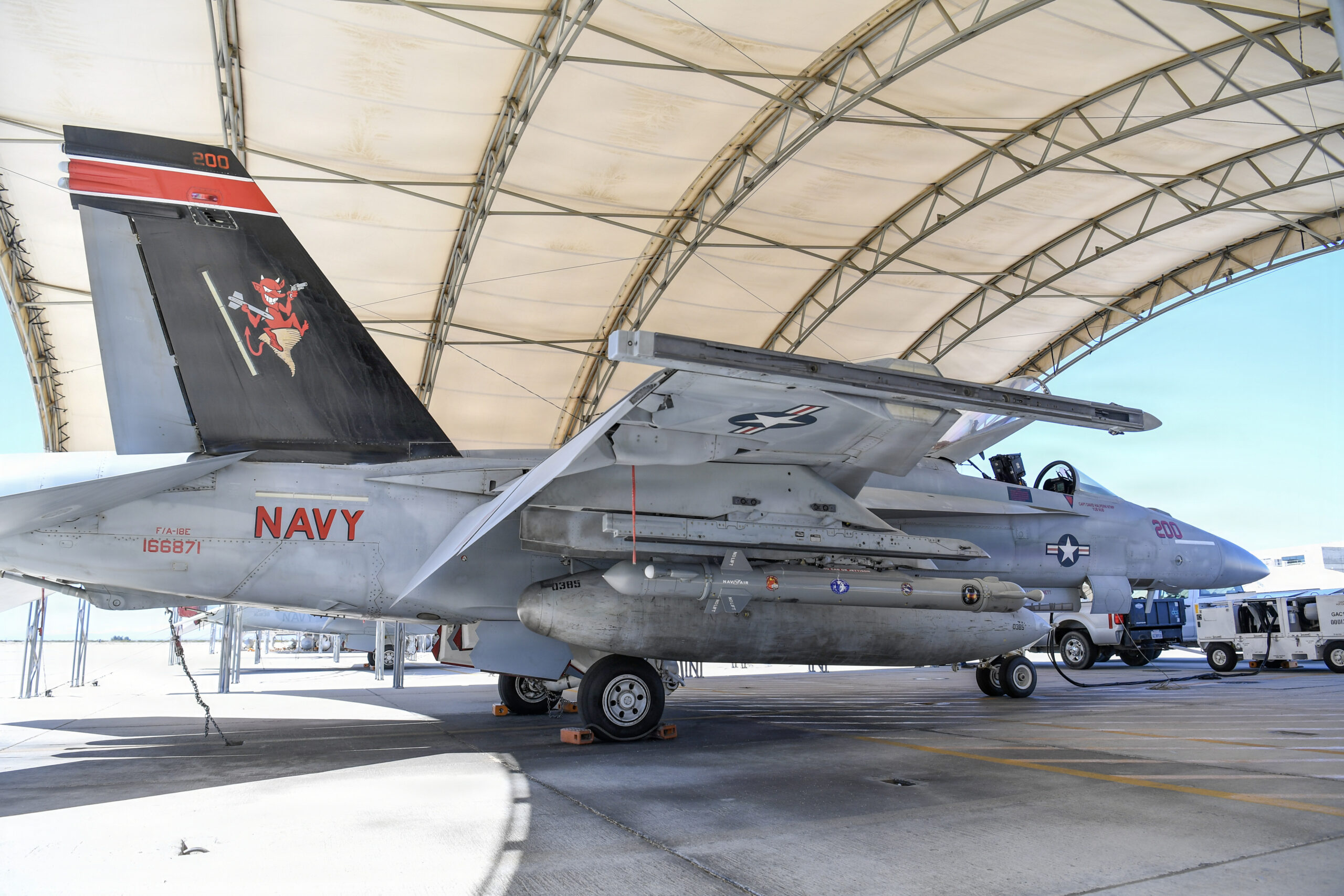
Angry Kitten does not replace Growler jamming or the power-projection potential of the Next Generation Jammer. It adds something different and in some respects more instructive for the future of the inventory.
First, it is a government-owned, reprogrammable pod with a proven integration and sustainment chain. NAWCWD and Georgia Tech have demonstrated the ability to integrate, certify, and maintain the system across multiple aircraft and ranges. That level of configuration control with government ownership of the intellectual property is far from standard in a defense acquisition landscape that often leaves the government dependent on contractor update cycles.
Second, its TDL-based architecture allows operators to create, test, and refine jamming techniques on a timescale measured in days rather than months. In an era of adaptive radars and software-defined threats, that agility is operationally consequential. The gap between the pace of adversary adaptation and the pace of U.S. system response has been a persistent vulnerability. Angry Kitten’s architecture directly addresses that gap.
Third, it embodies the convergence of training and operations in electronic warfare — the same pod stressing U.S. radar crews at Nellis can accompany combat aircraft into theater, armed with techniques already proven against representative emitters in instrumented environments. That continuity compresses the loop between test, training, and employment in ways that more traditional program structures rarely achieve.
In a U.S. defense inventory long dominated by large-program, contractor-centric development, Angry Kitten stands as something different, a bottom-up, government-driven adaptation born in the training ranges, refined in partnership with a university research institute, and now poised to fly as an offensive weapon alongside more traditional airborne electronic attack platforms.
The lesson is not that all future electronic warfare systems should follow this path. The lesson is that the boundaries between training tools, test assets, and operational weapons are far more permeable than acquisition logic typically acknowledges. The organizations and partnerships willing to exploit that permeability and the architectural choices that make rapid reprogramming possible will define the character of the electromagnetic battlespace in the years ahead.
The engineers at NAWCWD set out to build a better threat trainer. They built something more important: a demonstration of what adaptive electronic warfare can look like when government engineers own the technology, understand the threat, and have the authority to move fast.
The key source of this article is the following:
This model of miltiary transformation is discussed in detail in our forthcoming book this summer.