
Ukraine as Furnace of the New Global Order
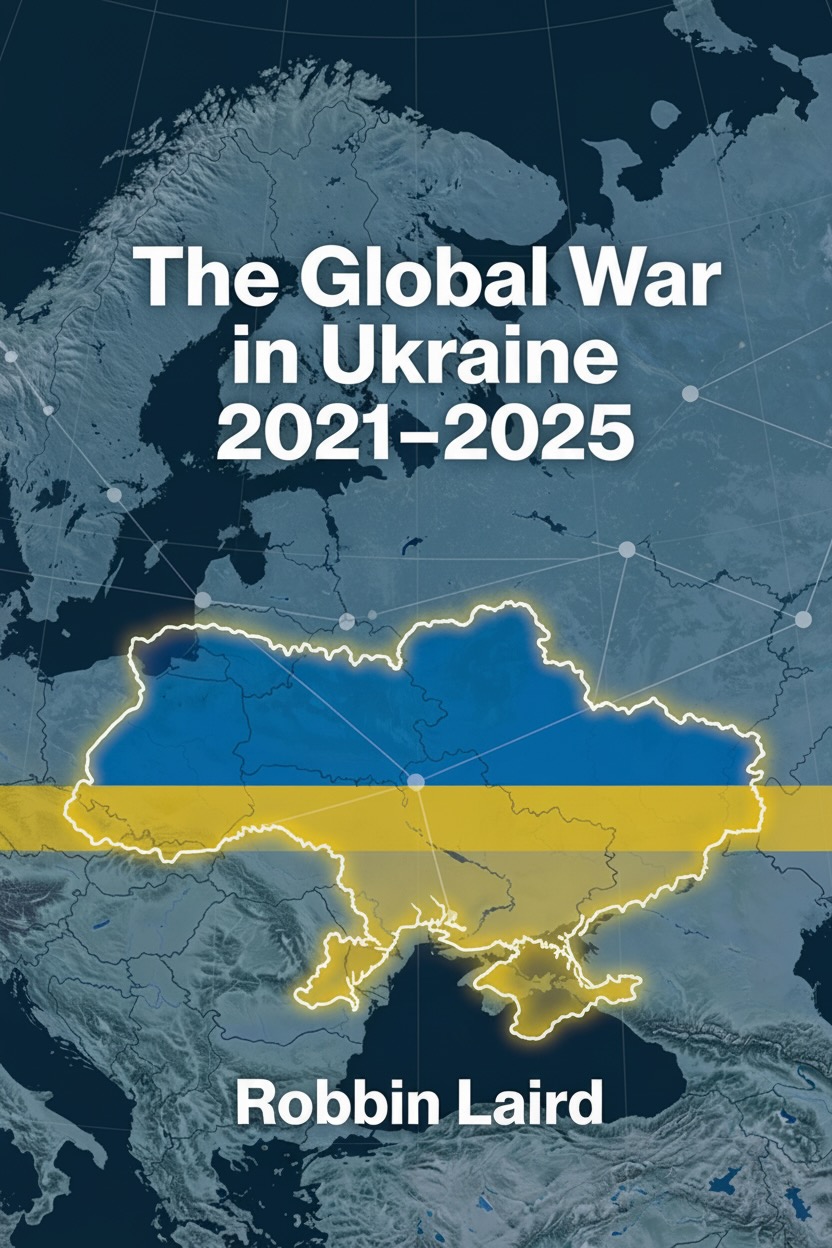
For three decades, much of the Western debate treated Ukraine as a difficult policy problem on Europe’s periphery; my new book argues it has become the furnace in which the emerging international order is being reforged. The Global War in Ukraine An Essay on the Changing Global Order distills more than forty years of work on the Soviet Union, Russia, and Europe into an interpretive essay on why this war is now the central organizing conflict of our time.
When we first looked at the “new Slavic states” for the Office of Net Assessment in the early 1990s, we described Ukraine and Belarus as “awkward states” too large and strategically located to be ignored, too contested to be easily integrated into either a renewed Russian sphere or the expanding Euro‑Atlantic system. That buffer problem was never really resolved; instead, it hardened into the fault line along which the post‑Cold War order ultimately cracked in 2014 and then broke open with the full‑scale invasion in 2022.
The book makes three core arguments.
First, Russia’s war in Ukraine is not a regional aberration but a system‑defining conflict that exposes the collapse of post‑1991 assumptions about interdependence, territorial integrity, and the “end of history.” What we declined to resolve in the 1990s has returned as high‑intensity war, now entangling multiple theaters, energy markets, financial systems, and technology regimes from Europe to the Indo‑Pacific.
Second, the war has crystallized an authoritarian axis and a set of adaptive democratic counter‑coalitions that together are reshaping global order. On one side sit Russia, China, Iran and North Korea, operating in a transactional but coherent division of labor: Russian energy and raw materials, Chinese manufacturing and financial infrastructure, Iranian drones and asymmetric warfare, North Korean artillery and missiles. On the other stands an evolving network of democratic states from the Baltic and Nordic countries to Germany, the UK, France and Poland, improvising new industrial, ISR, and deterrence architectures at speed even as legacy institutions struggle to keep up.
Third, Ukraine itself has become a warfare laboratory and doctrinal pioneer, moving in just a few years from Soviet‑style mass to a form of “intelligent mass” built on drones, AI‑assisted targeting, commercial space and software‑defined kill webs. Cycles of innovation and counter‑innovation that once took years now unfold in weeks, compressing the learning curve for every serious military and exposing just how unprepared our industrial bases and procurement systems were for protracted, high‑intensity conflict.
This essay volume is the accessible counterpart to my larger, fully annotated study The Global War in Ukraine 2021–2025, which carries the detailed documentation and extended case material. Here, I have tried to do what a Brzezinski‑trained historian of change should do explain how structural tensions, authoritarian adaptation and democratic counter‑adaptation have brought us to a world of multipolar authoritarian competition, middle‑power activism, and what I call “chaos management” rather than crisis management.
I was fortunate to have three forewords that situate the argument from different vantage points.
Lt. Gen. (ret.) Pasquale Preziosa emphasizes how the war has forced Europe to rethink deterrence, industrial policy, and nuclear maturity, and how Ukraine has moved from aid recipient to “knowledge provider” and co‑producer.
Brian J. Morra underlines the degree to which Washington still struggles to grasp the truly global nature of the conflict, from Asian engagement in a European land war to the role of middle powers seeking advantage across multiple theaters.
Dr. Holger Mey places Ukraine in the longer arc of European order, zones of influence, and the collective forgetting of basic principles about power, weakness and deterrence that were once axiomatic in Cold War statecraft.
I wrote this book for three overlapping audiences:
Practitioners wrestling with alliance design, force development, and industrial strategy in an era where promises without production lines have become “performance art.”
Analysts and scholars trying to move beyond comforting binaries (east–west, north–south, democracy–autocracy) toward a more realistic map of coalitions, middle powers, and contested orders.
Leaders and planners who recognize that the age of neat crisis management is over and that our task now is to organize chaos well enough to preserve options, manage nuclear risk, and sustain competitive coexistence under conditions we do not fully control.
If you are working on Ukraine, on European and Indo‑Pacific security, on defense transformation, or on the broader problem of governing in an age of systemic turbulence, I hope this essay will be a useful lens. For those who want the underlying documentation and extended case studies, the longer volume The Global War in Ukraine 2021–2025 provides the evidentiary backbone behind the argument.
For a podcast discussing the book, see the following:
For a video discussing the book, see the following:
Both the comprehensive book and the essay book are available on Amazon.