
Meeting the Australian Defence Challenge: Combat Readiness at the Speed of Relevance
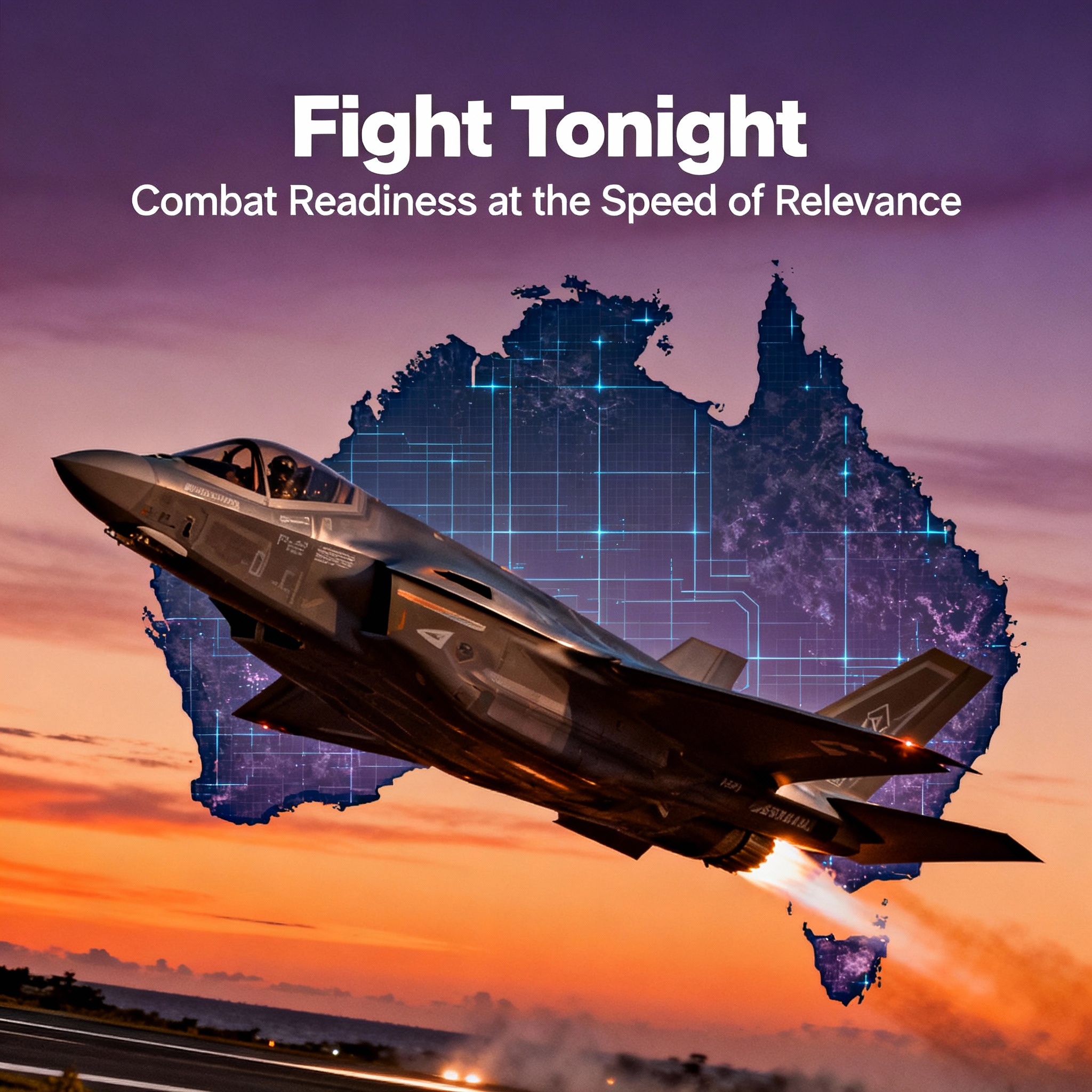
No one knows what tomorrow will bring and there are conflicting views on how benign or otherwise the future might look. But it is the responsibility of military practitioners and security officials to weigh up the current state of affairs and the prospects of conflict.
Notwithstanding assurances from politicians and some pundits that we can rest easy confident that the outbreak of war is not likely, the fact remains that there are numerous indicators of a surge in capability and troubling indicators of malign intent. A range of flash points, not just relating to Taiwan, could require an urgent response from the force already in being ‘tonight’.
Capability and intent are the two key determinants intelligence analysts use in their assessments to categorise security-related developments. In terms of capability, the armed forces of the People’s Republic of China, including their conventional, paramilitary and undeclared militia forces, have been growing almost exponentially in recent years – to a degree unmatched by any other power. Their declared intent to incorporate Taiwan into the PRC is not the only disconcerting indicator.
But it needs to be taken seriously. Their support of Russia’s aggression, their creation of manufactured islands in the South China Sea, their security pacts with several South Pacific nations in the last few years, coupled with the legacy of ‘wolf warrior’ diplomacy and more, all point to the prudence of the work undertaken as part of this project.
Critics suggest seeking to develop and maintain a robust military posture in response to these developments is confrontational, hawkish and dangerous. And yet governments know that each nation has a responsibility to be able to defend itself and its interests tonight, tomorrow and beyond.
This book demonstrates the thoughts and words aired at the Sir Richard Williams Foundation conference in September 2025 that turned into the core of this book, Fight Tonight Force: Combat Readiness at the Speed of Relevance. Drawing on a wide range of practitioners, officials, theorists and academics, this work by the indefatigable Robbin Laird examines the idea of combat readiness at the speed of relevance.
There is much to learn from this book. Laird distills the ideas of the contributing speakers. He then lets us in on his discussions with a range of additional figures that broaden and deepen our understanding of how to develop and maintain a credible deterrent effect – and all in the face of a fast-changing technological political, societal and economic context.
In Fight Tonight Force, Laird draws together threads from the land, sea, air, space and cyber components of the Australian Defence Force, as well as its broader societal context, and its work with allies and partners.
The book starts with the words of the Willams Foundation Chairman, ACM (Retd) Mark Binskin, who observes the fundamental asymmetry that democratic societies must address, particularly in light of the fact that ‘modern conflicts are won as much in the information space as the traditional battlefields.’ He concludes with an exhortation: ‘By preparing now, with the urgency the moment demands, democratic nations can ensure they retain the initiative in shaping their own security environment rather than merely reacting to threats already in motion.’
Professor Justin Bronk from the UK’s Royal United Service Institute addresses the economics of modern warfare, arguing ‘the modern threat spectrum demands a fundamental rethink of air defence’ and declaring that ‘the timeline for preparation is far shorter than most assume.’ To Bronk, the ‘interconnected nature of potential conflict adds urgency. A Chinese move on Taiwan would likely draw American forces from Europe, potentially encouraging Russian aggression against NATO. Conversely, European conflict could provide China with an opportunity to act while American attention is divided.’
Each of the chapters are worthy of study in their own right. For instance, LTGEN Sue Coyle, Chief of Joint Capabilities, expounding on space and cyber challenges and the need to synchronise non-kinetic effects in conflict, and for that to happen, a ‘transformation is imperative’.
Matt Jones from BAE Systems discusses the need for industrial mobilization. Drawing on the historical experience over eighty years back, he notes ‘The choice is stark: begin serious industrialization now during relative peace or face the consequences of unpreparedness when strategic patience runs out.’ Exploring the defence industrial base further, AVM (Retd) Robert Denney observes that it is not just the ‘fight tonight’ capabilities that are crucial. The force ‘must be prepared to “fight tomorrow night, next week and next month.’ This includes government and industry going further in collaborating on guided weapons and explosive ordnance manufacturing in Australia.
In a similar vein, Colonel David Beaumont stresses four pillars of Australia’s national support base: ‘industry, workforce, social cohesion, and institutional decision-making capacity.’ He notes implementation requires ‘sustained political will.’ Beaumont features again later in the book in a one-on-one with Laird. In essence, he argues, ‘Recent military operations have demonstrated that success depends not merely on having the right equipment, but on maintaining the flexibility to rapidly reconfigure logistic networks, repurpose existing capabilities, and sustain operations across vast distances with uncertain supply lines.’ This was followed by a reflection on the significance of the U.S. Marine Corps Osprey aircraft remaining stationed in Darwin – a point that echoed many of the logistic challenges and the tyranny of distance raised by Beaumont.
The UK’s ACDRE Alun Roberts points out the war in Ukraine has driven significant change in this direction for the British, with six new UK munitions factories in the pipeline. This is an interesting counterpoint for Australia and its efforts at enhancing industrial preparedness.
ACDRE Peter Robinson, Commander RAAF Air Combat Group, talks about how the RAAF is working to be ready for the fight tonight, while preparing for tomorrow. Former Australian Chief of Air Force (CAF) AM (Retd) Geoff Brown interviews the current incumbent as CAF, AM Stephen Chappell, who outlines a vision that strives to balance a ‘healthy tension’ between short-term readiness and long-term capability development, drawing critical lessons from contemporary conflicts. He features ‘four Ds’ (degrade, disrupt, destroy, defeat) and ‘six Cs’ (Capability, credibility, comprehended, communicated collectively and consistently) with a few extra Cs (delivered cumulatively, cost-effectively and collaboratively), most prominently displayed with the MQ-28 Ghost Bat drone.
In summing up the conference proceedings, Laird identifies a range of ‘answers to the speed of relevance’:
(1) deterrence requires demonstrated capability,
2) industrial mobilization is too late if it is in response to a crisis,
(3) there is a tyranny in compressed timelines,
(4) the need to look beyond platform acquisition to whole-of-national capability,
(5) geographic realities demand forward defence,
(6) the human dimension is the ultimate constraint,
(7) technology integration needs to happen at operational speed,
(8) cost effective solutions are required to address mass threats,
(9) there’s resilience to be found in distributed operations,
and (10) time can act as strategic depth.
These ‘paint a picture of military forces that must be continually ready, constantly adapting, and perpetually demonstrating their capabilities.’
The book then turns to an examination of additional Australian perspectives drawn from Laird’s own insights and those from people he interviews.
First off is Chief of Army, LTGEN Simon Stuart who, in rethinking military transformation, focuses on a shift from platform-centric to threat-informed innovation. The focus of that innovation is particularly from lessons learned at the tactical level.
Second is RADM Brett Sonter, Commander of Australia’s Maritime Border Command. Sonter applies an imaginative approach to Australia’s maritime security, through enhanced collaboration between crewed and uncrewed systems, developing what he calls ‘security clusters’. He suggests this innovation can serve as a template for regional cooperation as well – ‘start small, and think big’, ‘measure what matters’, embrace iteration’ and ‘foster collaboration’.
Third we turn to Laird’s own judgements. Here he talks about unlocking military potential particularly drawing on the immediate opportunities in uncrewed systems. He makes an important distinction between true autonomy – where the device is capable of making independent decisions – and more hands-on ‘collaborative’ systems.
To Laird, China is both a ‘key competitor who is driving a way forward with uncrewed systems’ and an exemplar, whereby the ‘Chinese model also illustrates how uncrewed systems can complement rather than replace traditional platforms.’
He looks to the Ghost Bat as the platform for Australia to focus on because its ‘current configuration allows for immediate experimentation with multi-domain operations.’
In addition, he points to the need to learn from real world innovations taking place in Ukraine, where ‘operator experience drives innovation more effectively than engineering specification’. Here the stress is more about ‘mission-focused integration rather than platform replacement’ in order to ‘amplify the effect of current systems’.
To Laird, the RAAF Surveillance and Reconnaissance Group (SRG) is the exemplar here, as ‘SRG personnel focus on mission accomplishment using available tools rather than waiting for perfect platforms.’
Next, Laird turns to my colleague at the Strategic and Defence Studies Centre at the Australian National University, Professor Stephan Fruehling. He observes a gradual shift to enhanced Australian autonomy as ‘the comfortable assumptions of the post-Cold War era are dissolving.’ Fruehling is troubled by ‘the lack of alliance institutionalization and political agreement, especially domestically in Australia, on its aims and objectives.’ This is exacerbated by the experiences in Ukraine and Israel which ‘have reinforced Australian concerns about maintaining decision-making autonomy in potential conflicts.’
Mindful of the risks of having to face security challenges without active U.S. support, Fruehling notes ‘Australian cannot compete through numerical superiority. Instead it must invest in systems that can “stop even a major aggressor in its tracks” through technological sophistication.’ Ghost Shark exemplifies this mindset. A ‘deliberate incrementalism’ is called for, he contends, ‘as a framework for managing the tension between deepening cooperation [with the United States] and preserving autonomy.’ Closer regional engagement with partners like the Philippines ‘can create alternative security networks that complement rather than compete with traditional alliance structures.’
Laird also engaged the thinking of MAJGEN (Retd) Mick Ryan, who has reinvented himself as a regular commentator on the war in Ukraine and its geostrategic implications. This chapter draws on Ryan’s most recent work, Translating Ukraine Lessons for the Pacific Theater published by the Australian Army Research Centre in September 2025. In this work he applies an engineer’s logic, to draw ‘ten lessons from Ukraine’s laboratory’:
(1) mass and national mobilization represents a fundamental shift in 21st-century warfare,
(2) cognitive warfare has emerged as a parallel battlefield,
(3) the people factor reveals that quality still matters,
(4) meshed commercial military sensor networks have created unprecedented battlefield transparency,
(5) ubiquitous uncrewed systems have collapsed the traditional distinction between mass and precision,
(6) cheaper, accessible, precision long-range strike has democratized strategic attack capabilities,
(7) Alliance integration has proven essential for sustained operations,
(8) rapid adaptation occurs at unprecedented speed, (9) surprise remains possible, despite enhanced surveillance,
and (10) leadership continues to determine outcomes.
Ryan notes that these don’t automatically and directly translate in the Pacific, where geography and distance, terrain, vegetation, weather as well as the political and cultural environment all come into play. In essence though, he notes, there is a need to close the learning gap, to develop better systems to identify the lessons and accelerate the mechanisms to apply them. There’s also a need to strengthen alliance frameworks to accelerate collective learning.
Next Laird engages with AVM (Retd) John Blackburn, now chairman of the Institute for Integrated Economic Research, to discuss a study entitled A Pandemic of the Mind? The Impact of AI on National Security and Resilience. The argument is that the most profound impact of AI may be cognitive rather than technological, ‘affecting how humans process information, make decisions, and maintain the mental capacities essential for the effective functioning of a democratic society and for national security.’ In other words,’ technology can erode the very capacities that democracies depend on’, leading to ‘cognitive atrophy’. He concludes noting that ‘preserving human cognitive abilities alongside technological advancement represents not a limitation but the essential foundation upon which democratic societies’ future prosperity and security depend.’
Exploring the mind pandemic metaphor further, Laird spoke with Tom Hanson of MARTAC, an AI innovator and practitioner, who suggests Blackburn’s ideas can be taken further. He is confident machine learning will surpass human thinking and that the cognitive decline Blackburn worries about will be overtaken by ‘bioengineering tech’ which ‘will lead to augmentation where people will combine with AI’ as a ‘technological necessity’. This augmented intelligence, as opposed to artificial intelligence, suggests the ‘AI deployment represents not merely a technological challenge but a fundamental question about human development and democratic governance.’
With so much of this discussion echoing sentiments last featuring in the public square about ninety years ago, Laird cites the work of Anne Borzycki, Director of the Institute for Integrated Economic Research, who draws some national security strategy lessons from the 1930s for the 2030s and asks important questions about where this has left Australia. ‘Increasingly, these same issues and challenges are being discussed today in Australia: simply replace China for Japan, and the U.S. for Britain.’ In essence, she argues, the ‘globalized, just-in-time interconnected economy of 2019 has eroded the resilience Australia had in the 1930s.’ Furthermore, ‘Australia has prospered by the changes to these systems, but the price has been a loss of sovereignty.’
The book concludes with three chapters grouped as ‘considering a broader perspective’.
The first, entitled ‘Strategic Independence and Deliberate Incrementalism’, explores the idea of redefining middle power alliance partnerships. The intersection of pressures from China, the United States and regional partners ‘reveal broader tensions about the future of alliance partnerships in an era of major power competition.’ Fruehling has suggested deliberate incrementalism as ‘a way to manage the tensions between deepening cooperation and preserving autonomy.’
On ‘Australia as an Information Society’, Laird notes Australia is vulnerable to the intrusion by China from cyber-attacks and more as ‘systematic targeting of open societies’. Undersea cables and satellite systems are vulnerable yet so important for the effective commerce, politics and governance of Australia’s small population which is thinly spread largely around its coastline. In response Australia has joined international initiatives to protect cables and bolster their resilience and redundancy.
On ‘redefining military readiness in an age of perpetual competition’, Laird addresses the obsolescence of traditional readiness models, the learning imperative to be adaptive, the need for distributed infrastructure as the ‘architecture for uncertainty’ and the challenges of technology integration and more. In essence, this ‘reflects a fundamental shift in thinking about military effectiveness in an era characterized by persistent complexity, strategic competition, and technological acceleration.’
In his chapter entitled ‘Beyond professional forces: the imperative of whole-of-society defense’, Laird concludes that the ‘central thesis that emerges from our analysis is both simple and profound: modern defense requires the active engagement, preparation, and resilience of entire societies.’
One noteworthy challenge ‘is to overcome the bureaucratic and procedural barriers that prevent rapid acquisition and continuous innovation, capabilities that modern conflicts have proven essential.’ Recent conflicts also indicate that the “assumption that conflicts can be managed through limited engagement by professional forces, while civilian society remains largely insulated from the costs and demands of war, appears increasingly untenable.’ ‘the evidence suggests that maintaining the status quo is not viable.’
And for Australia specifically, ‘this means embracing the challenge of developing genuine strategic autonomy through industrial capacity, infrastructure resilience, and societal preparation for sustained pressure’. In his concluding paragraph, Laird puts it this way: ‘The choice, ultimately, is between adaptation and vulnerability.’
Laird has done us a great service in writing this book. I commend it to you.
It is accessible, and carries an important message about how to respond to what I would describe as unrestricted competition – across the economic, political, social and technological domains.
Critics may contend that spending more on defense is a waste. In preparing for the ‘fight tonight’, it is well worth considering what the cost might be were we not to spend more to prepare. Deterrence is costly, to be sure, but war is much more so. To avoid the devastation of such an outcome we would do well to heed the lessons outlined in this work.
John Blaxland
Professor of International Security and Intelligence Studies
Strategic and Defence Studies Centre
Australian National University
This was published as the forward to the book released on January 10, 2026.