
A Decade of Strategic Analysis: My Australian Defence Research (2014-2025)
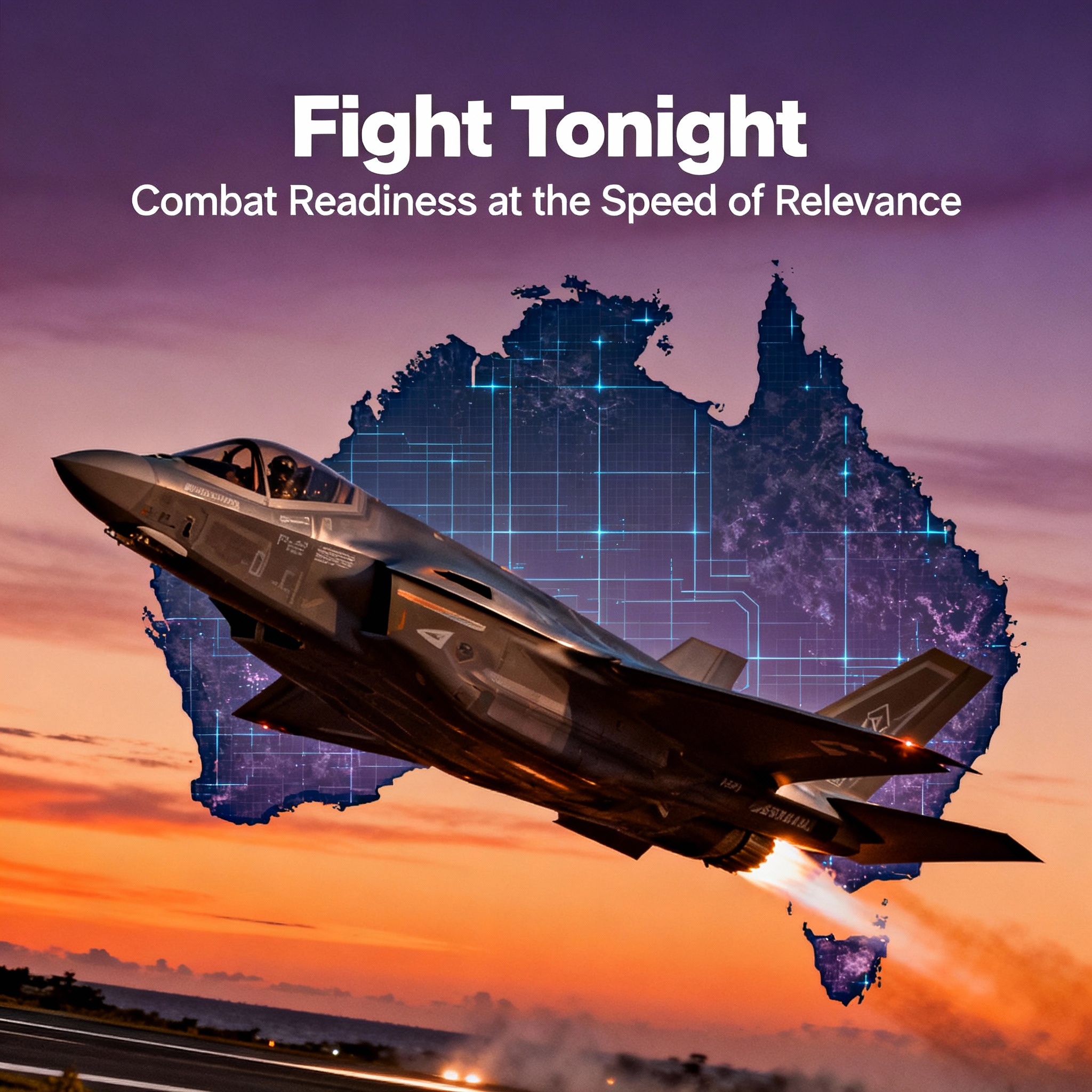
This month, my latest book on Australian defence has been published.
Fight Tonight Force: Combat Readiness at the Speed of Relevance focuses on the urgent reimagining of military readiness demanded by today’s rapidly changing strategic threat landscape. Drawing on insights from leading defense analysts, practitioners, and the Sir Richard Williams Foundation seminar in September 2025, the book distills the hard lessons of compressed preparation timelines, interconnected global risks, and the erosion of traditional Western defense assumptions.
From China’s exponential military growth and assertive posturing to the cascade of strategic consequences witnessed in Ukraine and beyond, the book explores how contemporary warfare transcends the battlefield, touching industry, technology, and even the cognitive resilience of democratic societies. The narrative probes Australia’s evolving defense posture, the crucial shift from platform-centric innovation to threat-informed adaptation, and the need for whole-of-society mobilization that bridges military, industrial, and civilian spheres.
Over the past decade, I have had the privilege of documenting Australia’s defence transformation as a Research Fellow with the Sir Richard Williams Foundation. This decade-long engagement has produced six books, built upon bi-annual seminar reports, extensive field research, and in-depth interviews with Australian Defence Force personnel and strategic analysts. Together, these works provide what I believe is an unique contemporary historical record of how Australia has confronted the challenges of Indo-Pacific security in the 21st century.
The Foundation of a Unique Partnership
The Sir Richard Williams Foundation, a not-for-profit Australian organization established to advocate for the appropriate development and use of airpower alongside other services in defence of Australia and its interests, has served as the institutional anchor for my research. Since 2014, I have written reports on their bi-annual seminars, creating a continuous analytical thread that traces the evolution of Australian strategic thinking from the comfortable certainties of the post-Cold War era to “the age of Fight Tonight” readiness challenges.
Their excellent focus and efforts in support of the ADF have been significant and unusual in an increasingly analytically contested Australian strategic landscape.
The Six Books: Documenting Strategic Transformation
Joint By Design: The Evolution of Australian Defence Strategy
My first book in the series captured a pivotal moment in Australian defence policy. Published in the midst of the COVID-19 crisis, it documented Prime Minister Scott Morrison’s launch of a new defence and security strategy representing a fundamental reset in Australia’s approach. This strategy marked a serious shift in policies toward China and a reworking of alliance relationships, focusing Australia’s attention squarely on the Indo-Pacific region with significant implications for its closest ally, the United States.
The book’s central insight addressed the strategic shift from land wars to full spectrum crisis management, arguing that liberal democracies require forces lethal enough, survivable enough, and agile enough to support this transformation. I introduced the concept of “integrated distributed forces” operating through “interactive kill webs”, a framework that would become increasingly central to my subsequent global defence analysis. Because the Australian Defence Force is small but operates what I identify as one the most modern Air Forces in the democratic world, force integration emerges as a key necessity to achieve desired combat effects. This early work established force integration as the through-line connecting all subsequent volumes.
Australia and Indo-Pacific Defence: Anchoring a Way Ahead
Published shortly after Australia’s 2023 Defence Strategic Review and during the early implementation of the AUKUS agreement, this book addressed the challenges of force modernization and transformation in the context of great power competition, particularly the rise of an assertive and confrontational China.
As Professor John Blaxland of Australian National University noted in his foreword, the book “reveals the sharp mind of a person very well connected in Australian defence policy, academic and military practitioner circles.” The book encompassed reforms affecting not just airpower but capabilities spanning maritime, land, space, and cyber domains, examining how these elements could be integrated to address the dynamic security environment of the Indo-Pacific region.
Australian Defence and Deterrence: A 2023 Update
Originally published in July 2023 and subsequently revised, this volume captured Australian strategic thinking during the critical period between the announcement of the new submarine program and the release of the strategic defence review in April 2023. The revised edition incorporated work from the September 2023 Sir Richard Williams Foundation seminar, which dealt with the expanded role of multi-domain strike as an enabler of deterrence strategy.
The book uniquely brought together in one place a contemporary historical record of Australian thinking about resetting their defence force. Contributors John Blackburn and Anne Borzycki examined the broad impact of Australian politics on defence efforts, arguing for a comprehensive national defence strategy to address the new historical era facing Australia and liberal democracies.
The volume posed fundamental questions that remain central to Australian defence policy: How does Australia generate credible deterrence against a power that is their major trading partner? How does it shape national security strategy while pursuing energy policies that don’t tap its abundant natural resources? How credible is the future force, and do its elements truly integrate or represent new platform stovepipes? Can Australia defend itself as a sanctuary sufficient to provide strategic reserve for Pacific allies in times of crisis?
Australian Defence and Deterrence: A 2024 Update
Building on my 2023 work, this volume provided an update on the ADF from the perspective of changes introduced in 2023 and embodied in the 2024 Defence Investment Plan. The core focused on the April 2024 Sir Richard Williams Foundation seminar addressing multi-domain operations in support of Australian maritime strategy.
The book continued my approach of combining seminar analysis with exclusive interviews conducted during visits with ADF personnel and strategists. This methodology provided insights into the evolution of Australian defence and security strategy unavailable through conventional policy analysis or academic research. The work examined how the force in being — the ready force — was focused on improving capability, survivability, and lethality for “fight tonight” scenarios, emphasizing short to mid-term improvements rather than over-emphasizing long-term future force structure planning.
The Australian Defence Force: Meeting the Modernization Challenges
This volume highlighted the September 26, 2024 seminar entitled “Enhancing and Accelerating the Integrated Force: An Operational Perspective.” The seminar and book focused on improving the force in being for the “fight tonight” with a sense of urgency regarding short to mid-term improvements rather than long-term restructuring.
As Professor John Blaxland noted in his foreword: “Laird captures the views of the people who really matter — our nation’s operational commanders who are thinking about these challenges in real time.” The book argues that force modernization cannot wait for programs scheduled decades in the future. Australia needs capabilities now that enable combat mass through networking, autonomous systems, and integration across all domains.
Combat Readiness at the Speed of Relevance: The Fight Tonight
My most recent book represents the culmination of a decade of analysis and introduces what I consider a paradigm shift in how democratic nations must approach military readiness. The title deliberately challenges conventional planning assumptions. For too long, defence establishments in Australia, the United States, and throughout the democratic world have operated on the premise that strategic competitors will provide adequate warning time for force generation and that alliances guarantee mutual support when crises emerge.
That comfortable assumption no longer holds. The strategic environment has fundamentally changed. China and Russia have demonstrated willingness to act without warning, to exploit grey-zone operations below traditional thresholds of armed conflict, and to challenge democratic nations’ ability to respond coherently. Iran and North Korea add further complexity to a coalition of authoritarian powers that, while not formally allied, coordinate actions to constrain Western response options.
The book’s central argument is stark: Australia and its democratic allies no longer have the luxury of gradual preparation. Forces must be ready to fight tonight, not theoretically deployable given months of preparation, but genuinely capable of effective combat operations with minimal warning. This requires a fundamental transformation in how militaries organize, train, equip, and deploy.
I emphasize throughout that “fight tonight” readiness is not simply about having equipment forward-deployed or maintaining high personnel readiness levels, though both matter. Rather, it demands forces capable of “combat readiness at the speed of relevance” — the ability to adapt tactics, integrate new capabilities, and respond to changing operational conditions faster than adversaries can exploit vulnerabilities.
This concept fundamentally challenges traditional military planning, which typically emphasizes careful preparation, detailed coordination, and deliberate decision-making. While these remain important, they must be subordinated to speed — the speed to deploy, the speed to decide, the speed to strike, and crucially, the speed to adapt when initial plans encounter battlefield realities.
Drawing on my extensive interviews with ADF personnel and examination of operations in Ukraine, I argue that modern warfare increasingly rewards agility over mass, adaptation over persistence, and distributed operations over concentrated force. Traditional military advantages — superior logistics, overwhelming firepower, technological dominance — matter less when adversaries can strike without warning and when conflicts unfold across multiple domains simultaneously.
I am publishing two books next month — an essay and a comprehensive book — on the global war in Ukraine which complement my latest book on Australian defence.
Kill webs or distributed networks of sensors, shooters, and decision nodes that can rapidly reconfigure based on mission requirements and threat conditions. Unlike traditional force packages built around specific platforms, these clouds leverage autonomous systems, artificial intelligence, and advanced networking to achieve effects previously requiring far larger forces. For a nation like Australia with a relatively small military, this approach offers the possibility of generating combat power sufficient to deter aggression or, if necessary, impose unacceptable costs on adversaries.
The integration of autonomous systems represents not merely an incremental improvement but a fundamental shift in military capability. When properly networked with manned platforms and ground-based systems, autonomous aerial, surface, and subsurface vehicles create what I describe as “mesh fleets” that complicate adversary targeting, extend sensor coverage, and multiply strike options. The economics are compelling: a single manned platform costing hundreds of millions of dollars becomes exponentially more effective when paired with dozens of autonomous systems costing a fraction as much.
This argument is developed in detail in my book to be published in March with a foreward by Wing Commander Keirin Joyce, and that book is entitled, Lessons from the Drone Wars.
But technology alone cannot deliver “fight tonight” capability. Transformation requires changes in training, doctrine, command structures, and acquisition processes. Military personnel must train not just to operate specific platforms but to manage information flows, make rapid decisions with incomplete information, and collaborate seamlessly across service boundaries. This demands “Live-Virtual-Constructive” training environments that blur distinctions between physical exercises, simulation, and computer-generated scenarios.
Command structures must evolve from hierarchical approval processes to distributed decision-making that empowers lower-level commanders to act within commander’s intent. When conflicts unfold at speeds measured in minutes rather than hours or days, waiting for approval from higher headquarters becomes a vulnerability adversaries will exploit.
Acquisition processes face perhaps the most difficult transformation. Traditional defence procurement optimizes for minimizing technical risk and achieving the lowest unit cost through large production runs delivered over many years. But when the strategic environment changes faster than acquisition timelines, forces receive capabilities designed for yesterday’s threats. I argue for what I term “acquisition at the speed of relevance” — accepting higher unit costs and technical risk in exchange for faster delivery of adequate capabilities that can be rapidly upgraded or replaced as technology and threats evolve.
The book also addresses a challenge rarely discussed in defence circles: the psychological and cultural barriers to genuine transformation. Military organizations naturally resist fundamental change, preferring incremental improvements to existing approaches over revolutionary shifts that challenge established roles and relationships. I explore how Australia’s relatively small military size, combined with pragmatic culture and experience operating alongside larger allies, provides advantages in implementing transformation that larger, more bureaucratic forces struggle to achieve.
From Crisis to Chaos Management
Perhaps my most significant conceptual contribution in Combat Readiness at the Speed of Relevance is distinguishing between “crisis management” and “chaos management.” Traditional military planning assumes forces face discrete crises that can be resolved through appropriate application of force, after which stability returns. Crisis management focuses on containing disruption, restoring order, and returning to status quo ante.
But the contemporary security environment increasingly resembles not discrete crises but persistent chaos, multiple overlapping challenges without clear boundaries, adversaries who deliberately blur lines between peace and war, and threats that span traditional domains. Grey-zone operations, hybrid warfare, cyber attacks, disinformation campaigns, and economic coercion create continuous complexity that resists resolution through traditional military means.
I argue that forces optimized for crisis management, designed to mobilize, deploy, achieve objectives, and return home, struggle in environments characterized by persistent chaos. Instead, militaries need what I term “chaos management” capabilities: forces that can operate effectively within ongoing complexity, adapt continuously to changing conditions, and sustain operations indefinitely without assuming return to stable peacetime conditions.
This distinction has significant implications. Chaos management requires different force structures (more distributed, more resilient, more autonomous), different training approaches (emphasizing adaptability over precise execution of rehearsed plans), and different command philosophies (accepting uncertainty rather than seeking to eliminate it through better intelligence or planning).
The concept also reframes how we think about deterrence. Traditional deterrence theory assumes adversaries make rational cost-benefit calculations before initiating conflict. But in environments of persistent chaos, adversaries can probe, test, and exploit without triggering clear thresholds that would justify military response. Effective deterrence in such environments requires demonstrating not just ability to prevail in conventional conflict but capability to impose costs across the full spectrum of hostile actions before the first shot is fired.
Modern military effectiveness requires shifting from managing discrete crises to what I term “chaos management” or the ability to operate effectively within persistent complexity while leveraging unpredictability as strategic advantage. I am publishing a book which focuses specifically on the chaos management concept later this year.
Ukrainian forces provide the contemporary demonstration of this principle through real-time battlefield feedback loops that evolve tactics faster than adversaries can develop countermeasures. Success demands thriving within permanent complexity rather than seeking to restore stability, a fundamental shift from traditional military planning focused on crisis resolution.
Thematic Continuities and Evolution
Across these six books, several thematic elements emerge as consistent threads while simultaneously evolving in sophistication and urgency.
Force Integration as Necessity: From my earliest volume’s emphasis on “integrated distributed forces” operating through “interactive kill webs,” I have consistently argued that Australia’s relatively small force size makes integration not merely desirable but essential. This integration spans all domains — air, maritime, land, space, and cyber — and increasingly incorporates autonomous systems and joint enablers such as ISR, C2, and electronic warfare capabilities.
Short-Term Versus Long-Term Planning: The tension between immediate readiness and future force structure planning runs throughout the series. While acknowledging the importance of long-term programs like AUKUS submarine acquisition, I consistently emphasize the need for “fight tonight” capability improvements. This reflects my understanding that strategic windows can close rapidly, and forces must be prepared for contingencies that may arise before future capabilities mature.
Alliance Dynamics: The books trace Australia’s evolving relationship with the United States and the development of new alliance structures like AUKUS. Rather than taking alliance guarantees for granted, I examine how Australia can serve as both a capable partner and, when necessary, a sanctuary providing strategic reserve for allies in times of crisis. This analysis recognizes that alliance credibility depends on demonstrated capability and will.
The China Challenge: The progression from cautious analysis to frank acknowledgment of China as Australia’s primary strategic challenge reflects broader shifts in Australian policy. My books examine the particular complexity of generating deterrence against a major trading partner and the domestic political challenges of maintaining public support for defence spending while economic ties remain strong. I have a book coming later this year written with the well-known historian of Brazil, Dr. Kenneth Maxwell, which addresses the nature of China’s relationship with two middle powers, namely Australia and Brazil which explores in detail the theme of the China conundrum.
Technological Transformation: From early emphasis on fifth-generation aircraft to later focus on autonomous systems, mesh fleets, and multi-domain strike capabilities, my books document how technological change drives operational concepts. I consistently link technological capability to operational employment, avoiding the trap of platform-centric analysis divorced from combat effectiveness.
Chaos Management: The evolution from “crisis management” to “chaos management” represents a fundamental conceptual shift I introduced in my most recent volume. This reflects recognition that the contemporary security environment is not characterized by discrete crises requiring resolution and return to stability, but rather by persistent complexity requiring forces capable of operating effectively within ongoing uncertainty.
My Methodology and Contribution
What distinguishes my work from conventional defence analysis is my practitioner-oriented methodology. Rather than approaching Australian defence primarily through policy documents, budget analysis, or strategic theory, I engage directly with those responsible for operating and transforming the force. My bi-annual visits to Australia, coinciding with Sir Richard Williams Foundation seminars, provide structured opportunities for extensive interviews across the ADF and defence community.
This approach yields insights unavailable through other methods. When analyzing strategic challenges like building combat mass in a continent-spanning defence, I capture not just official policy but the practical concerns of those tasked with execution.
My transatlantic perspective adds another dimension. Having worked extensively in the United States, Europe, and Australia, I bring comparative insights to Australian challenges. I understand how alliance relationships function in practice, how different democratic nations approach similar security challenges, and how technological and operational innovations transfer across militaries. This perspective helps Australian readers understand their defence challenges in global context while helping American and European readers appreciate Australia’s unique strategic position.
A Contemporary Historical Record
Collectively, these six books constitute what Professor Blaxland rightly identifies as “a unique volume” or more accurately, a unique series providing a contemporary historical record of Australian defence thinking during a critical period. My decade-long engagement with the Sir Richard Williams Foundation and the broader Australian defence community has produced not merely academic analysis but a practitioner’s guide to defence transformation in an era of strategic competition.
My six books together map the evolution of Australian strategic thinking from the comfortable post-Cold War era through recognition of great power competition to the urgent demand for forces capable of “combat readiness at the speed of relevance.”
They constitute what I hope is an indispensable resource for anyone seeking to understand how a middle power democracy confronts the challenges of Indo-Pacific security in the 21st century.