How 3rd MAW is Translating Strategic Concepts into Combat-Ready Capabilities
The Marine Corps has long understood that the character of warfare is shaped not merely by weapons systems or technological innovation, but by how forces are trained, organized, and conceptually prepared for the operational environment they will face. Steel Knight 2025, was conducted from December 1-14, 2025, across Southern California and the greater Southwest, represented a significant evolution in how I Marine Expeditionary Force (I MEF) prepares for the demands of Indo-Pacific contingencies. This exercise transcends the traditional model of large-scale training events as discrete readiness checks, instead functioning as a “campaign laboratory” or a venue where operational concepts are tested, refined, and validated against the friction of realistic scenarios before they are deployed in actual theater operations.
I was a guest of 3rd Marine Air Wing during the exercise, and I conducted a number of interviews during the exercise. This is the first of these interviews.
In a wide-ranging discussion at Marine Corps Air Station Miramar, Colonel Michael Perrottet, the G-3 (Operations) officer for 3rd Marine Aircraft Wing, offered a perspective on force transformation that moves beyond theoretical debates about Force Design 2030. His view emphasizes practical adaptation over doctrinal purity, revealing how the wing is actively reshaping Marine Corps aviation capabilities for an uncertain future.
Colonel Perrottet frames Force Design 2030 not as a fixed blueprint but as an evolving experiment. The key insight is that Force Design’s true value lies not in its specific prescriptions but in the framework it provides for continuous innovation. “We are excellent at being the guardians of the perennial task of creative destruction,” Perrottet observed. “We constantly build something up, and then we are the ones to tear that down and progress it forward.”
Perrottet articulates 3rd MAW’s operational approach through three distinct levers that commanders can manipulate:
- Tasking: The mission sets and their prioritization across different echelons, adjusted to meet evolving strategic requirements.
- Capability: The range of aviation assets from fifth-generation fighters to assault support, each with unique attributes that enable different operational approaches.
- Capacity: The depth, breadth, training, and readiness of forces, essentially the quantitative dimension of what the wing can sustain over time.
“Those are the three things that we’re constantly trying to meet,” Perrottet explained. This framework provides a practical way to think about force employment that transcends abstract debates about force structure.
When pressed about what enables the Marine Corps to adapt so effectively, Perrottet returned to fundamentals. “The core element is the people.”
This emphasis on human capital reflects a deeper truth about military innovation: technology alone changes nothing. “You can mix and match our people in any way, shape or form, we’re going to be quick to adapt,” Perrottet said. The organization must co-evolve with its technology, not simply bolt new systems onto static structures.
This becomes particularly important as 3rd MAW integrates autonomous systems, both maritime and airborne. The wing’s location on the West Coast positions it uniquely among combat units, surrounded by companies developing cutting-edge autonomous capabilities from San Francisco to San Diego. ”
The evolution of Exercise Steel Knight illustrates how 3rd MAW is expanding its operational aperture. What began in 1991 as a small tank exercise has grown into a massive joint operation spanning from Washington State to Yuma, Arizona, involving Marine Corps, Navy, and Air Force elements.
“In 2023, we welcomed ESG-3, actually Third Fleet writ large, to participate,” Perrottet explained. “Now in 2025 we’ve got the Marine Corps, the Navy and the Air Force.” This expansion reflects what he terms “N3I” or naval integration, interdependence, and interoperability extending across service boundaries.
The exercise serves three essential functions: warfighting readiness, force generation, and modernization through experimentation. “I don’t think it’s either modernization experimentation or the development of that warfighting readiness,” Perrottet said. “I think it’s all three of those.”
Critically, Steel Knight provides the venue for controlled failure. “We have to be willing to fail in a training and rehearsal environment,” Perrottet emphasized. “If we’re not willing to fail, then we will avoid those opportunities to fail. And ultimately, all you’re going to do is lie, hide and fake the funk.”
Perrottet sees the Marine Corps’ expeditionary character as its defining strength in an era of distributed operations. “One thing we are able to do well are expeditionary operations. We get forward, we persist, we survive. We’re lethal,” he said. “I think we can do that in a sustained way.”
This expeditionary ethos extends to how the wing thinks about autonomous systems and emerging technologies. Rather than waiting for perfect solutions, 3rd MAW incorporates what works now. The ability to rapidly integrate contractor systems during exercises, evaluate their performance, and make fielding recommendations represents a combat development cycle measured in months rather than years.
Perrottet articulated five critical drivers of effective change management: vision, skills, incentives, resources, and implementation. The absence of any one element creates specific organizational pathologies:
- Without vision: confusion
- Without skills: anxiety
- Without incentives: resistance
- Without resources: frustration
- Without implementation: false starts
“The piece about implementation is not enough,” he emphasized. “I look at it as a continuous process.” This perspective explains why Force Design remains contentious, implementation is ongoing, not complete, and the Marine Corps continues making course corrections based on operational reality.
Regarding the broader strategic picture, Perrottet acknowledged the uncertainty inherent in planning for conflict with a peer competitor. The challenge isn’t just technical or operational for its epistemological. How well do we actually understand how a potential adversary would fight?
This uncertainty reinforces the importance of adaptability over rigid planning. In Perrottet’s view, the Marine Corps serves as a probing force, able to operate in contested environments and generate the kind of operational knowledge that can only come from contact with the enemy. But this role demands the right mix of survivability, lethality, and mobility to ensure Marines can accomplish their mission and get out alive.
Colonel Perrottet’s perspective on 3rd Marine Aircraft Wing’s transformation offers a compelling alternative to the binary debates that often characterize discussions of Force Design 2030. Rather than defending or attacking a particular vision, he describes an organization engaged in continuous experimentation, learning, and adaptation.
The wing’s approach emphasizes several key principles:
- Use what you have effectively rather than waiting for perfect solutions.
- Test concepts through realistic exercises that permit failure.
- Maintain the core competencies that make Marine aviation unique.
- Integrate new technologies as complements to existing capabilities.
- Keep people, their character and competence, at the center of transformation.
This pragmatic approach may lack the dramatic appeal of revolutionary manifestos, but it reflects how military organizations actually evolve in practice. By focusing on operational realities rather than abstract concepts, 3rd MAW is building the force that can fight tonight and tomorrow.
As Perrottet put it simply: “We want to ensure we win the wars and the battles. And so to do that, we’re going to constantly reiterate and review and have our own internal OODA loops to self-correct.” In an uncertain strategic environment, that capacity for continuous adaptation may matter more than any specific force structure or operational concept.
And if there is any lesson to be taken from the war in Ukraine, is that the Ukrainian ability to adapt rapidly has been at the core of their unanticipated success. Among the U.S. services the Marines, in my view, are the most likely element along with the SOF forces of being able to drive a similar innovation path.
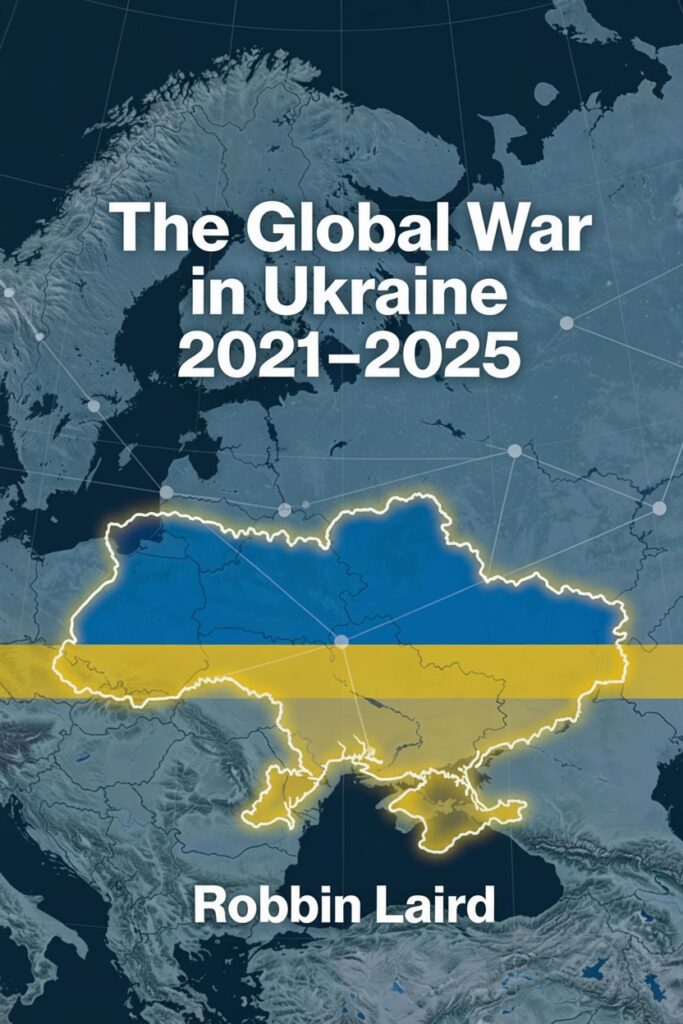
Note: Next month I am publishing on Amazon my essay book on The Global War in Ukraine and in March my comprehensive book on The Global War in Ukraine: 2021-25.
The question of rapid adaptation of Ukrainian forces and how this has happened is discussed thoroughly in these books.