
The HASC V-22 Osprey Hearing: Building a Tri-Service Enterprise for Sustained Excellence
On February 10, 2026, the House Armed Services Committee hearing on the V-22 program, notably examining the findings of the 2025 NAVAIR V-22 Comprehensive Review. After Representatives Kelly and Bergman provided their opening statements, three witnesses provided testimony and discussed the program with the Committee. The three witnesses were: Vice Admiral John E. Dougherty IV, USN, Commander, Naval Air Systems Command, Brigadier General David C. Walsh, USMC, Program Executive Officer, Air Anti-Submarine Warfare, Assault & Special Mission Programs, Naval Air Systems Command, and Ms. Diana Moldafsky, Director, Defense Capabilities and Management, Government Accountability Office.
A fundamental reality permeated every exchange: the V-22 Osprey remains an indispensable capability for American military operations. As Jack Bergman, Chairman of the House Armed Services Committee’s Subcommittee on Readiness, opened the proceedings, he acknowledged this essential truth. The aircraft’s extended range, increased speed, and expanded lift capacity compared to legacy rotary-wing platforms make it irreplaceable in the current force structure.
This strategic necessity has only grown more evident. The Army’s selection of a tiltrotor aircraft as their Future Long-Range Assault Aircraft speaks volumes about the platform’s proven capabilities and future potential. With plans to operate the V-22 for at least 30 more years and production nearing its end, the imperative is not whether to sustain the Osprey but how to build the enterprise management structure necessary to support it comprehensively through the 2050s.
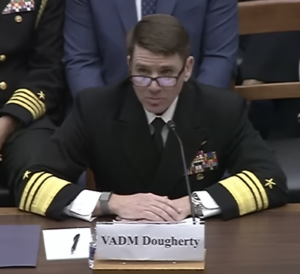
Vice Admiral John E. Dougherty IV, Commander of Naval Air Systems Command, emphasized this point in his opening testimony: “The V-22 is a unique and indispensable capability for our nation’s armed forces. As the world’s only operational tilt-rotor aircraft, it combines the vertical lift of a helicopter with the speed and range of a turboprop aircraft, enabling missions that no other platform can accomplish the Navy, Marine Corps and Air Force. The V-22 has transformed how we execute expeditionary operations, special missions and critical logistics.”
The Enterprise Management Imperative
What emerged most clearly from the hearing was the recognition that the V-22’s complexity and joint service nature require an enhanced enterprise approach to management and sustainment. The aircraft operates across three services, Marine Corps MV-22s, Air Force CV-22s, and Navy CMV-22s, each with unique mission sets but common technical challenges. This reality demands systematic collaboration rather than parallel, independent efforts.
Brigadier General David C. Walsh, Program Executive Officer for Air Anti-Submarine Warfare, Assault, and Special Mission Programs (often written PEO(A), highlighted this joint commitment: “The V-22 program office ensures the continued airworthiness and readiness of this critical capability through a truly joint effort, staffed by personnel from the Marine Corps, the Navy, and the Air Force. Our team is implementing all recommendations from the recent comprehensive review and GAO report, driving improvements that will keep the Osprey mission ready for decades to come. The V-22 provides unmatched operational capability and flexibility. It’s in high demand across the joint force because of the unique warfighting advantage it provides our warriors. We owe the men and women who count on this platform every day, the safest, most ready aircraft that we can provide, and we are fully committed to doing just that.”
The hearing revealed significant progress in building this enterprise structure. Both Vice Admiral Dougherty and General Walsh described the establishment of the Joint V-22 Leadership Forum, a body that brings together cross-service leaders from the Navy, Marine Corps, and Air Force to share information, assess performance, and remove barriers to safe and effective operations. This forum reports annually to the service vice chiefs on performance across safety and readiness outcomes, ensuring senior leadership visibility and accountability.
Additionally, Vice Admiral Dougherty reports monthly to the Secretary of the Navy on progress in implementing the comprehensive review findings. As he testified, “Both in the GAO report and our internal comprehensive review, this sharing of data across the services and senior leader awareness of the risk on the platform was identified as a gap. We’ve updated our policy and our governance structure to ensure that I, as the airworthiness authority, have visibility on all of the risk as they manifest on this platform.”
Hardware Upgrades
Among the hardware upgrades discussed, the proprotor gearbox improvements emerged as a cornerstone of the enhanced sustainment strategy. General Walsh outlined the comprehensive approach: “We’re already fielding improvements to the proprotor gearbox, incorporating stronger, more robust steel into the aircraft. Those are delivering right now to all three services.”
These improvements address one of the most critical safety and reliability challenges facing the V-22 fleet. The new proprotor gearboxes use triple-melt steel rather than the previous double-melt specification, providing significantly enhanced resistance to the microscopic impurities that have contributed to past failures. As Vice Admiral Dougherty explained, “Our analysis shows that going from the double-melt gears to the triple-melt gears will reduce the probability of this happening by an order of magnitude. It will actually take this risk from a serious risk down to a medium risk.”
The production and fielding schedule demonstrates the priority placed on this upgrade. General Walsh confirmed that the new gearboxes are being produced at a rate of 12 per month, going to all three services. For the Navy and Air Force, the retrofit will be complete within the next couple of years, with the Marine Corps following on a similar timeline. This represents a fully funded, systematic upgrade across the entire V-22 fleet.
Beyond the gearbox improvements, the V-22 Improvement Program encompasses several additional critical initiatives:
- Input Quill Assembly Redesign: Aimed at reducing the incidence of hard clutch engagements, a known risk factor in V-22 operations. As General Walsh noted, “We have dramatically reduced the rate of hard clutch engagements to zero since implementing life limits on the input quill assembly in February 2023, and we are qualifying a new, more robust design to be fielded in late 2027.”
- Osprey Drive System Safety and Health Information (ODSSHI or “Odyssey”): Advanced monitoring systems that provide maintainers and aircrews with better real-time information about gearbox health, enabling predictive maintenance rather than reactive repairs. ODSSHI is a gearbox vibration monitoring and diagnostic system that provides real‑time data on drivetrain/gearbox condition to support earlier detection of degrading components and enable predictive maintenance, and it is being fielded as part of a broader move toward more proactive sustainment of the V‑22 drive system.
- Nacelle Improvements: Enhancements to improve overall maintainability and reduce the time aircraft spend in maintenance status. The Air Force has already incorporated the Nacelle Improvement Program beginning in 2021 with significant positive results. As Congressman Bergman noted, “The data that I have seen has been very positive,” and he strongly recommended that the other services follow this proven initiative.
- Cockpit Technology Replacement: Addressing obsolescence in avionics and electronics, particularly important given the platform’s planned 30-year operational life extending into the 2050s.
- V-22 Aircraft Modernization Plan (REVAMP): A comprehensive initiative to ensure the aircraft maintains relevant capabilities through the 2050s.
General Walsh confirmed that the proprotor gearbox, input quill assembly, and ODSSHI upgrades are fully funded. Nacelle improvements are funded for the Air Force, with the Navy and Marine Corps applying funding to those programs. The costs for cockpit technology replacement and REVAMP are still being studied and will appear in future budgets.
Systematic Information Sharing: Closing the Communication Gap
One of the GAO report’s key findings centered on the need for enhanced communication across the V-22 enterprise. Diana Moldafsky, Director of Defense Capabilities and Management at the Government Accountability Office, highlighted this issue: “The services have not proactively shared information from hazard and accident reporting with Osprey units across military services.”
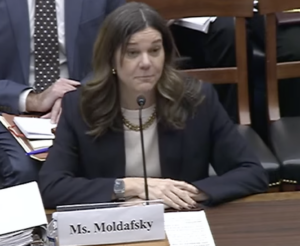
The department has responded with concrete measures to institutionalize information sharing. General Walsh outlined the formal communication structure: “It starts at the joint program office, where we have pilots who fly these aircraft integrated from all three services. They work together day-to-day and have connections back out to the fleet and their counterparts out there.”
The enterprise communication framework now includes:
- Monthly Class Desk Safety Reviews: Where engineers in the program office engage industry and the fleet in safety discussions.
- Semi-Annual Program Safety Review Boards: Providing higher-level assessment and oversight. General Walsh noted, “We just had one, and we’re having another one in March.”
- NATOPS Conferences: Where the fleet comes together, representing squadrons from all services, to discuss changes to procedures and emerging operational insights.
- System Safety Work Groups: Regular forums to address fleet concerns and share hazard information systematically.
Importantly, the services have committed to ensuring these forums are held on a regular basis. As Ms. Moldafsky noted, “There were several years when those forums were not held, and one of the things we recommended was to make sure that those formal conferences would be held on a regular basis.”
The informal networks that exist among pilots and maintainers remain valuable, but the enterprise approach recognizes that systematic safety and reliability improvements require formal structures. As Ms. Moldafsky observed based on GAO’s interviews with service members: “While they all were very confident about the aircraft, one comment that would come up is we’re not worried about what we know. We’re worried about what we don’t know. There were things that came out later that their colleagues, maybe in the Navy, knew that they in the Air Force did not.”
The joint program office now has established protocols to ensure that when a Marine Corps unit discovers a maintenance issue or operational insight, it is shared systematically with Air Force Special Operations and Navy carrier onboard delivery squadrons. This enterprise-wide visibility enables the entire fleet to benefit from collective learning.
Reliability Control Boards: The Foundation of Readiness Improvement
A critical element of the enterprise management approach is the systematic use of Reliability Control Boards (RCBs) to address readiness challenges. These boards represent a proven best practice that NAVAIR has employed successfully across multiple platforms.
General Walsh explained the process: “We have a disciplined process inside the program to identify the drivers, analyze root causes of our readiness challenges, and we’re pursuing many measures to increase availability, increase maintainability, and reduce the maintenance workload for our Marines, sailors, and airmen. That’s an all-hands effort across the services, our NAVAIR partners, the fleet, and industry to make sure we get the right parts produced and into those Marines’, sailors’, and airmen’s hands to do that work.”
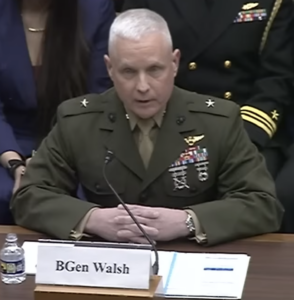
Vice Admiral John Dougherty reinforced this point, drawing on NAVAIR’s experience with the F/A-18: “On our journey on F-18, almost a decade ago, to get to 341 operational aircraft mission capable, the RCB was a key element of that, to understand our degraders. As the airworthiness authority and as NAVAIR that manages 40 different type, model, series aircraft, that is a best practice that we enforce across all our platforms.”
The RCB process enables the enterprise to take a data-driven approach to readiness improvement. By identifying the components and processes that most significantly degrade mission capability rates, the program can prioritize resources and focus engineering efforts where they will have the greatest impact. This systematic approach stands in contrast to reactive responses to individual issues.
Supply Chain and Sustainment: Building the Enterprise Infrastructure
Addressing the V-22’s sustainment challenges requires more than hardware upgrades. It demands an integrated approach to the supply chain and maintenance ecosystem. As Vice Admiral Dougherty, testified, “The issues are from the supply chain and us having the repairables and the consumables that we need to operate the aircraft. The program office is highly focused on that and closing those gaps.”
The enterprise approach recognizes that effective sustainment spans multiple organizations: the joint program office, the Naval Supply Systems Command, the Defense Logistics Agency, and industry partners. General Walsh described this integrated effort: “The joint program office, along with our industry partners and our partners in the supply system, Naval Supply Systems Command and DLA, do a good job of understanding where our most challenging parts are and working with industry partners to get those delivered to our Marines and sailors.”
This collaboration extends to tracking and managing obsolescence issues, particularly in avionics and electronic components. The planned Cockpit Technology Replacement initiative addresses these challenges proactively, ensuring that the V-22 doesn’t face capability gaps due to parts becoming unavailable.
The services have also committed to addressing the disparate maintenance systems that have historically limited information sharing. As Ms. Moldafsky noted from the NAVAIR comprehensive report, “One of the key challenges with the Osprey was that there were disparate maintenance systems between each of the services. So knowledge was not shared, lessons learned not shared across the different services and how they would maintain.”
Harmonizing these systems and creating shared knowledge bases represents a significant undertaking, but it is essential to the enterprise approach. When a maintainer in one service develops an innovative repair technique or identifies a recurring issue, that knowledge should be immediately available across all V-22 units, regardless of service affiliation.
Crew Confidence and Operational Excellence
Underlying all the technical discussions was recognition of the human dimension of the V-22 enterprise. Representative Jen Kiggans asked directly about crew confidence, and Vice Admiral Dougherty’s response was unequivocal: “Crew confidence is high in this platform. We did find some gaps in the flight hours that we want to get our aviators part of that was due to our focus on safety and some of the groundings we had to go through. But I will tell you that we have talked to many, many of the aircrews, and they have confidence in this platform and are getting the training they need.”
This confidence stems not just from the aircraft’s capabilities but from the systematic approach to safety and reliability that the enterprise management structure enables. As Vice Admiral Dougherty emphasized throughout his testimony, “It is my first duty to ensure that the platform is airworthy and safe for operations.”
The enterprise approach recognizes that maintaining crew confidence requires continuous attention to safety, transparent communication about risks and mitigations, and demonstrable progress on reliability improvements. The monthly reporting to the Secretary of the Navy, the regular safety review boards, and the systematic implementation of hardware upgrades all serve to build and maintain the trust of those who fly and maintain the V-22.
Lessons for Future Programs
The V-22 enterprise management approach offers valuable lessons for other programs, particularly the Army’s new tiltrotor aircraft. Ms. Moldafsky emphasized GAO’s leading practices for weapon system development, particularly “bringing in the users and operators during the requirements development phase to help shape sustainment considerations.”
The V-22’s journey demonstrates that revolutionary capabilities must be matched by equally sophisticated sustainment strategies. As Ms. Moldafsky noted, “Operations and sustainment represents 70% of a weapon system’s life cycle cost, and those costs are built into that program when it’s only about 10% complete.” Building sustainment into the design from the beginning, rather than treating it as an afterthought, is essential for long-term success.
She also noted: “Readiness issues and maintenance remain a problem not just for the V‑22, of course, but across many different aircraft types. In reviews, we recently reported that only four of 49 aircraft types actually met their mission‑capable rate goals over the last 10 years. So it’s not just an Osprey problem; it is a problem across the departments.”
The enterprise management structure that is emerging for the V-22 with its emphasis on joint collaboration, systematic information sharing, reliability control boards, and integrated supply chain management is shaping a way ahead to enhance readiness and safety as well.
Congressional Partnership: Toward Legislative Support
The hearing concluded with a clear commitment from both the department and Congress to work together on ensuring the V-22 enterprise has the resources and authorities it needs. The top Democrat (Ranking Member) on the House Armed Services Subcommittee on Readiness, John Garamendi, issued a direct request: “I would like the three of you to provide to this committee specific questions about what you need in the law to fully address the Osprey issues that have been raised by your own review and also by the GAO. What you need to avoid the 10-year or nine-year timeframe for the full upgrades. Is it money? Is it authority? Please get back to us by the end of the month.”
Joe Courtney, Ranking Member of the House Armed Services Subcommittee on Seapower and Projection Forces, drew parallels to the legislative response following the USS Fitzgerald and USS McCain collisions. “At the insistence of Senator John McCain, the recommendations of the Navy’s Comprehensive Review were actually codified in the National Defense Authorization Act,” that this “has ensured that seamen are fully qualified before going underway and resulted in an appreciable drop in mishaps,” and that he remains “open to the possibility of exploring legislative action to codify elements of these recommendations,” which “would send a powerful message to our service members and the public that real change is happening.”
This partnership between Congress and the department represents an opportunity to institutionalize the enterprise management approach, ensure sustained funding for critical upgrades, and provide the authorities necessary for effective cross-service collaboration.
The Path Forward: A Sustainable Enterprise
The February 10, 2026 hearing marked an important milestone in the V-22’s evolution from a platform with acknowledged challenges to a comprehensively managed enterprise with a clear path forward.
Several key themes emerged:
- Recognition of Essential Capability: All participants acknowledged that the V-22 provides unique capabilities that will remain essential to U.S. military operations for decades to come. As Vice Admiral Dougherty stated, “The V-22 is a unique and indispensable capability for our nation’s armed forces.”
- Enterprise Management Structure: The establishment of the Joint V-22 Leadership Forum, monthly reporting to senior leaders, and systematic communication protocols across services represents a fundamental shift toward integrated enterprise management.
- Systematic Hardware Upgrades: The proprotor gearbox improvements, input quill assembly redesign, ODSSHI implementation, and planned cockpit technology replacement and REVAMP modernization provide a comprehensive technical upgrade path, with key elements already fully funded and in production.
- Enhanced Information Sharing: Regular safety forums, NATOPS conferences, and systematic hazard reporting protocols ensure that lessons learned in one service benefit the entire V-22 community.
- Reliability-Focused Sustainment: Reliability Control Boards, integrated supply chain management, and data-driven identification of readiness drivers enable systematic improvement in mission capability rates.
- Congressional Support: The commitment to work together on legislative provisions that could provide additional authorities and resources demonstrates the broad recognition of the V-22’s importance and the necessity of getting sustainment right.
What distinguishes this moment from previous reviews and assessments is the comprehensive nature of the enterprise approach. Rather than addressing individual issues in isolation, the services and the joint program office are building a management structure designed to sustain the V-22 through the 2050s and beyond.
Conclusion
The V-22 Osprey stands at a pivotal moment in its operational history. With production ending and a planned service life extending into the 2050s, the focus has appropriately shifted from acquisition to sustainment, from platform development to enterprise management.
The February 2026 congressional hearing revealed a department and services that recognize both the aircraft’s indispensable capabilities and the systematic approach required to sustain them. The establishment of joint leadership forums, the implementation of comprehensive hardware upgrades with priority placed on nacelle improvements, the commitment to systematic information sharing across services, and the application of proven reliability management practices all point toward a sustainable path forward.
The enterprise management approach recognizes a fundamental truth: the V-22’s complexity and multi-service nature require collaboration, integration, and shared commitment that transcends individual service boundaries. The Joint Program Office, working closely with NAVAIR, the services, and industry partners, is building the structures and processes necessary to ensure that the V-22 delivers on its promise for decades to come.
For the practitioners who fly and maintain the V-22, this enterprise approach offers the systematic support that complex, high-demand platforms require. For operational commanders across the joint force, it promises improved readiness and reliability for a capability they depend on daily. For Congress and the American people, it demonstrates responsible stewardship of a significant national investment.
The V-22’s revolutionary capabilities, its unique combination of helicopter versatility and fixed-wing speed and range, remain as essential today as they were when the platform first entered service. The challenge has always been matching those capabilities with equally sophisticated sustainment. The enterprise management structure now being implemented, supported by comprehensive hardware upgrades and systematic collaboration across services, represents the maturation of the V-22 program from developmental platform to enduring capability.
As Vice Admiral Dougherty concluded his testimony, “The V-22 remains a cornerstone of U.S. military capability. It provides unmatched operational reach and operational flexibility. Whether conducting special operations, assault support, or logistics resupply, the V-22 is in demand across every theater. We are committed to the continued safe operation and readiness of the platform.”
That commitment, backed by systematic enterprise management, comprehensive technical upgrades, and collaborative partnership between the services and Congress, provides the foundation for the V-22’s sustained contribution to American military capability well into the 2050s.
For a podcast discussing the hearing:
The HASC Hearing on the Osprey, February 10, 2026: Shaping an Enterprise Approach
For a video discussing the hearing:
An Update on the Tiltrotor Enterprise: The HASC V-22 Hearing, February 10, 2026