
From Platform to Ecosystem: Training Transformation and the Time Factor
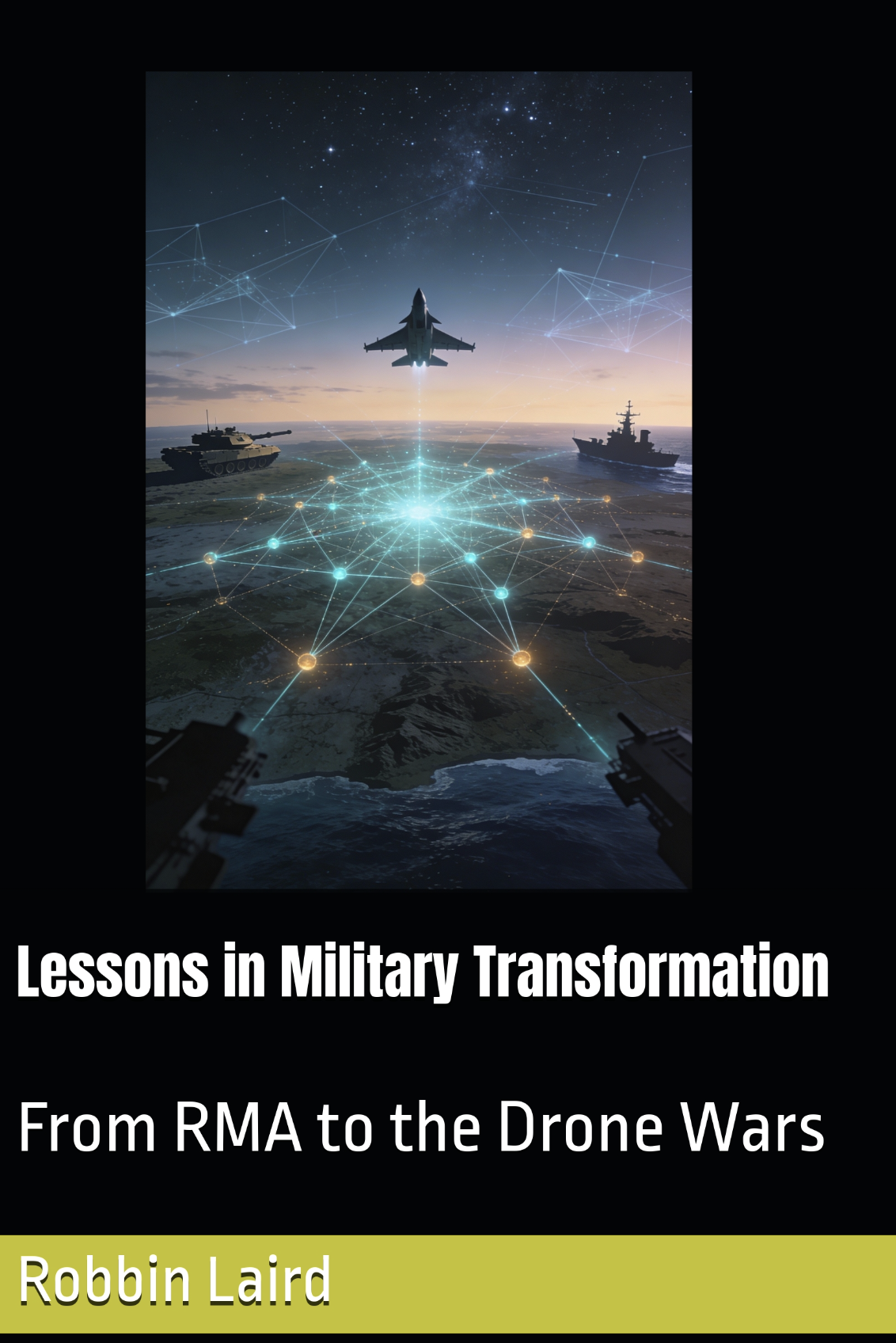
In my new forthcoming book, Lessons in Military Transformation: From the RMA to the Drone Wars, I examine four decades of how military transformation actually occurs, not as briefed in Washington, but as implemented by practitioners in squadrons, on flight decks, and across distributed operating areas.
A central theme emerges consistently across every case study: platforms alone do not constitute transformation. How operators employ them within operational ecosystems determines their actual impact on military effectiveness. This principle applies as forcefully to trainers as it does to fighters, heavy lift, or naval combat systems.
This reality came into sharp focus during my recent field research on pilot training evolution, which included visits to Italy’s International Flight Training School (IFTS) and discussions with experienced USAF aviators who have moved through the full progression from undergraduate pilot training to advanced tactical platforms. These practitioners offered a uniquely longitudinal view of American pilot training evolution from the earliest T-6A classes at Moody in 2001 through the F-15E Strike Eagle, C-130H, MC-12, AT-6E, and KC-46. Their direct comparison between American training approaches and a system that has spent the past decade deliberately evolving toward fifth-generation operational requirements proved illuminating.
This research illuminates the book’s core argument about transformation: there is typically a 5-10 year gap between initial platform introduction and a fully evolved ecosystem capable of exploiting it. In my research on tiltrotors and fifth-generation systems, I documented how the Osprey only became truly transformational roughly eight years after entering service, when Marines discovered uses and built tactics far beyond the program’s original concepts. The F-35 showed its full potential only when air forces reframed it as a network node rather than a fighter replacement. The same logic applies to trainers. You do not transform training by buying a new aircraft; you transform it by building the ecosystem and cognitive frameworks what I call “mental furniture” to employ that aircraft for modern, networked operations.
The Platform-Ecosystem Development Cycle
The practitioner accounts I gathered chart this gap between initial aircraft fielding and mature training ecosystem with unusual clarity. When the first USAF classes went through the early T‑6A program, the airframe itself represented a significant step forward: a modern turboprop replacing the aging T‑37 and introducing a basic glass cockpit and onboard GPS into undergraduate training. The basic ecosystem existed, syllabus, classroom computer‑based training, simulators, but it remained locked into legacy patterns. The most notable “new” element in daily student experience was GPS, yet some instructors discouraged its use because they wanted students to learn “the old way,” even though modern aircraft already depended on such systems.
The ecosystem had not yet aligned with the future operational environment. It was trying to graft new technology onto old training habits, and the early T‑6A cockpit represented a transitional rather than a fully modern design. Its electronic flight instruments were digital rather than analog, a genuine improvement over the T‑37, but it lacked the multi‑function displays and heads‑up display that define a truly modern glass cockpit and fundamentally change how a pilot learns to think, prioritize, and fight. Students gained familiarity with digital instrumentation but were not yet immersed in the cockpit environment they would eventually inhabit in frontline aircraft.
The U.S. Navy’s experience with the T‑6B illustrates both the opportunity and the lag even more clearly. Unlike the early T‑6A, the T‑6B brought a genuinely modern glass cockpit into primary training, with multi‑function displays and a heads‑up display more akin to those found in contemporary fighters, bombers, and transports.
Yet the Navy did not routinely exploit the HUD in its T‑6B training for roughly fifteen years after acquiring the aircraft, a textbook case of a new platform outpacing the mental furniture and syllabus design of the training community. When the Air Force’s Pilot Training Next initiative later “borrowed” a small number of Navy T‑6Bs, it demonstrated how much more effectively an all‑through training construct could prepare pilots when paired with a cockpit representative of their follow‑on aircraft.Senior training leaders effectively acknowledged that, had the broader fleet possessed T‑6B‑like cockpits and an ecosystem designed to exploit them, scaling such all‑through training across the enterprise might have been feasible much earlier.
The lesson for the Navy’s own training community is pointed: possessing the right platform is necessary but not sufficient. The T‑6B’s HUD and MFDs sat underexploited for a decade and a half, not because the Navy lacked the aircraft, but because the mental furniture and syllabus design of the training community had not caught up. It is a challenge that demands an honest answer from naval aviation leadership today.
This iterative development process is not a failure. It is how complex systems actually evolve. My transformation research across domains reveals this as a consistent pattern: initial platform delivery, several years of working out technical issues, gradual syllabus development and iteration, integration of simulators and Live-Virtual-Constructive (LVC) environments, and finally the establishment of cross-platform feedback loops that keep training aligned with operational practice. Israel’s experience with the F-35, Australia’s with F-35 and Wedgetail, and Italy’s with F-35 and IFTS all demonstrate that even highly capable forces need nearly a decade to fully mature a fifth-generation ecosystem.
The Air Force T-7 Journey Ahead
Within this context, Brig. Gen. Matthew A. Leard, director of plans, programs, requirements, and international affairs at Air Education and Training Command (AETC), recent statement that the T-7 is “more future proof than our current enterprise” represents an honest acknowledgment that the Air Force is at preliminary stages of thinking through how to build a training ecosystem around this platform that can support fifth- and sixth-generation operations, including manned-unmanned teaming with Collaborative Combat Aircraft (CCA). This is appropriate candor rather than overreach. The service recognizes both where it needs to go and that the journey has just begun.
The Air Force is only now starting to receive T-7 aircraft and has not yet stood up a mature training system around it. Working out aircraft issues, developing and iterating syllabus content, integrating simulators and LVC environments with appropriate fidelity, and building operational feedback loops will require years of dedicated effort. As practitioners consistently note, this timeline is “going to take time”, potentially five to ten years to reach parity with what systems like IFTS can deliver today.
This does not diminish the T-7’s potential value. Boeing and the Air Force are pursuing an ambitious vision: a platform capable of absorbing both low- and high-end training demands, designed with digital engineering approaches that could accelerate software updates and capability integration but the payback thus far has been far from clear. If successful, the T-7 ecosystem could conceptually provide the foundation for training pilots who transition seamlessly into fifth-generation aircraft and eventually sixth-generation platforms with integrated CCA teaming but, at present and for at least a few years longer, that ecosystem itself is largely composed of powerpoint slides and developmental systems which have, thus far, proved problematic and costly to mature.
The challenge is not the vision but the timeline. Transformation always takes longer than advocates hope and longer than critics fear. My research documents this repeatedly across successful programs: the MV-22 Osprey emerged from developmental controversies and budget battles to become the connective tissue of expeditionary operations, but its full transformation of Marine Corps capabilities became apparent only when practitioners discovered operational applications program designers had not anticipated. The F-35 encountered its share of development challenges, yet it has evolved into a genuinely transformational system as operators developed the cognitive frameworks to employ it as a network node rather than a traditional fighter.
What IFTS Demonstrates About Matured Ecosystems
My direct observations at IFTS underscore what a fully evolved training ecosystem looks like after nearly a decade of iterative development. Comparing what the Italians achieve with the M-346 to the American training progression through T-6A, T-38A/C, Introduction to Fighter Fundamentals, and the F-15E FTU, the assessment is unequivocal: the IFTS training ecosystem is “leagues ahead” of what the USAF currently provides with the T-38 or what the USN provides with the T-45.
At IFTS, student pilots perform in the training unit what American pilots only accomplish later in the advanced replacement training units, multi-sensor management, tactical formation employment, realistic weapon simulations, and integrated LVC scenarios. They enter operational squadrons at a much higher baseline of competence in managing complex systems and tactical scenarios. Italian Eurofighter FTUs have been able to reduce their historical training content by 20-30% because the M-346 ecosystem already delivers those skills. Similar early evidence exists for Italian F-35 training.
What stands out at IFTS is not just the airframe but the complete ecosystem: instructors continually review training quality and realism, identify discrepancies, for instance, missile fly-out behavior not accurately represented, and work with Leonardo to iteratively update software and simulations. When weapon models were inaccurate, they were corrected. When tactics evolved, the syllabus and classroom material adapted. This represents precisely the operational feedback loop my transformation work identifies as central to shifting from static, crisis-style training to dynamic chaos management training, where curricula evolve in near-real time with operational reality.
The M-346 ecosystem is inherently LVC-centric. Aircraft and simulators are designed from the ground up to operate within an integrated live-virtual-constructive environment. The training system builds fifth-generation skills, sensor fusion comprehension, multi-platform coordination, networked decision-making, as foundational components rather than advanced add-ons. The system is tied directly into Italy’s F-35 training and their emerging sixth-generation Tempest program, ensuring fifth-generation training is not an afterthought but a core element of a broader airpower ecosystem.
The coalition dimension matters particularly for future naval aviation. IFTS already trains pilots from fourteen nations, with coalition interoperability embedded in the syllabus and scenarios from day one. For the Navy, whose future air wings will operate in joint and allied kill webs with CCAs and allied fifth-generation aircraft, this coalition-centric training is not optional: it is foundational.
The Cognitive Transformation Challenge
Field research consistently reinforces a central theme from Lessons in Military Transformation: mental furniture, the cognitive frameworks operators carry, matters as much as the hardware they employ. In the early T-6A era, instructors tried to maintain “old school” methods by discouraging GPS use. This same phenomenon occurred in the USN with their T-6B and its advanced HUD and MFD glass cockpit. That backward-looking training mentality prevented the ecosystem from fully exploiting modern avionics capabilities.
By contrast, IFTS presents a system designed to train toward the future rather than preserve the past. Students are taught from day one to manage sensors, networks, and synthetic threats in complex environments. The difference is not just technology. It is mindset as well as instructor skillset. The USAF and USN models have historically front-loaded basic flying skills and deferred “adult flying” to the FTU/RAG and squadron level. The Italian approach, with M-346 and IFTS, has pushed “adult flying” into advanced training, allowing FTUs and squadrons to focus on truly high-end, platform-specific skills.
The contrast is stark: pilots who experienced an M-346-like training system before transitioning to a fighter would have found the experience “night and day”, absorbing more, faster, with the FTU/RAG able to take them further into advanced tactical employment rather than covering foundational systems and tactical skills.
This cognitive transformation cannot be rushed. It requires time for instructors to internalize new approaches, for syllabus developers to translate operational requirements into training objectives, and for the entire system to develop shared mental models about what “good” looks like in a fifth-generation training environment. My research across multiple transformation case studies demonstrates that this cognitive shift typically lags hardware deployment by years, sometimes nearly a decade. The good news for the USN, and to some extent the USAF T-7 program is that another world class Air Force has been doing much of this work already with the M-346 ecosystem at IFTS and there are ample lessons learned and cognitive approaches to training which can be incorporated in the USN model as it is built. The challenge for both U.S. services will be in sharing and incorporating an allied force’s best practices, lessons learned and IP mental framework that have all been developed in a decade of operational training with a very capable M-346 based integrated training system.The Time and Risk Equation
From a transformation perspective, the central question is not whether the T-7 will eventually support effective training — it likely will — but rather the timeline and the strategic risk during the development period. The Air Force has acknowledged that it is “behind the eight ball” on fifth-generation training and is now building a system around T-7 that must become relevant to F-35, sixth-generation fighters, and CCAs within the next five to ten years.
That timeline presents challenges. Warning time has evaporated in contemporary strategic competition. CCAs and sixth-generation constructs will enter the battlespace in the next three to five years. Training ecosystems must generate pilots who are already proficient in fifth-generation and manned-unmanned teaming concepts now, not in a decade. These are the conditions of chaos management my book examines: forces must be ready to “fight tonight” in rapidly evolving environments while transformation continues simultaneously.
The Navy faces particular pressure in this timeline. Future carrier air wings will operate as kill web forces by necessity, launching varied manned and unmanned platforms from carrier decks, integrating with joint and allied assets in contested environments, and operating with CCAs that may not even be ship-based. Training for that environment must be coalition-sensitive and network-centric from the start.
Coalition partners face similar time pressures. Many allied air forces are already operating or preparing to operate F-35s and need training systems that prepare pilots for that operational environment today, not systems that promise future capability after years of ecosystem development.
The Path Forward: Spiral Development and Operational Integration
The real “future-proofing” comes not from platform design alone but from systems that deliver relevant training today while incorporating deliberate spiral development paths, integrated LVC environments, coalition interoperability, and institutionalized feedback loops that keep the ecosystem aligned with operational practice.
Leonardo and the Italian Air Force have already invested that decade in M-346 ecosystem development. They possess an operationally validated system, are now adding Block 20 enhancements that extend capability based on actual training experience and are anchoring that system within an F-35 and future sixth-generation ecosystem. They are not selling a promise of what they hope to deliver in ten years; they are offering a reality that is performing today and designed to evolve through continuous spiral development.
This does not diminish what the Air Force is attempting to accomplish with T-7. Rather, it highlights the transformation reality documented throughout my book: platforms are starting points, but ecosystems, mental furniture, and time are what turn them into genuinely transformational capabilities. The Air Force is embarking on that journey with T-7, and if history is any guide, the system will evolve significantly over the next decade as practitioners discover what works, instructors internalize new approaches, and the service builds the feedback loops necessary to keep training aligned with operational demands.
The Navy and coalition partners, however, face a different strategic calculus. They need training systems producing fifth-generation-capable pilots now to feed operational squadrons that are already flying or preparing to fly fifth-generation aircraft. For these users, systems like IFTS that have already completed much of their ecosystem development cycle may offer lower-risk pathways to meeting immediate operational requirements while the T-7 ecosystem matures.
Lessons from Transformation History
My transformation research across domains, from the Osprey to the CH-53K, the A330MRTT to the F-35, reveals a consistent pattern. A new platform enters service full of promise. For five to ten years, organizations struggle to integrate it, update doctrine, and build sustainment and training ecosystems around it. Only when operators, maintainers, and commanders develop new mental models does the system become genuinely transformational.
The Coast Guard’s Deepwater modernization, which I examine extensively in the transformation book as well as my USCG book to be released this year, illustrates what happens when ecosystem development is shortchanged in favor of rapid platform acquisition. The European Eurofighter consortium’s evolution shows how even successful platforms require continuous spiral development to maintain operational relevance. The Second Marine Aircraft Wing’s transition from counterterrorism to strategic competition demonstrates how organizations must simultaneously operate existing systems while transforming for future requirements, the essence of chaos management.
These historical patterns should inform how we think about training transformation. The T-7 represents the Air Force’s long-term investment in next-generation pilot production. It is undertaking this transformation while acknowledging, candidly, that the service is behind where it needs to be in fifth-generation training today. That honesty should be welcomed rather than criticized. It reflects the kind of practitioner-focused thinking that my book argues is essential for successful transformation.
Yet for services and partners who need fifth-generation training capability in the near term, proven systems that have already completed much of their ecosystem development may offer more appropriate solutions. The choice between investing in systems that promise future capability versus systems delivering relevant capability today represents a fundamental strategic decision informed by warning time, operational requirements, and organizational capacity to absorb transformation while maintaining current readiness.
Conclusion: Platforms, Ecosystems, and the Long View
The introduction to Lessons in Military Transformation notes that “platforms alone do not constitute transformation; how operators employ them within operational ecosystems determines their actual impact on military effectiveness.” This principle, validated across four decades of research, applies with particular force to training systems that shape the cognitive frameworks future pilots carry into combat aircraft.
Field research spanning early T-6A ecosystems through contemporary assessment of what IFTS achieves with matured M-346 systems illustrates both the promise and the timeline challenge of training transformation. New aircraft are beginnings, not endings. The ecosystem development that follows determines whether that beginning yields genuinely transformed capability or simply a new airframe conducting old training with updated aesthetics.
The Air Force’s T-7 program represents an important investment in that future. General Laird’s acknowledgment that the service is at “preliminary stages” of building the ecosystem around it reflects appropriate strategic humility about the work ahead. If history is any guide, that work will take five to ten years of dedicated effort by practitioners who will discover what works through trial, error, and continuous adaptation.
For those who need fifth-generation training capability on shorter timelines, the Navy with carrier air wings transforming for kill web operations, coalition partners fielding F-35s now, systems that have already completed much of their ecosystem evolution may offer lower-risk pathways forward.
The ultimate lesson from transformation history is that time matters. Rushing ecosystem development to meet acquisition timelines rarely succeeds. Acknowledging the actual development timeline required, as the Air Force has done, represents the kind of practitioner-informed realism that gives transformation efforts their best chance of success. The question is not whether the T-7 can eventually anchor an effective training ecosystem — it likely can — but whether organizations with pressing near-term requirements can afford to wait while that ecosystem matures.
That is the essential tension at the heart of military transformation: balancing investments in long-term capability development against the requirement to maintain readiness for conflicts that may not wait for transformation to be complete. It is the tension between crisis management, which seeks to restore stability, and chaos management, which accepts that forces must operate effectively within persistent complexity. And it is the central challenge that Lessons in Military Transformation examines across multiple domains, platforms, and decades: how to transform while fighting, how to build future capability while maintaining current readiness, and how to navigate the unavoidable gap between strategic vision and operational reality.
The practitioners I have interviewed over four decades, Marines transforming from counterinsurgency to strategic competition, Italian instructors building fifth-generation training systems, Coast Guardsmen navigating modernization challenges, all face variations of this same fundamental challenge. Their experiences, documented throughout the book, offer not prescriptions but patterns that illuminate how transformation actually occurs when theory encounters the stubborn realities of operational forces, budgetary constraints, institutional resistance, and adversaries who refuse to cooperate with our assumptions.
This longitudinal perspective on American pilot training, grounded in direct comparison with what IFTS has achieved through a decade of deliberate ecosystem development, adds another data point to that larger pattern. It reminds us that transformation is measured not in contract awards or initial operating capability declarations, but in the cognitive capabilities of operators, the maturity of training ecosystems, and the alignment between what training produces and what operational squadrons require. By that measure, transformation remains a work in progress as it always has been, and as it likely always will be in an era of continuous strategic competition and relentless technological change.
And this begs the key question: in the face of a rapidly changing and dynamic military environment where “peer” adversaries can emerge overnight with new approaches and technologies, how long does the Navy training pipeline have to get on top of the challenges?
Note: I am publishing my book later this year entitled: Lessons in Military Transformation: From the RMA to the Drone Wars.
 \
\
At the end of last year, I published my book examining in detail the paradigm shift in pilot training.
Training for the High-End Fight: The Paradigm Shift for Combat Pilot Training