
Leadership in the Age of Chaos
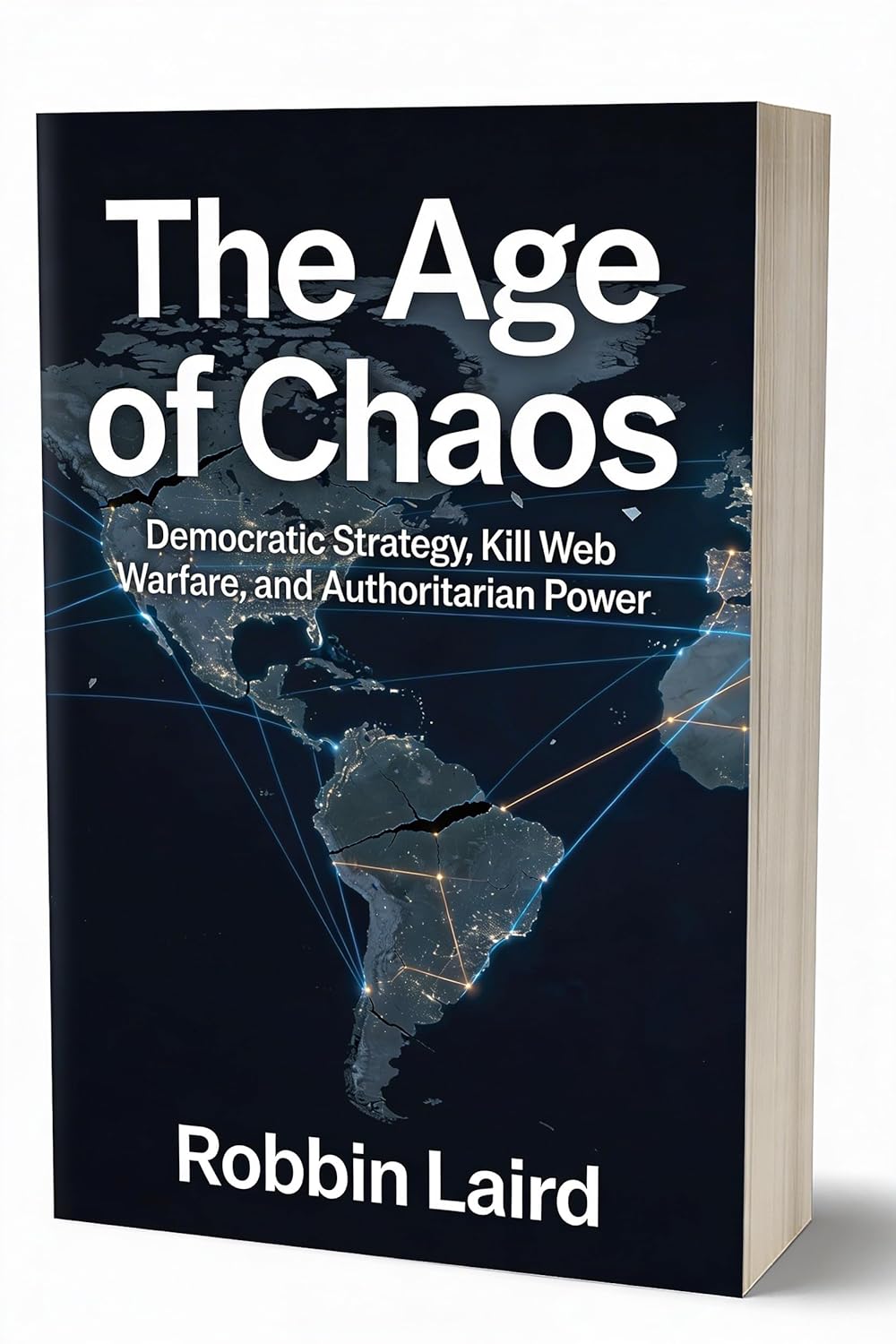
We are not living through a passing disturbance. We are living through a systemic transition from one global order to another whose destination remains sharply contested. That distinction matters enormously for anyone responsible for leading an organization, a nation, or a coalition through what comes next.
In this Age of Chaos, leadership is no longer about riding out episodic crises and returning to familiar ground. It is about operating in a world where the ground itself has shifted and where the frameworks that once organized strategy, economic competition, and institutional design no longer fit the realities that decision-makers actually face.
The disruptions now confronting leaders are not sequential. They are simultaneous and mutually reinforcing: a fracturing global order, the rapid transformation of conflict and competition, the rise of networked authoritarian power, and the growing leverage of middle powers whose choices will help shape what comes next. Clinging to yesterday’s concepts is not prudence in this environment. It is a reliable path to being surprised by events that were already visible to those willing to look clearly.
From Crisis Management to Chaos Management
For much of the late twentieth century, leaders approached international and organizational shocks as discrete crises, events that disrupted a basically stable system. The task was to contain the disturbance, negotiate a settlement, and restore a prior equilibrium. That mental model assumed the underlying order was durable and that turbulence was the exception rather than the rule.
That assumption has been operationally falsified by events. Economic shocks, regional conflicts, technological disruption, pandemics, and domestic political fragmentation now interact and amplify one another rather than arriving in sequence. Policy decisions in one domain create cascading effects in others that were not anticipated and cannot easily be reversed. Supply-chain vulnerabilities exposed in one crisis become fault lines in the next.
What this demands is a shift from crisis management to chaos management. Crisis management presumes that normality can be restored. Chaos management accepts that turbulence is the operating condition, not a temporary state to be endured until stability returns.
The practical difference is significant. A crisis manager asks: how do we end this? A chaos manager asks: how do we build the capacity to absorb the next five disruptions we cannot yet see?
That means designing organizations and institutions for permanent uncertainty rather than temporary shock, treating adaptation as a continuous responsibility rather than a phase between emergencies, and accepting that there may be no return to a prior stable baseline.
This is not a semantic distinction. It changes how leaders use time, how they communicate with stakeholders and partners, and how they think about risk and investment. Leaders who manage chaos effectively do not wait for clarity before acting; they build the capacity to act effectively under persistent ambiguity.
A Fractured System and the Architecture of Competition
The broader environment in which organizations now operate is defined by a fractured, coalition-driven global system in which competing models of political economy are contesting the organizing logic of the twenty-first century. This is not simply a matter of geopolitics as conventionally understood. It directly shapes the conditions in which businesses, governments, and civil institutions make consequential decisions.
Russia, China, Iran, and North Korea have not built a formal alliance. What they have assembled is better understood as a multipolar authoritarian architecture, a marketplace of coercion in which energy, weapons, finance, technology, and diplomatic cover are exchanged to blunt external pressure and advance revisionist goals. This network does not need to be formal to be effective.
At the center of this architecture sits what might be called Global China, not a territorial empire in the traditional sense, but an informal one built through ports, infrastructure investment, digital platforms, and financial instruments that bind states into long-term dependency. Currency arrangements, telecommunications standards, and infrastructure projects create a gravitational field in which governments and corporations must constantly recalculate how far they can engage economically without surrendering strategic autonomy.
For leaders across sectors, this has three immediate implications.
First, see the system as it is, not as it was. The conflicts and competitions now visible across multiple theaters are not isolated events; they are connected expressions of a single systemic transition.
Second, think in coalitions rather than blocs. The era of a single, uncontested international order is finished. The practical task is to build layered, task-specific partnerships around supply chains, technology, deterrence, and resilience.
Third, recognize the leverage of mid-sized actors. Countries such as Australia, Poland, Brazil, India, and others are no longer peripheral. Their choices on trade, technology, and security alignments will help determine whether the emerging system hardens into rival blocs or evolves toward something more manageable.
Leadership in this environment is therefore system leadership. It requires connecting decisions made domestically on energy, industrial capacity, technology investment, and social cohesion with the larger contests now underway globally. Leaders who treat these as separate domains will find themselves repeatedly surprised by how one affects the other.
Networked Competition and the New Logic of Readiness
The character of both military and economic competition has changed faster than the institutions responsible for navigating it. The war in Ukraine has provided the first large-scale demonstration of what networked, distributed competition looks like in practice: distributed sensing and decision-making, commercial satellite capabilities integrated with military operations, AI-enabled analysis, unmanned systems operating across multiple domains, and digitally networked command structures reshaping what speed and scale mean.
What Ukraine illustrates is not primarily a story about military hardware. It is a story about integration and adaptability. Relatively inexpensive systems, connected to effective networks and updated continuously through software and operational learning, have proven capable of defeating far more expensive platforms. The decisive advantage does not lie in owning the most sophisticated individual system; it lies in connecting capabilities across distributed participants faster than the adversary can adapt.
The lesson for leaders extends well beyond defense policy. In any competitive environment, commercial, technological, diplomatic, the organization that can integrate information faster, adapt more rapidly, and operate effectively across distributed teams and partnerships has a structural advantage over the organization built around a few high-cost, difficult-to-replace capabilities.
Readiness in this context is no longer simply a question of assets on hand. It is a question of networks, learning speed, and the industrial and digital resilience that sustains operations through disruption. An organization that cannot regenerate capability, update its operating logic, or maintain its supply chains under stress is not ready, regardless of what its inventory looks like on paper.
Leadership responsibilities extend accordingly. They include the executives and technologists who decide whether to invest in scalable, resilient capacity; the policymakers who shape the rules under which competition occurs; and the organizations that must understand why supply chains and digital infrastructure have become strategic questions, not merely operational ones.
Institutions Under Strain: What Real Adaptation Requires
Institutions embody the accumulated leadership decisions of previous generations. In a period of systemic transition, those accumulated decisions can become liabilities as much as assets. Understanding what genuine adaptation looks like and what makes it hard is one of the most important challenges facing leaders today.
The U.S. Marine Corps offers a revealing case study. Over recent years, it has been working to shift from a primarily crisis-response force toward a distributed, forward-positioned capability designed to operate continuously in contested environments and contribute to joint and allied networks. This has meant accepting significant organizational disruption, shedding legacy structures, redesigning doctrine, and integrating more tightly with other services and partners.
The broader lesson for any institution is this: serious adaptation involves shedding or fundamentally reshaping structures optimized for conditions that no longer exist. It requires accepting more experimentation and tolerating more decentralization than established institutions find comfortable. And it means designing to influence the competitive environment continuously, not simply to respond after a crisis has already forced the issue.
The Human Core of Chaos Management
Across every domain, global order, networked competition, institutional adaptation, one element remains constant: the human judgment at the center of leadership. The Age of Chaos places a renewed and demanding premium on strategic judgment, and strategic judgment is inseparable from how leaders listen, learn, and decide.
Listening has become an operational capability in its own right. In a turbulent environment, leaders who treat partners, subordinates, customers, and skeptical stakeholders as audiences to be managed rather than as co-authors of strategy are working with systematically incomplete information. The realities visible from the front line whether that is a manufacturing floor, a forward operating base, a regulatory agency, or a field office are often the realities that conference-room frameworks miss entirely. Building genuine dialogue into the operating rhythm of leadership is not a soft preference; it is an intelligence function.
Intellectual flexibility is no longer optional. Leaders must be capable of holding multiple analytical frameworks simultaneously, connecting economic strategy, technological change, competitive dynamics, and organizational culture without reducing everything to a single lens. The essence of chaos management is recognizing that no one model will fully capture an environment where technology, geopolitics, and social change interact in non-linear ways. Leaders who insist on a single explanatory framework will be consistently late in recognizing what is actually happening.
Perhaps most importantly, leadership in the Age of Chaos demands a specific kind of courage: the courage to move beyond nostalgia. It is tempting to believe that with sufficient effort, the more familiar and forgiving environment of an earlier period can be recovered. The responsible stance is to acknowledge that the old order has changed fundamentally, that competitive alternatives to democratic arrangements have become more capable and more confident, and that the task now is to build a new equilibrium, not to restore a prior one.
Three Imperatives for Leaders Now
The Age of Chaos has not arrived as a future possibility. It is the present condition. For leaders across sectors, executives, officials, officers, analysts, entrepreneurs, and citizens, it poses three clear imperatives.
- See clearly. Name the world as it is, including the erosion of assumptions that guided previous generations of leaders. Resist the comfort of frameworks that are familiar but no longer accurate.
- Adapt continuously. Build organizations that learn faster than their environment changes and that can operate effectively under conditions of persistent competition and disruption. Treat adaptation as a permanent institutional responsibility, not a special project.
- Lead collaboratively. Treat listening, coalition-building, and the agency of partners as central strategic tasks rather than afterthoughts. The leaders who will navigate this period most effectively are not those who operate from the greatest certainty, but those who build the widest and most honest networks of understanding.
Whether the Age of Chaos becomes a period of fragmentation or the foundation of a new and more stable order will depend on leaders who recognize its arrival and are prepared to act before its full consequences unfold. That recognition, clear-eyed, unsentimental, and forward-looking, is where effective leadership in our time must begin.
The first of my books on the Age of Chaos series has just been published.