
Discussing the New Book: Listen to Lead
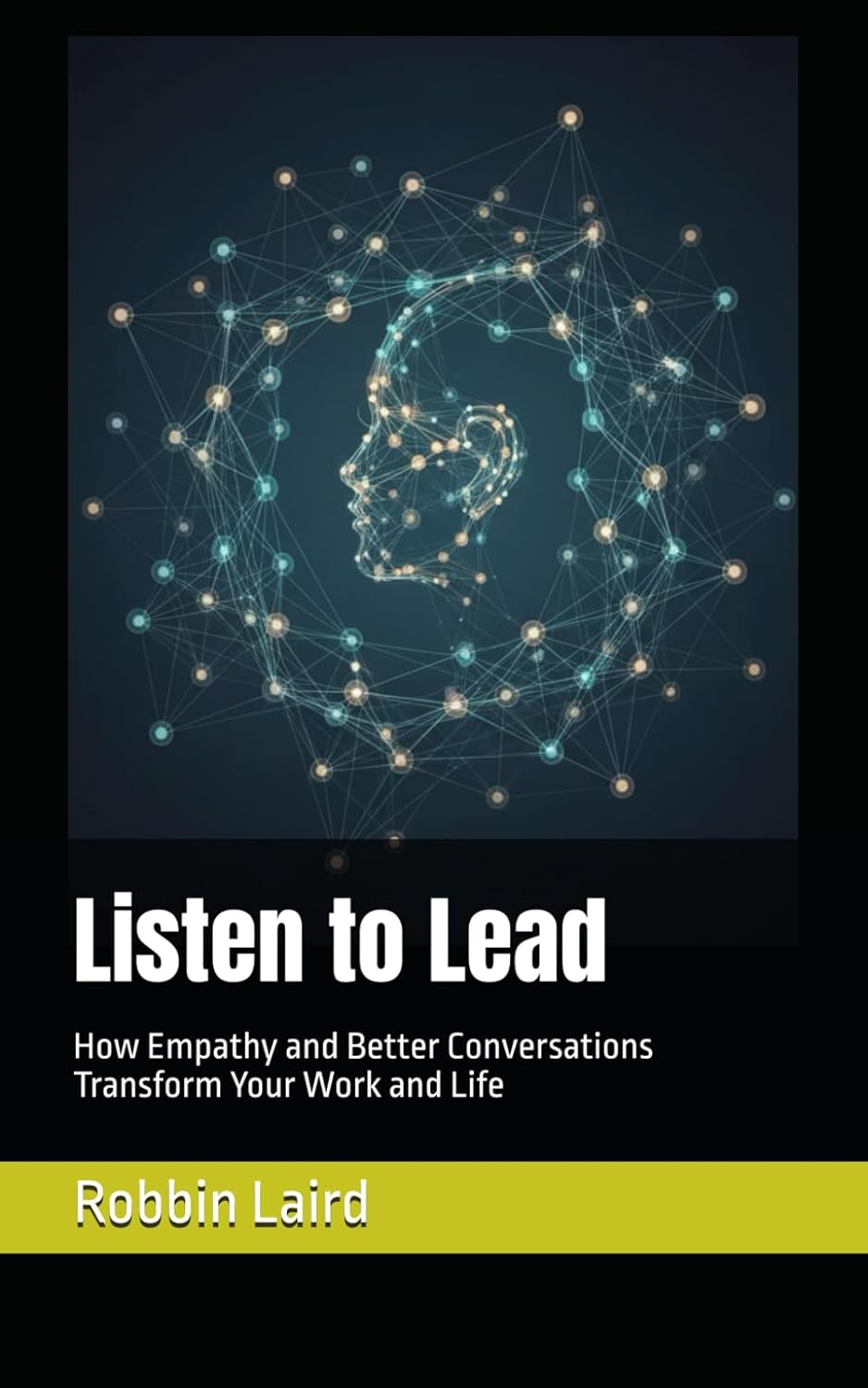
On January 20, 2026, Alexandre Gilbert disccused Robbin Laird’s new book, Listen to Lead:
Gilbert is an analyst who works in France and the discussion was conducted remotely while Laird was in Alcudia, Spain.
This is the narrative which Gilbert published in his article published on January 20, 2026.
I have spent more than forty years writing on military affairs, defense, and foreign policy. Over that time, I’ve produced many substantive works on global issues, strategy, and governance. Yet, the process of writing and researching these topics has also forced me to develop certain practical skills that are rarely discussed in traditional analyses. These skills—how to communicate effectively, how to manage complex organizations, how to lead under uncertainty—are the focus of my current series of books. Rather than dwelling solely on intellectual substance, I am now exploring the art of skillful action, the human practices that enable success in professional and personal life.
The first book in this series focused on public speaking: how to communicate effectively, how to hold an audience’s attention, and how to craft presentations that are both clear and compelling. The second, which I have just completed, builds on that foundation. Following this, I have a book about managing chaos—the age in which we now live, marked by rapid change, unpredictability, and complexity. Chaos is no longer an abstract concept; it is the environment in which every organization, business, and state operates. The fourth book, coming next year, is based on three decades of interviews with individuals who have led remarkable lives. It addresses integrity, resilience, suffering, and success, highlighting the lessons that can be drawn from lived experience rather than theory.
A central concern across all these works is the art of listening, which, I argue, is increasingly absent in contemporary society. Social media gives us the illusion of connection, but in practice, it often isolates us. People are more informed than ever, yet they rarely engage in meaningful dialogue. I first reflected on this problem in 1996 at a UNESCO conference in Madrid, where I was invited by Pierre Hasner, a French political scientist and philosopher. At that conference, young Spaniards were enthusiastic about how new technologies might promote democracy, openness, and transparency. Meanwhile, Hasner and I—both older at the time—observed the opposite risk: tribalism and fragmentation could, paradoxically, reduce dialogue.
This observation ties directly into the challenges leaders face today. In an era of chaos, organizations must be adaptable. Consider a business: a technology may dominate the market for a decade, only to disappear almost overnight. Similarly, military or government organizations can fail if they do not properly understand their environment or cannot adjust to rapid change. Leadership in such contexts is not just about issuing orders; it is about fostering an organizational culture that encourages feedback, recognizes early warning signals, and engages people in real conversations rather than isolating them in silos.
Political discourse offers a striking example of how the absence of listening can destabilize organizations and societies. Democracies struggle because participants often shout at each other rather than engaging with opposing viewpoints. President Trump exemplifies this approach, though he is not unique. The problem lies in the structure of communication: when people do not hear one another, they cannot anticipate consequences, adapt, or respond effectively. Leaders, therefore, must cultivate both a clear agenda and the capacity to listen, creating channels through which bad news or dissenting views can reach decision-makers without fear or distortion.
This emphasis on listening extends into meetings, one of the most mundane yet revealing aspects of organizational life. A successful meeting is not about reciting information; it is about interaction and engagement. Too often, participants are distracted—on their phones, multitasking, or mentally preparing their next point rather than listening. Such behavior is not only rude; it undermines the collective intelligence of the organization. I insist on what I call a “three-second rule”: when someone speaks, pause to truly absorb what they are saying before responding. This cultivates understanding and allows for meaningful dialogue.
Generational dialogue is another crucial component. In both France and the United States, I observe differing attitudes toward age and experience. Many younger people assume that being young automatically confers insight, while older generations are sometimes dismissed as irrelevant. Both perspectives are misguided. True dialogue respects the experiences and perspectives of all participants. In my own family, my daughter, who is almost thirty, engages in dynamic, reciprocal discussions with my wife and me. These conversations are not lectures; they are exchanges of ideas that allow for mutual understanding. Such dialogue is increasingly rare in professional and social settings, yet it is essential for organizational adaptability and societal resilience.
The interplay of technology and conversation further complicates matters. AI, social media, and digital communication tools can enhance dialogue, but they cannot replace the fundamental skills of listening and engagement. Algorithms often filter information to reinforce preexisting beliefs, creating echo chambers that hinder true conversation. Political events illustrate this vividly. Consider President Trump’s so-called interest in buying Greenland. The media frenzy around it ignored fundamental realities: no president can purchase a territory, there is no constitutional mechanism, and financial resources are insufficient. Yet much of the public discourse focused on speculation rather than fact, highlighting the failure to engage critically and listen attentively.
This failure is evident across organizations, including in defense and business sectors. I have conducted workshops with senior leaders in Australia, and I can count on one hand the number of presentations that genuinely invited dialogue. Effective leadership requires more than transmitting information; it demands creating spaces for discussion, reflection, and challenge. When I speak publicly, I rarely talk for more than ten to fifteen minutes without inviting questions, sometimes deliberately provoking the audience to stimulate engagement. Leadership, at its best, recognizes the fundamental humanity of each participant and fosters an environment where ideas can be exchanged freely, without fear or hierarchy stifling the conversation.
Respect is a prerequisite for meaningful conversation. Without it, dialogue becomes impossible. AI can assist by organizing information or suggesting questions, but the underlying issue is human: how people are trained, the norms they follow, and what behavior they consider acceptable. In schools, for instance, many students fail to listen attentively, not because of a lack of intelligence but because of habits formed in technologically saturated environments. Yet when children are raised in environments that prioritize reading, reflection, and face-to-face conversation, their listening skills are dramatically better, as I observed with my own children in France.
In the broader organizational context, the capacity to listen, process information, and act is central to navigating chaos. Chaos, as defined by chaos theory, is a constant feature of life: every action produces a reaction, and every event triggers unforeseen consequences. Leaders cannot predict every change, but they can cultivate systems and cultures that allow them to respond intelligently. This requires embracing bad news, encouraging early warning signals, and understanding the logic behind decisions. Too often, leaders receive conclusions without insight into the reasoning that produced them, whether in business, defense, or government. Without understanding the underlying logic, organizations are less adaptable, less innovative, and more prone to failure.
Generational differences further complicate this dynamic. People born before the digital age process information differently than those who grew up with computers, smartphones, and instant communication. Visual processing, memory, and attention spans differ, as do approaches to problem-solving. These are not matters of superiority or inferiority—they are differences in training and experience that leaders must navigate to ensure effective communication and collaboration. Likewise, cultural differences shape how conversations are understood. Even when people share a language, the meanings, associations, and emotional resonances of words can vary significantly. Leaders must cultivate sensitivity to these differences to avoid miscommunication and to foster inclusive dialogue.
The essence of leadership in our era, therefore, is the art of conversation. A good leader communicates goals clearly while remaining open to discussion, critique, and alternative perspectives. I have witnessed leaders who excel in this approach: they articulate their objectives, explain their reasoning, and encourage others to challenge their assumptions. Such engagement not only improves decisions but also builds trust and loyalty. By contrast, leaders who dictate without dialogue—who, like Macron or Trump, rely solely on their own judgment—risk isolating themselves, misunderstanding their environment, and making avoidable errors. Confidence in decision-making is valuable, but overconfidence in judgment without feedback is dangerous.
Leadership also requires humility and the willingness to share one’s reasoning. I have seen the most effective leaders outline their decisions, listen to challenges, and sometimes adjust their plans based on input from colleagues or subordinates. This approach is not about indecision; it is about building understanding and consensus. It acknowledges that the world is complex, dynamic, and unpredictable. It recognizes that chaos is constant and that every interaction—every conversation—creates ripple effects that can shape outcomes in unexpected ways.
In conclusion, the skills necessary for leadership and effective organizational management—listening, conversation, adaptability, respect, and generational dialogue—are not innate. They must be cultivated through conscious effort, practice, and reflection. Technology can support these skills, but it cannot replace them. Chaos will remain a defining feature of our era, and the organizations that thrive will be those led by individuals who can engage fully with their teams, listen attentively, and foster environments where ideas can be exchanged openly and critically. These are the lessons I hope to convey in my series of books: that the human capacity for dialogue, reflection, and reasoned engagement is as vital today as it has ever been, and that cultivating these skills is essential not only for leaders but for society as a whole.